
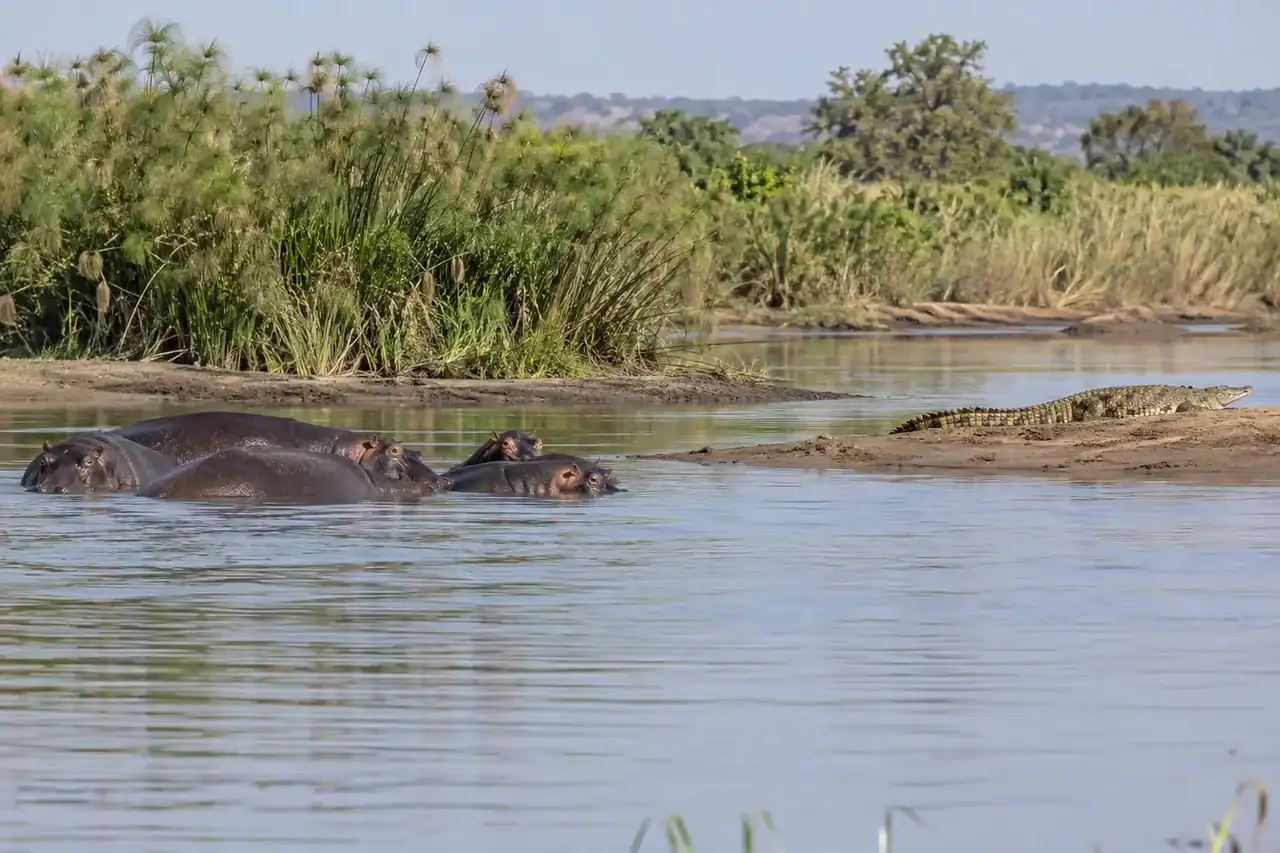
Nile crocodiles usually avoid healthy adult hippos because the risk is far greater than the likely reward. A full-grown hippo is massive, powerfully armed, territorial in water and often protected by nearby group members. The two species regularly share rivers, but coexistence usually depends on spacing, threat displays and each animal recognizing when a confrontation is not worth it.
Key takeaways
- Adult hippos are not normal prey for Nile crocodiles.
- Crocodiles and hippos often share the same waterways without fighting.
- A hippo’s size, tusk-like teeth and defensive behavior make close approaches dangerous.
- Calves or weakened animals can change the risk calculation, but mothers and groups provide protection.
- Viral claims that a hippo can simply “snap a crocodile in half” are dramatic exaggerations, not a useful scientific description.
Do Nile crocodiles really avoid hippos?
“Avoid” does not mean that crocodiles flee whenever a hippo appears. It means they generally maintain distance from healthy adults and yield space when a hippo becomes assertive. Both species use river channels, banks and basking sites, so encounters are unavoidable.
Behavioral guidance compiled by the San Diego Zoo Wildlife Alliance notes that hippos may push crocodiles aside at basking sites or knock them into the water, and that hippos can kill crocodiles. That does not make every meeting hostile. Most animals conserve energy and avoid injuries when a display or change of position can settle the encounter.
Why an adult hippo is such a poor target
The size mismatch favors the hippo
Nile crocodiles are formidable ambush predators, but predation is an energy calculation. Their success depends on surprise, a secure grip and the ability to overpower or drown prey. A healthy adult hippo is an exceptionally difficult animal to control. Its deep body, thick skin and strength make an attack risky, while a defensive bite or body blow could seriously injure the crocodile.
The crocodile’s broad diet also reduces any reason to gamble on an adult hippo. Animal Diversity Web describes Nile crocodiles as opportunistic predators whose prey changes with body size. Fish and a wide variety of terrestrial animals offer more manageable feeding opportunities.
A wide gape is a warning, not a hunting pose
Hippos use their mouths and enlarged teeth in threat displays and figh