
Eagle talons are specialized tools for seizing and restraining prey, but popular “grip strength” rankings are far less certain than they appear. Golden, bald and harpy eagles all use four toes and curved claws, yet differences in talon proportions, foot surfaces, prey and hunting habitat make a single PSI leaderboard misleading.
Key takeaways
- An eagle has four toes on each foot; the rear hallux and inner front toe commonly carry especially large talons.
- Raptor talon shape reflects how prey is restrained, not just how “strong” the bird is.
- Widely repeated 400–500 PSI figures usually lack a standardized scientific method, sample and contact-area measurement.
- Bald eagles have rough papillae on their feet that improve purchase on slippery fish.
- Harpy eagles have exceptionally large feet and claws suited to capturing arboreal mammals, but “largest” claims depend on which claw measurement and species sample are compared.
How eagle talons actually work
“Talon” usually refers to the claw of a bird of prey. The claw itself is a keratin sheath covering a bony core. It works with toe bones, flexor muscles and long tendons that transmit force from the lower leg. When an eagle closes its foot, the toes wrap around prey while the curved talons penetrate or anchor against the surface.
The four toes are not identical. Three point forward and one—the hallux—points backward. A comparative study of raptor feet found that differences among individual talons correspond to prey-restraint technique. In many accipitrids, including eagles, the hallux and inner front talon are emphasized, creating an opposing pair that helps immobilize struggling prey.
Why eagle grip strength in PSI is difficult to rank
Online lists often assign golden eagles more than 400 PSI and harpy eagles more than 500 PSI. Those numbers sound precise, but pressure is force divided by contact area. A defensible value requires a calibrated force measurement plus a clear definition of the area applying that force. Results would also vary with the bird, foot position, motivation and measuring device.
Scientific studies more often compare foot and talon dimensions, tendon mechanics, or predicted force than publish universal species specifications in PSI. That makes anatomy-based comparisons useful while exact internet rankings remain poorly supported. It is safer to say that large eagles can exert a powerful closing grip than to claim one value applies to every individual.
Golden eagle talons: built for terrestrial prey
Golden eagles hunt a broad range of animals, especially mammals and birds. Their feet must secure prey that can twist, kick or run on open ground. Morphometric research comparing North American golden and bald eagles found that golden eagles generally had larger measurements in several major talons, particularly digits I and II, although measurements overlap and vary by sex and individual.
That anatomy supports restraint; it does not prove that golden eagles routinely “crush bones” at a particular pressure. They can kill substantial prey, but prey selection varies geographically and most captures are far smaller than deer. Claims that they easily fracture fox or young-deer bones oversimplify both hunting behavior and the evidence.
Bald eagle feet: traction for slippery fish
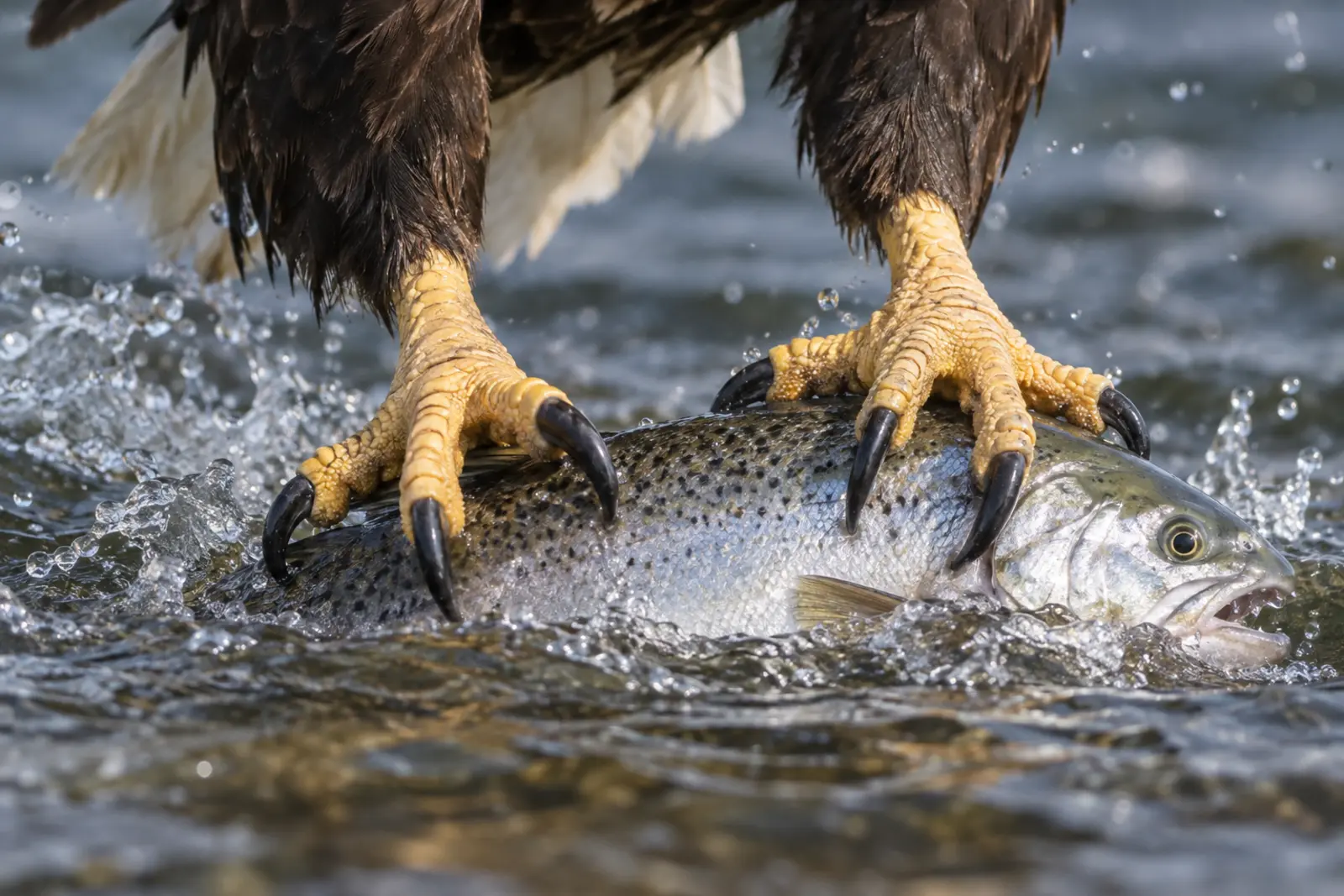
Bald eagles are opportunistic predators and scavengers strongly associated with aquatic habitats. They often take fish near the surface, steal catches from other birds and feed on carrion. Their sharply curved talons provide hooks, while rough projections called papillae on the underside of the toes increase friction against wet, slippery prey.
These papillae are sometimes called “spicules,” but they are not separate barbs that mechanically lock onto fish. They are textured skin structures that improve grip. Bald eagles can also capture birds and mammals, so their feet are not single-purpose fishing tools.
Harpy eagle talons: control in the rainforest canopy
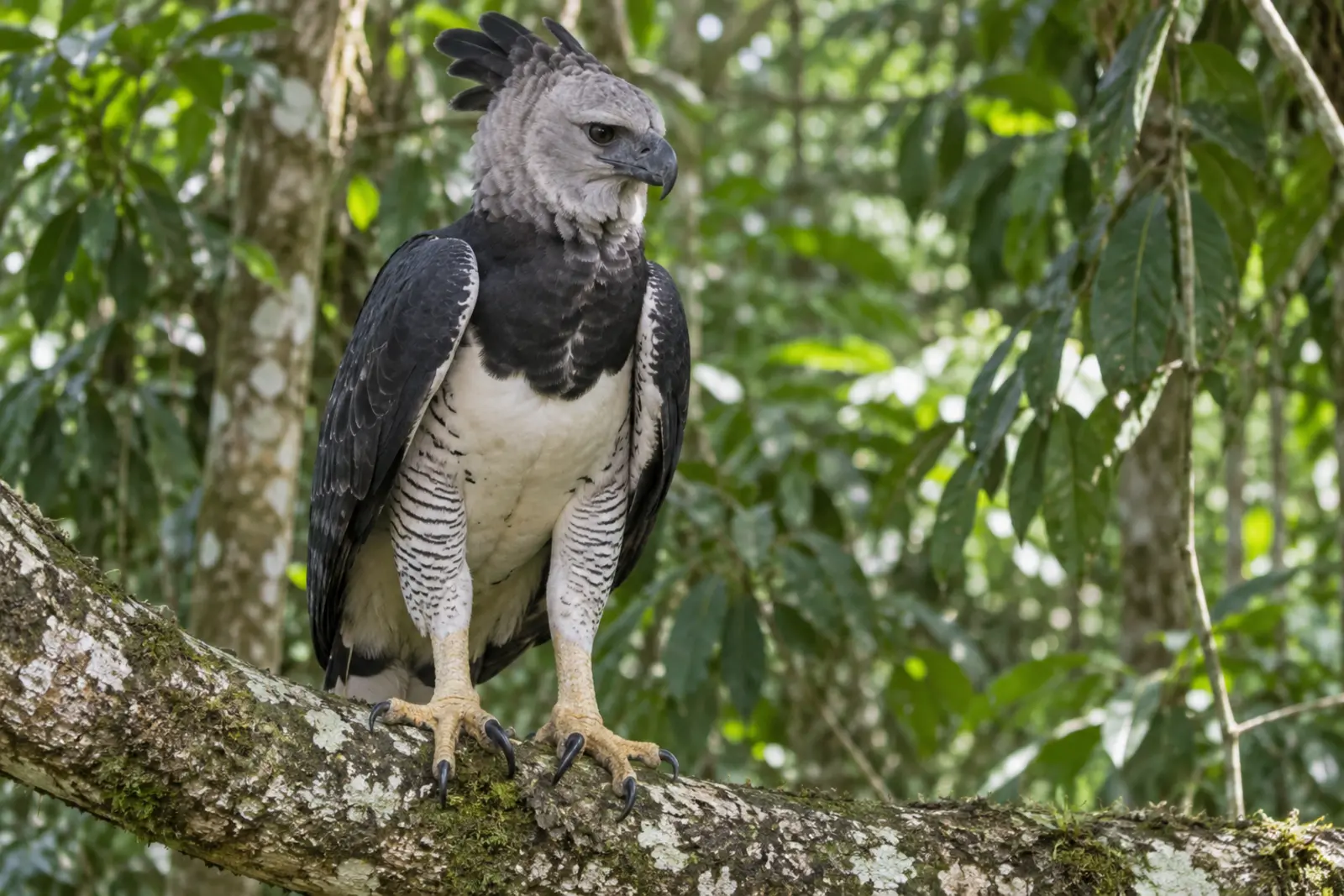
Harpy eagles have massive legs, feet and claws suited to capturing arboreal mammals such as sloths and monkeys. In dense tropical forest, the bird must strike through vegetation, grasp a moving animal and maintain control while leaving a branch or canopy opening.
The rear claw is frequently reported at roughly 12–13 centimeters when measured along its curve, but claw measurements differ depending on whether researchers report straight chord, outside curve or total sheath length. Comparisons with a grizzly bear claw are visually dramatic but biologically limited: the structures belong to animals with different body plans and functions.
Harpy eagles are formidable, yet “effortlessly snatches” is not an evidence-based description. Hunting imposes real energetic and injury risks, and prey size varies. Their large feet reveal specialization rather than invulnerability.
Eagle talons compared
| Eagle | Typical hunting context | Useful foot feature | Claim to treat cautiously |
|---|---|---|---|
| Golden eagle | Open terrain; mammals and birds | Large opposing hallux and inner talon for restraint | A universal 400+ PSI bone-crushing value |
| Bald eagle | Water margins; fish, birds, carrion | Rough plantar papillae improve traction | Spines that “lock” mechanically into every fish |
| Harpy eagle | Tropical canopy; arboreal mammals | Very large feet and strongly curved claws | A universal 500+ PSI value or effortless capture |
Are talons the same as claws?
All talons are claws, but “talon” is the customary term for the strongly curved claws of birds of prey. Eagles also use their feet for perching, nest work and handling food. The predatory function comes from the entire foot-and-leg system, not from the keratin tip alone.
Frequently asked questions
Which eagle has the strongest talons?
No standardized dataset establishes one universal winner. Harpy eagles have exceptionally large feet and claws, while golden eagles show robust talon dimensions suited to restraining terrestrial prey. “Strongest” changes with the measurement used.
Can an eagle crush bones with its feet?
Eagle feet can puncture and severely injure prey, but viral bone-crushing PSI claims are rarely tied to controlled measurements. Eagles immobilize prey through grip, penetration, body weight and repeated positioning.
How many talons does an eagle have?
An eagle normally has eight talons—four on each foot. The rear hallux and inner front toe often carry the principal restraining claws.
The bottom line
Eagle talons are impressive because they are precisely matched to ecological jobs. Golden eagles restrain mobile prey on land, bald eagles combine hooks with textured foot pads around water, and harpy eagles control arboreal mammals in forest. Their anatomy is well supported; exact PSI rankings are not.