
Jonathan is the oldest known living land animal and the oldest recorded chelonian. The Seychelles giant tortoise is estimated to have hatched around 1832, making him at least 194 in 2026. His age is an estimate, not a documented birth date, but an 1880s photograph already showed him fully grown.
Is Jonathan the tortoise still alive in 2026?
Yes. On April 2, 2026, the St Helena Government issued an official statement confirming that Jonathan was “alive and well” after a false death announcement circulated online. He was seen that morning at Plantation House, where staff and the St Helena Veterinary Service continue to care for him.
Guinness World Records subsequently recognized Jonathan as a GWR Icon in June 2026 and described him as at least 194 years old. Because nobody recorded his hatching, the wording matters: Jonathan is estimated to have been born around 1832.
How do we estimate Jonathan’s age?
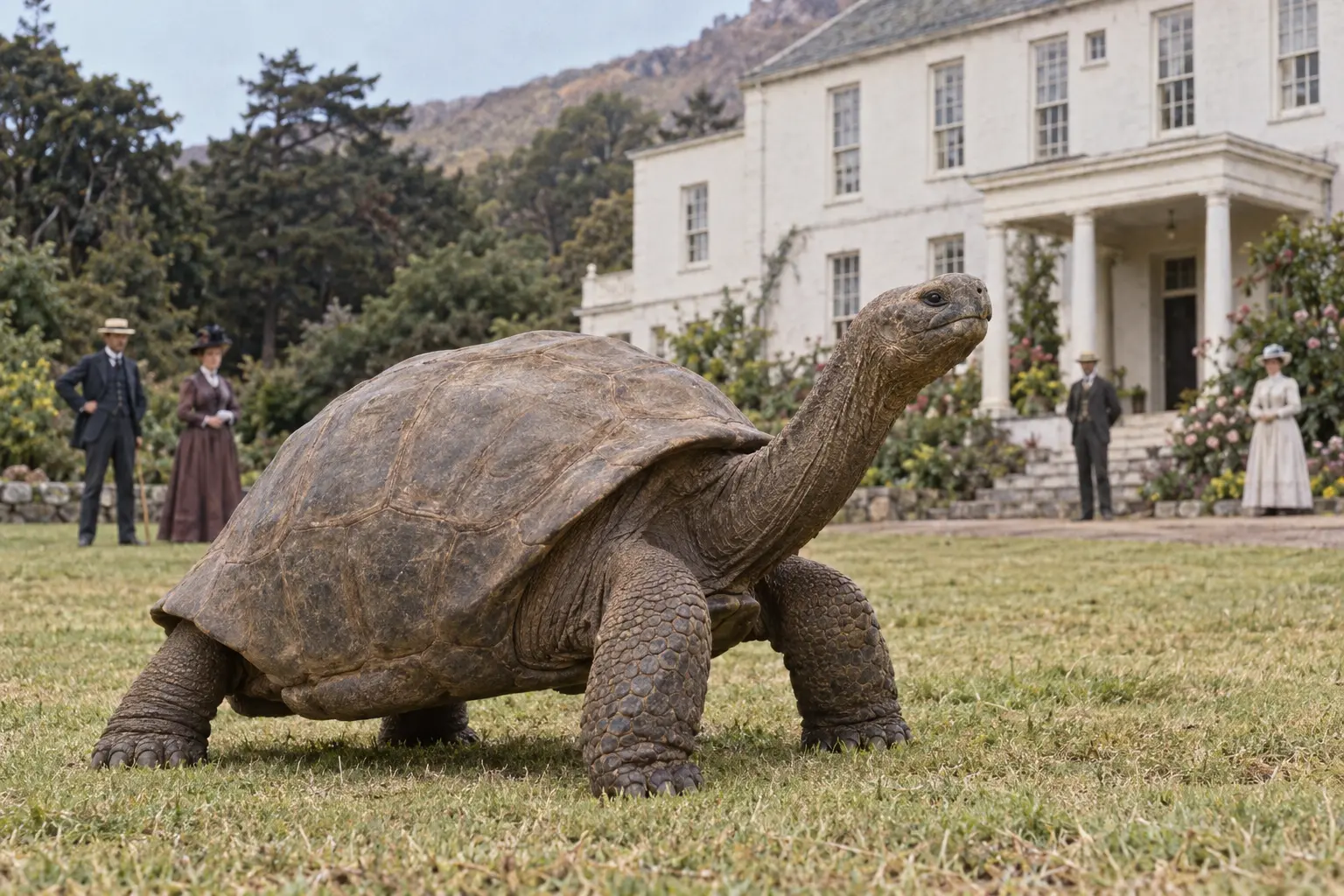
Jonathan arrived on St Helena from the Seychelles in 1882 with three other tortoises. A photograph taken between 1882 and 1886 shows him already fully grown on the grounds of Plantation House. Giant tortoises take decades to reach mature size, so historians estimated that he was about 50 when he arrived. Working backward produces the approximate hatch year of 1832.
This is strong historical evidence, but it cannot identify an exact birthday. St Helena assigned Jonathan an official birthday for celebration purposes; it should not be mistaken for a known biological birth date.
What kind of tortoise is Jonathan?
Jonathan is usually identified as a Seychelles giant tortoise, Aldabrachelys gigantea hololissa. The taxonomy of Indian Ocean giant tortoises has a complicated history. Genetic and morphological studies have examined whether named Seychelles forms represent distinct surviving lineages or variation within the Aldabra giant tortoise complex.
For a general audience, “Seychelles giant tortoise” is the clearest common name and matches official records. Jonathan’s record concerns an individual animal; it does not resolve every taxonomic debate surrounding giant tortoises from the Seychelles.
What is Jonathan’s health like?
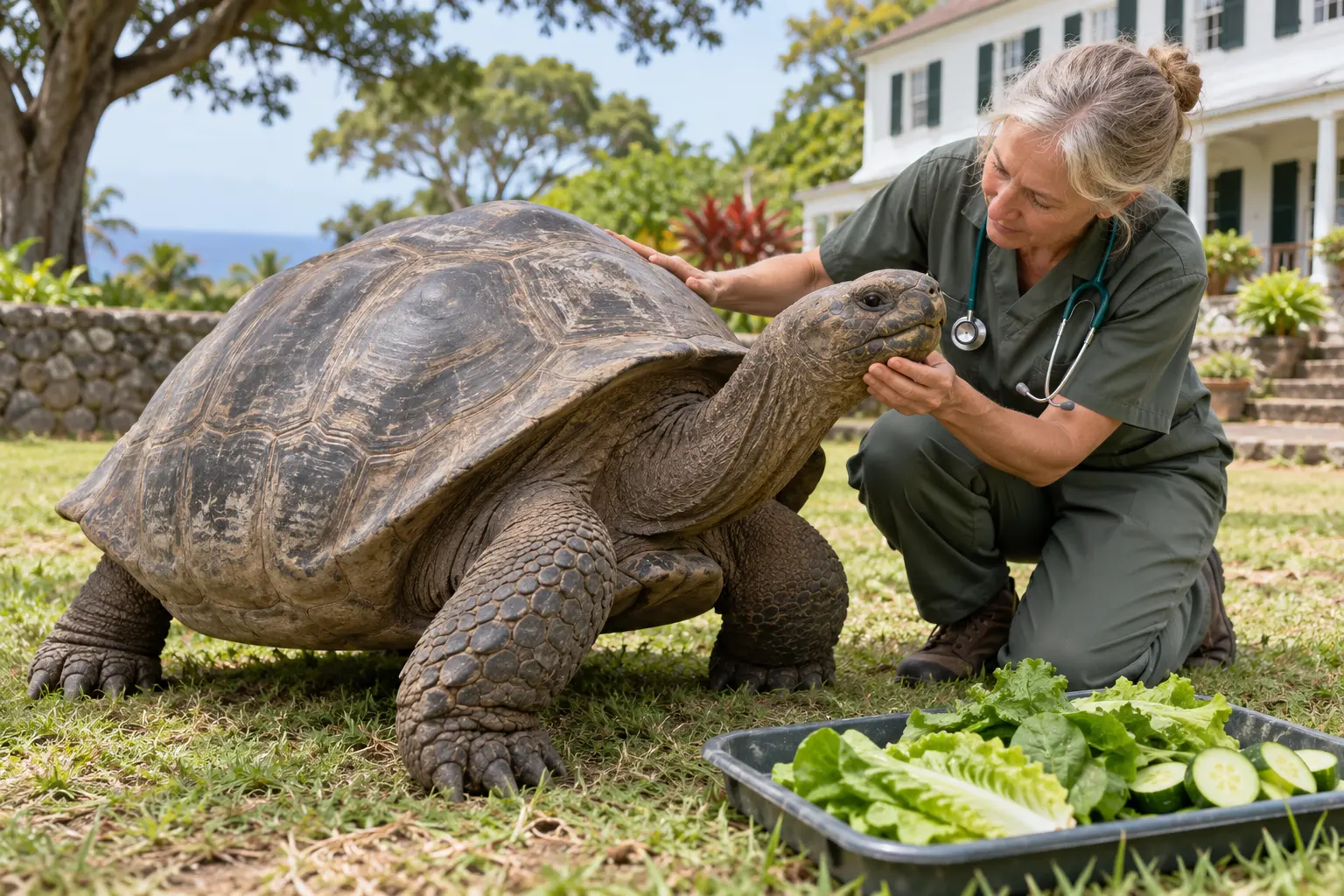
Accounts from his veterinary care describe Jonathan as blind from cataracts and without a functional sense of smell, while retaining good hearing and a strong appetite. Staff support him with regular monitoring and supplementary feeding. His routine includes grazing, resting and moving around the grounds with other giant tortoises.
It would be misleading to call him ageless or immune to decline. Jonathan has age-related sensory loss and depends on attentive care. His continuing activity is remarkable precisely because he is extremely old, not because aging has stopped.
Why can giant tortoises live so long?
There is no single proven “longevity switch.” Slow growth, life history, body size, low adult predation and physiology may all contribute. Genomic studies of giant tortoises have identified candidate changes related to DNA repair, immune function, cancer biology and other pathways associated with healthy aging.
Those findings are evolutionary clues, not a complete explanation of Jonathan’s lifespan. His individual history also includes a protected environment, dependable food and veterinary care. Saying that a slow metabolism alone caused his longevity would oversimplify a complex trait.
Jonathan’s record in context
- Oldest known living land animal: the record currently recognized by Guinness World Records.
- Oldest recorded chelonian: chelonians include tortoises, turtles and terrapins.
- Estimated hatch year: around 1832, based on mature size in an 1880s photograph.
- Residence: Plantation House on St Helena, the official home of the island’s governor.
Jonathan is not necessarily the oldest animal alive. Some marine animals, including long-lived bivalves, corals and Greenland sharks, can reach far greater estimated ages. His distinction is specifically the oldest known living terrestrial animal.
History he actually lived through
If the 1832 estimate is approximately correct, Jonathan hatched during the reign of King William IV. He has lived through the reigns of eight British monarchs, from William IV through Charles III, as well as two world wars and extraordinary technological change.
Claims that he lived through 40 British monarchs are false. It is also imprecise to say he witnessed the “entire” Industrial Revolution, whose beginning is generally placed decades before his estimated birth. His genuine timeline is already astonishing without embellishment.
Frequently asked questions
How old is Jonathan in 2026?
At least 194, based on an estimated hatch year of around 1832. His exact age is unknown.
Where does Jonathan live?
He lives in the grounds of Plantation House on St Helena, a remote British Overseas Territory in the South Atlantic.
Is Jonathan the oldest animal in the world?
No. He is the oldest known living land animal. Several marine species are known or estimated to live longer.
The bottom line
Jonathan’s verified story is more compelling than the myths around it. Historical photographs support an age of at least 194 in 2026, official authorities confirmed he was alive and well on April 2, and continued care helps him remain active despite sensory decline. His record offers a rare living connection to the nineteenth century—and a valuable case study in giant-tortoise longevity.
References
- St Helena Government: Jonathan the Tortoise Is Alive and Well, April 2, 2026
- Guinness World Records: Oldest living land animal
- Guinness World Records: Jonathan named a GWR Icon, June 2026
- Nature Ecology & Evolution: Giant tortoise genomes and longevity
- Molecular Ecology: Genetic perspective on Seychelles giant tortoises
Inline historical and veterinary scenes are educational reconstructions, not original archival or appointment photographs.