
How tall are bears standing up? An adult American black bear may reach about 5–7 feet (1.5–2.1 m), very large brown bears can approach 9 feet (2.7 m), and an adult male polar bear may exceed 10 feet (3 m). These are upright reaches, not normal walking heights—and they vary with sex, population and individual size.
Bear height depends on what you measure
Online bear comparisons often mix three different measurements: shoulder height while the animal is on all fours, nose-to-rump body length, and total height while standing on the hind legs. Those numbers are not interchangeable.
- Shoulder height is the standard height of a four-legged bear, measured from the ground to the shoulder.
- Body length runs along the animal from the nose or head to the rump, sometimes including the tail.
- Upright height is the approximate ground-to-head reach when a bear stands on its hind legs. It changes with posture and is not always measured in a standardized way.
Scientists therefore usually rely on body length, shoulder height and mass for consistent comparisons. Upright figures are useful for visualization, but they should be treated as approximate ranges rather than a ranking measured under identical conditions.
Bear standing-height comparison
| Bear | Approximate upright figure | Important context |
|---|---|---|
| Polar bear | Adult male may exceed 10 ft (3 m) | Polar Bears International; exceptional reach, not average shoulder height |
| Large brown bear | Almost 9 ft (2.7 m) | National Park Service; large individuals |
| American black bear | About 5–7 ft (1.5–2.1 m) | National Park Service general range |
| Male Andean bear | About 5.9 ft (1.8 m) | Fundación AndígenA regional species profile |
| Giant panda | No widely standardized upright range | Shoulder height 2–3 ft; body length 4–6 ft |
Polar bear: the tallest living bear when upright
Polar bears are generally the largest living bear species by body mass, although the biggest brown bears overlap with them. Polar Bears International states that an adult male may reach more than 3 meters (10 feet) when standing on its hind legs.
That does not mean every polar bear stands 10 feet tall. Adult males are much larger than females, and body size differs among individuals and populations. Researchers normally measure a polar bear at the shoulder while it is on all fours, because that position is more repeatable.
Brown bear: large individuals approach 9 feet
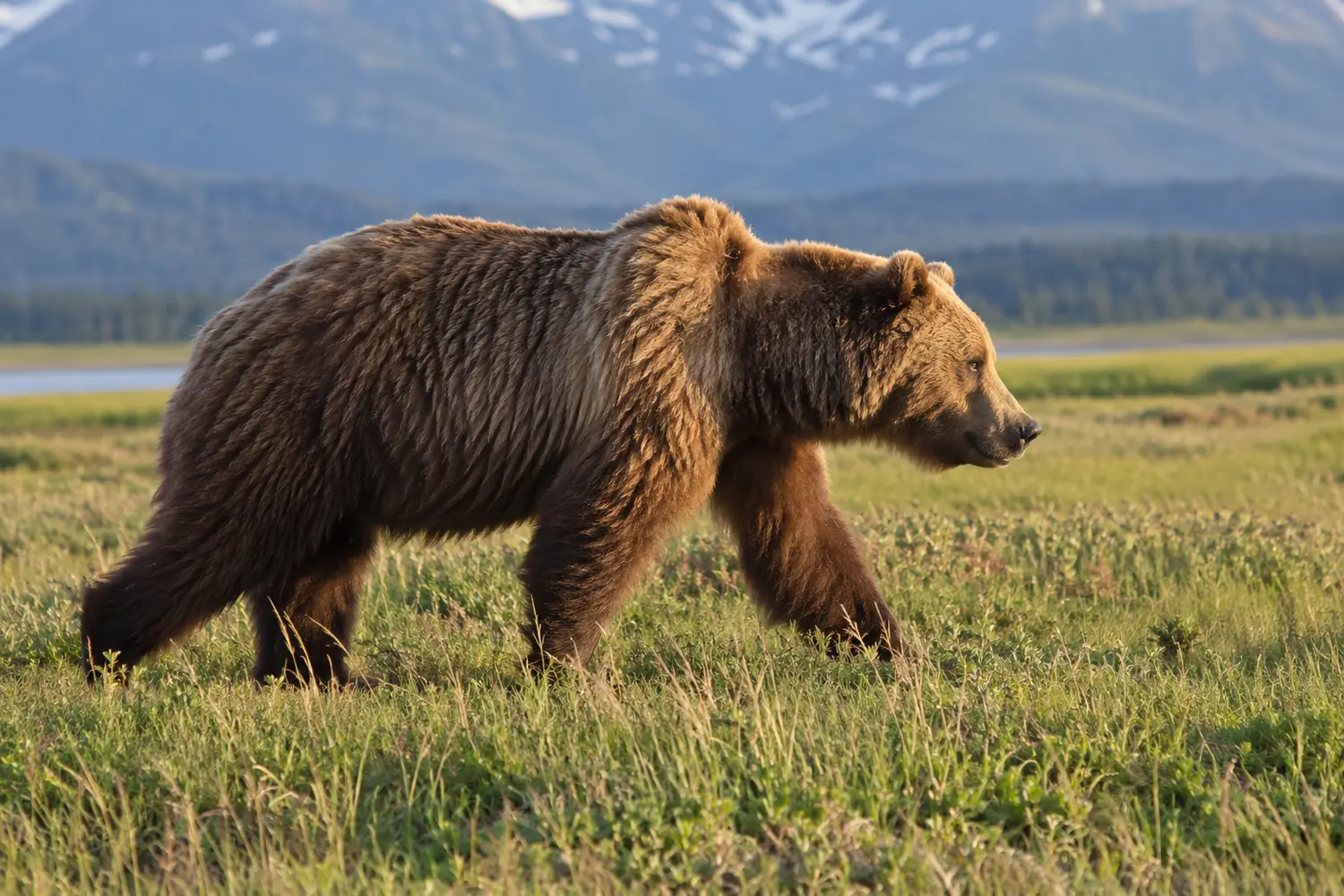
Brown bears vary enormously across their range. Interior grizzlies are often smaller than food-rich coastal brown bears, while Kodiak bears are a large brown bear population—not a separate species.
The U.S. National Park Service gives a shoulder height of roughly 3–5 feet and notes that very large brown bears can measure almost 9 feet when standing on their hind legs. The word “very large” matters: the upper figure is not a typical height for every brown bear.
American black bear: commonly 5–7 feet upright
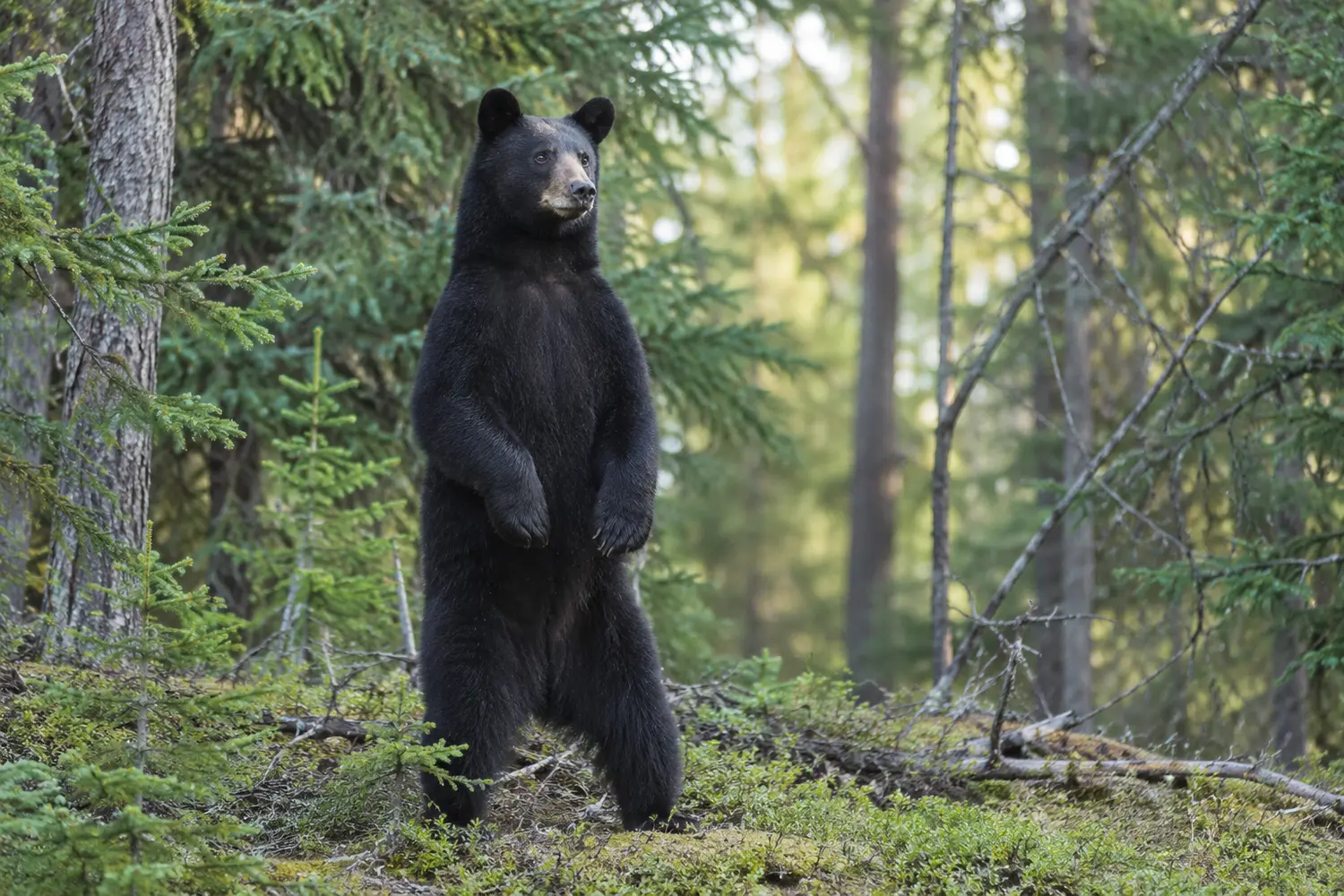
American black bears are smaller on average than the largest brown and polar bears, but they can still look imposing when they stand. The National Park Service lists about 3 feet at the shoulder and approximately 5–7 feet upright.
A bear rising onto its hind legs is not automatically preparing to attack. Bears often stand to improve their view or investigate a scent. Body language, distance and context matter more than height alone.
How tall are giant pandas and Andean bears?
Giant pandas are true bears, but reliable public profiles usually report their shoulder height and body length rather than a standardized upright height. The Smithsonian’s National Zoo gives a shoulder height of 2–3 feet (60–90 cm) and a body length of 4–6 feet (1.2–1.8 m). It would be misleading to turn that body length directly into an exact standing height.
For the Andean or spectacled bear, conservation organization Fundación AndígenA reports that males reach about 1.8 meters upright, while females rarely exceed about 1.4 meters. These regional reference figures are useful, but they should not be presented as universal limits for every animal.
Why do bears stand on two legs?
Bears usually stand upright to gather information. Raising the head can improve the animal’s view over vegetation and help it sample scents carried by the wind. Bears may also rear during play, sparring, feeding or defensive encounters.
They are plantigrade mammals, walking with the heel and sole on the ground. This foot posture and their powerful hind limbs let them balance upright temporarily, but bears are not built for sustained bipedal walking like humans.
Which bear is actually the biggest?
“Tallest” depends on posture, while “biggest” can refer to mass, body length or shoulder height. Polar bears are generally considered the largest living bear species, but the largest coastal brown bears can overlap with them. Exceptional records should not be used as typical species averages.
For taxonomy, habitats and adaptations across the whole family, see our guide to all eight living bear species.
Frequently asked questions
Can a polar bear really stand 10 feet tall?
Yes. A large adult male may exceed 3 meters when fully upright, according to Polar Bears International. This is an upper-end figure, not the normal height of every polar bear.
Is a standing bear showing aggression?
Not necessarily. Bears commonly stand to see or smell better. People should still keep a safe distance and follow local wildlife guidance.
Are brown bears taller than black bears?
Large brown bears generally exceed American black bears in shoulder height, body length and mass, but size overlaps and varies by sex, age, season and population.
The bottom line
Polar bears can reach the greatest documented upright heights, with large males exceeding 10 feet. Very large brown bears approach 9 feet, while American black bears commonly fall around 5–7 feet upright. The fairest comparisons keep standing height, shoulder height and body length separate.