
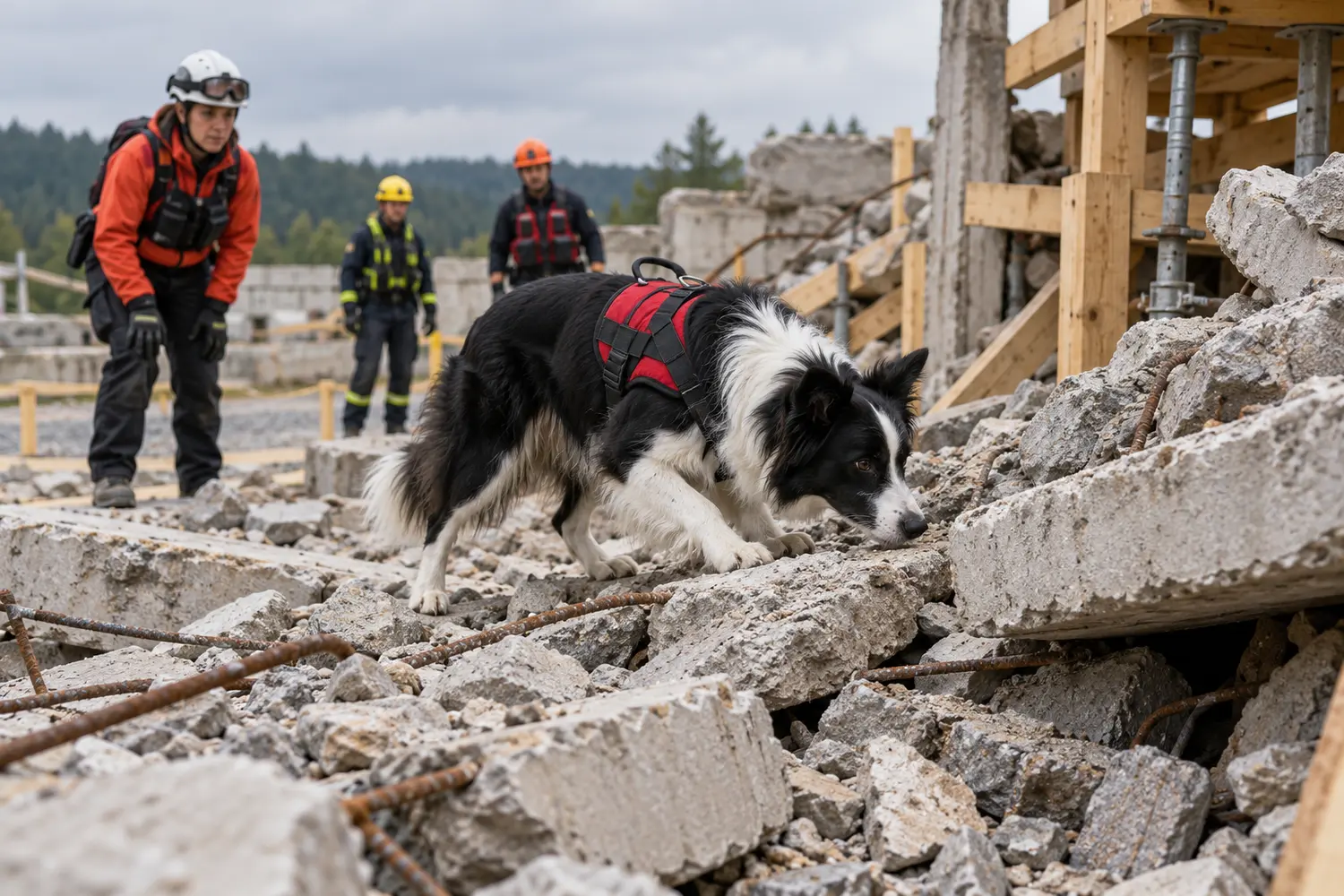
Tsunami the rescue dog went from an abused, abandoned puppy to one of Venezuela’s most recognizable search dogs. Working with handler Jorge Beens and the volunteer K-SAR ECID unit, the Border Collie searched damaged buildings after the earthquakes of June 24, 2026. His final operational deployment became a story about second chances—but also a lesson in why dramatic rescue totals need careful checking.
Reports agree on the core facts: Tsunami was rescued as a puppy, trained to detect live human scent, deployed with a specialist team, and retired after the 2026 response. What they do not agree on is how many people he found. Claims range from 13 to 40. Beens later said the correct figure was 26 people located after the earthquakes, while other contemporaneous reporting documented at least one specific survivor: a 60-year-old man found alive beneath the collapsed eight-story Residencias Rita building in Caracas.
That distinction matters. A search dog can indicate where human scent is coming from; engineers, medics and technical rescuers then assess the structure, reach the void and extract the survivor. Tsunami was a vital member of that chain, not a lone superhero working without a team.
Who is Tsunami the rescue dog?
Tsunami is a male Border Collie associated with the Centro de Formación de Equipos Caninos de Intervención en Desastres, usually styled K-SAR ECID. The organization was founded and directed by Venezuelan rescuer Jorge Beens, who became Tsunami’s handler and caregiver.
Accounts published after the 2026 earthquakes describe Tsunami as having been found in poor condition after abuse and abandonment. The animal-protection organization APROA says Beens helped turn the rescued puppy’s energy into search work. This was not an instant transformation. Disaster search requires repeated training, strong communication between dog and handler, physical conditioning, confidence on unstable surfaces and the ability to work around noise, dust and unfamiliar people.
By the time he became nationally known, Tsunami was reported to be eight or nine years old. That small discrepancy likely reflects different publication dates or incomplete birthday information, so it is more accurate to describe him as a veteran dog near the end of his operational career.
What happened after Venezuela’s June 2026 earthquakes?
A damaging sequence of earthquakes struck Venezuela on June 24, 2026. Search teams deployed to affected locations, including collapsed structures in Caracas and La Guaira. Tsunami and Beens joined the response with K-SAR ECID.
One of the best-documented incidents involved Residencias Rita in San Bernardino, Caracas. Reporting by the Universidad de Carabobo’s radio service said a K-SAR ECID dog located a 60-year-old man alive in the remains of the eight-story building. Other coverage identified Tsunami as the dog involved. The survivor had reportedly been trapped for about six hours.
This concrete case is more reliable than viral graphics that simply attach a large total to one photograph. It identifies a building, an approximate age, a time under debris and the specialist unit involved. Even here, the word located is important: the dog’s alert directed rescuers to a promising area, and the human team carried out the technical rescue.
Did Tsunami save 13 people?
The safest answer is that 13 is not a securely verified total. Public reports published in the weeks after the disaster gave several incompatible numbers. Some social posts said 13; other stories said 30 or 40. On July 3, 2026, Beens publicly pushed back against inflated claims and said Tsunami had located 26 people after the earthquakes.
That statement is the closest available correction from the handler, but it still needs precise wording. “Located 26 people” does not necessarily mean 26 live extractions, nor does it show that every alert produced a rescue. A dog may alert to scent in a void that rescuers later investigate, and disaster records can change as teams reconcile overlapping searches.
For that reason, this article does not turn 26 into a sensational headline either. The verifiable achievement is that Tsunami worked as part of a deployed canine team, helped identify human scent in collapsed structures and was linked to at least one specifically documented live find.
How rubble-search dogs help rescue teams
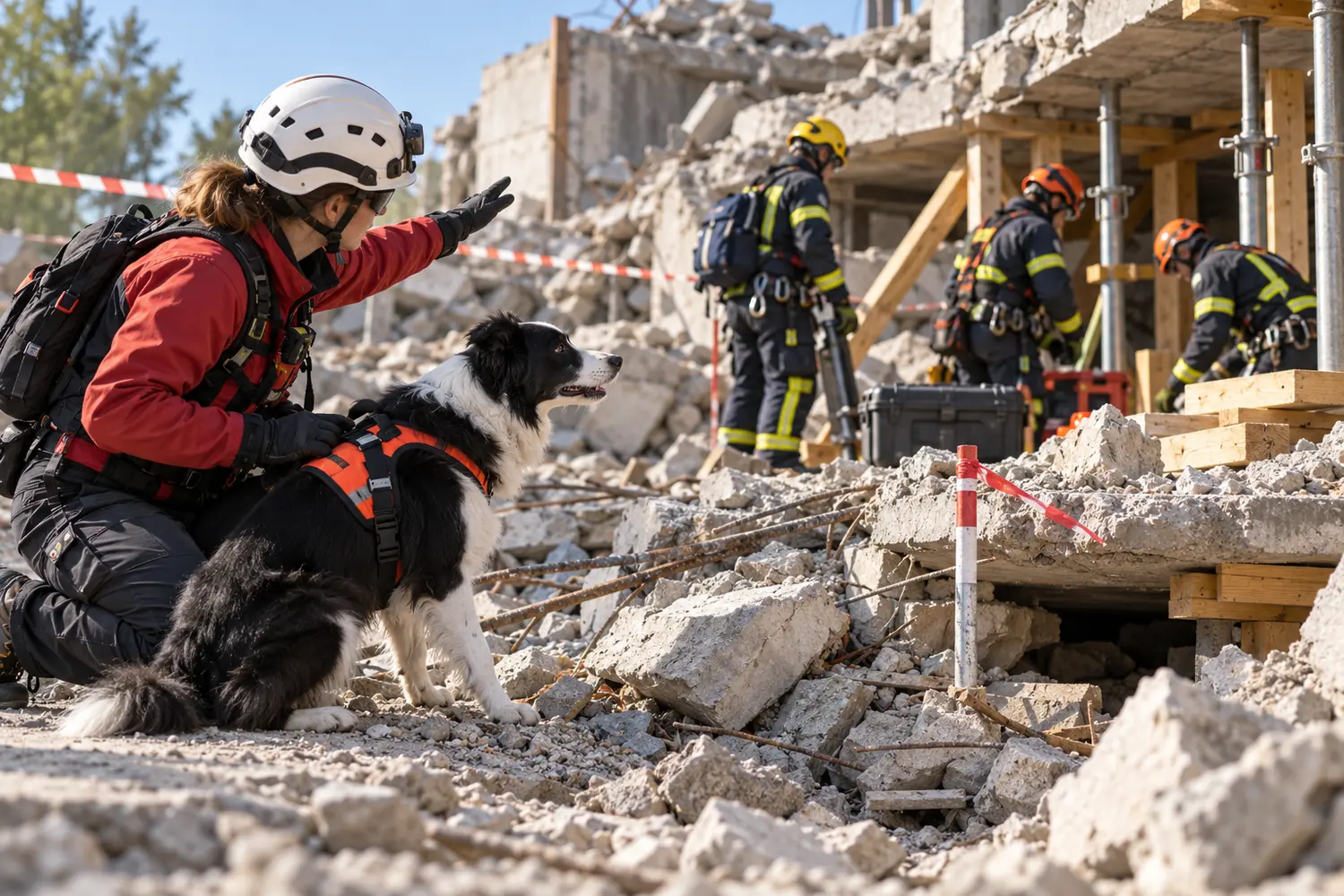
Urban search-and-rescue dogs are trained to find live human scent moving through cracks and air channels in damaged structures. According to International Search and Rescue Advisory Group guidance, canine teams can cover large areas comparatively quickly and help technical rescuers prioritize where to investigate.
The dog-handler pair functions as one unit. The handler evaluates wind, access, hazards and the dog’s search pattern. The dog works the area and gives a trained alert—often barking at the strongest scent source. A second search, technical listening equipment or cameras may be used to confirm the location. Structural specialists then decide how to shore, cut or remove material without causing a secondary collapse.
International Rescue Dog Organisation testing reflects this team approach. Rubble-search evaluations assess obedience, agility, independent searching and a clear indication at concealed scent locations. Certification is not a guarantee that every operational search will succeed; it shows that a dog-handler team has met defined performance standards under test conditions.
Was Tsunami deployed to Turkey and Syria?
Several Venezuelan and Latin American reports say Tsunami’s operational career included the 2023 Turkey-Syria earthquake response. The claim is plausible and is repeated in interviews about his retirement, but a publicly accessible deployment roster naming him was not found during this review. It should therefore be presented as a reported part of his career rather than an independently confirmed mission record.
That caution does not diminish Tsunami’s documented wor