
Alabama’s dog tethering law, widely called Beau’s Law, took effect on October 1, 2026. The law does not impose a total ban on every leash, cable or outdoor tether. Instead, it sets statewide rules for how dogs may be tethered or confined outside, what shelter and care they must receive, and how violations may be enforced.
The measure began as Senate Bill 361. Alabama lawmakers approved the enrolled version in April 2026, and the final text established an effective date of October 1. Owners should read the law itself and consult local authorities when applying it to a specific situation.
Does Alabama now ban chaining dogs?
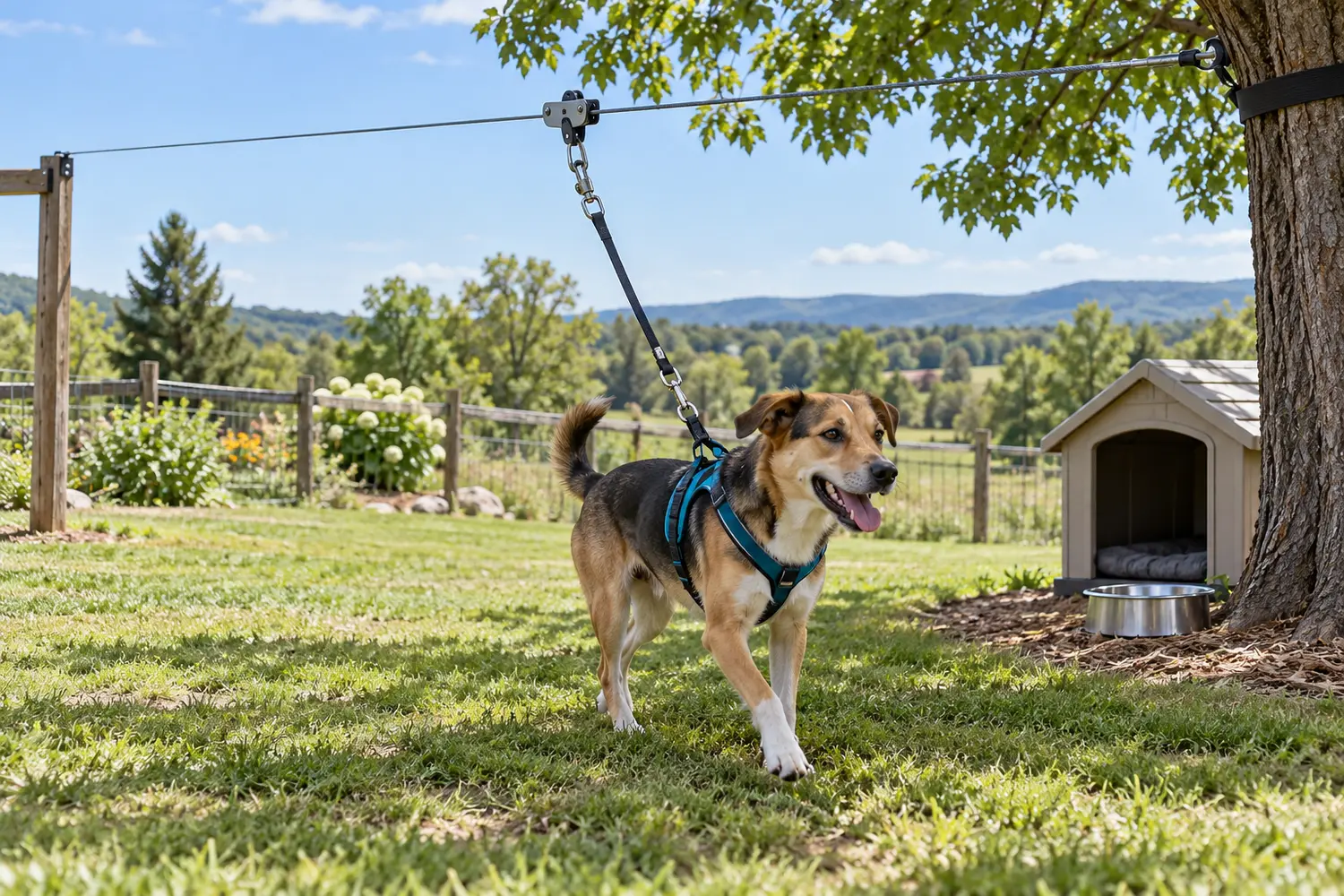
Not completely. Beau’s Law generally prohibits attaching a dog directly to a stationary object such as a tree, pole, stake or structure unless the dog is connected through a compliant trolley system. It also prohibits using a logging chain, choke collar or pinch collar as tethering equipment.
This distinction matters because some viral posts say Alabama has “officially outlawed keeping dogs chained up.” That headline is too broad. The law regulates tethering and bans particular unsafe arrangements, but it preserves compliant trolley systems and lists several exemptions.
What a compliant trolley tether requires
Under the enrolled text, a trolley tether must satisfy all of the following:
- It cannot be unreasonably heavy compared with the dog’s weight.
- It must keep the dog on the responsible person’s property.
- Each tether may connect to only one dog.
- It must attach to a properly fitted collar or harness that does not choke the dog or interfere with breathing or swallowing.
- It must have swivels at both ends to reduce tangling.
- It must allow continuous access to adequate food, potable water and legally compliant shelter.
- It cannot cross an object or edge that could cause injury or strangulation.
- It must be positioned to prevent entanglement with objects or other animals.
Outdoor enclosures must allow normal movement
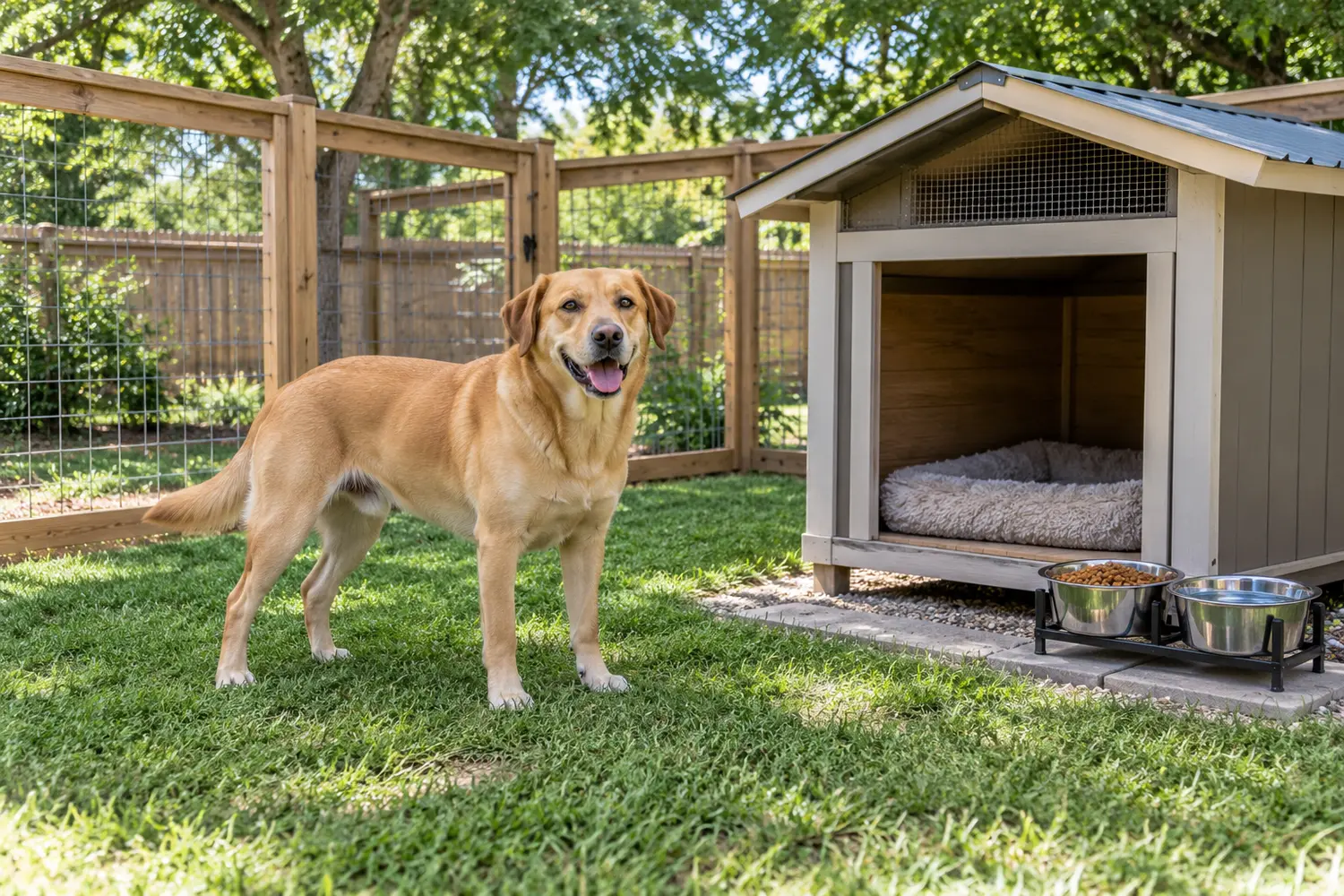
The law also covers dogs confined in outdoor enclosures. An enclosure must be secure and fully fenced, provide enough room for the dog to move freely, and prevent the animal from leaving the property. Dogs covered by these requirements must have continuous access to food, water and compliant shelter.
The law defines adequate food as food offered often enough and in sufficient quantities to prevent starvation or a significant health risk. Adequate water means potable water offered often enough and in sufficient quantities to prevent dehydration or a significant health risk.
What counts as adequate outdoor shelter?
Beau’s Law gives animal-control officers and owners a detailed shelter standard. A dog kept tethered or confined outside must have access to shelter that:
- keeps the dog dry and protected from weather;
- provides shade and cold-weather bedding when necessary;
- is fully enclosed apart from an adequate entrance and has a solid floor;
- has enough space for the dog to stand, turn around, lie normally and extend its limbs;
- uses durable materials and has adequate ventilation;
- is free of accumulated waste, standing water and debris; and
- remains available to the dog without restriction.
Which activities are exempt?
The statute contains multiple exceptions, so it should not be summarized as a universal prohibition. Listed circumstances include veterinary practices, boarding kennels and animal shelters, dog exhibitions or trials, service or assistance dogs, licensed grooming during grooming, temporary necessary tethering, walking a dog on a leash, and certain federally licensed commercial breeders.
Additional exemptions cover dogs used or trained for livestock herding, agriculture, hunting or retrieving. Temporary tethering near a business, campsite, recreation area or home may also qualify when it lasts a reasonable time considering the weather and meets the law’s other conditions.
Penalties and enforcement
County and municipal governments may appoint animal-control officers to investigate alleged violations. When a certified law-enforcement officer has probable cause, the officer may remove a dog believed to be in danger or order the owner to provide compliant care at the owner’s expense, subject to the hearing procedures referenced in the act.
A first violation is a Class C misdemeanor, a second is a Class B misdemeanor, and a third or later violation is a Class A misdemeanor. Violators must also pay the full costs of boarding and veterinary care. Alabama’s standard misdemeanor limits can reach three months and $500 for Class C, six months and $3,000 for Class B, and one year and $6,000 for Class A offenses, although an actual sentence depends on the case.
Why the law matters
Before Beau’s Law, officers could use general cruelty and neglect statutes, but outdoor-care disputes did not always have the same detailed statewide definitions. The new law supplies concrete standards for movement, shelter, food, water and tether equipment while preserving existing cruelty enforcement.
For dog owners, the practical lesson is straightforward: a stationary chain on a tree or pole is not a lawful default. Outdoor dogs need safe equipment, room to move and continuous access to essentials. Local ordinances may be stricter, so compliance with state law does not necessarily replace city or county rules.
Frequently asked questions
When did Beau’s Law take effect?
The law took effect on October 1, 2026.
Can a dog still be tethered in Alabama?
Yes, in limited compliant situations. The general rule requires an overhead trolley system meeting detailed equipment and care standards, subject to statutory exemptions.
Are choke collars allowed for tethering?
No. The act prohibits using choke collars, pinch collars and logging chains to tether a dog.
Does the law replace local ordinances?
Not necessarily. Municipal or county rules may impose additional restrictions. Owners should check both state law and applicable local ordinances.