
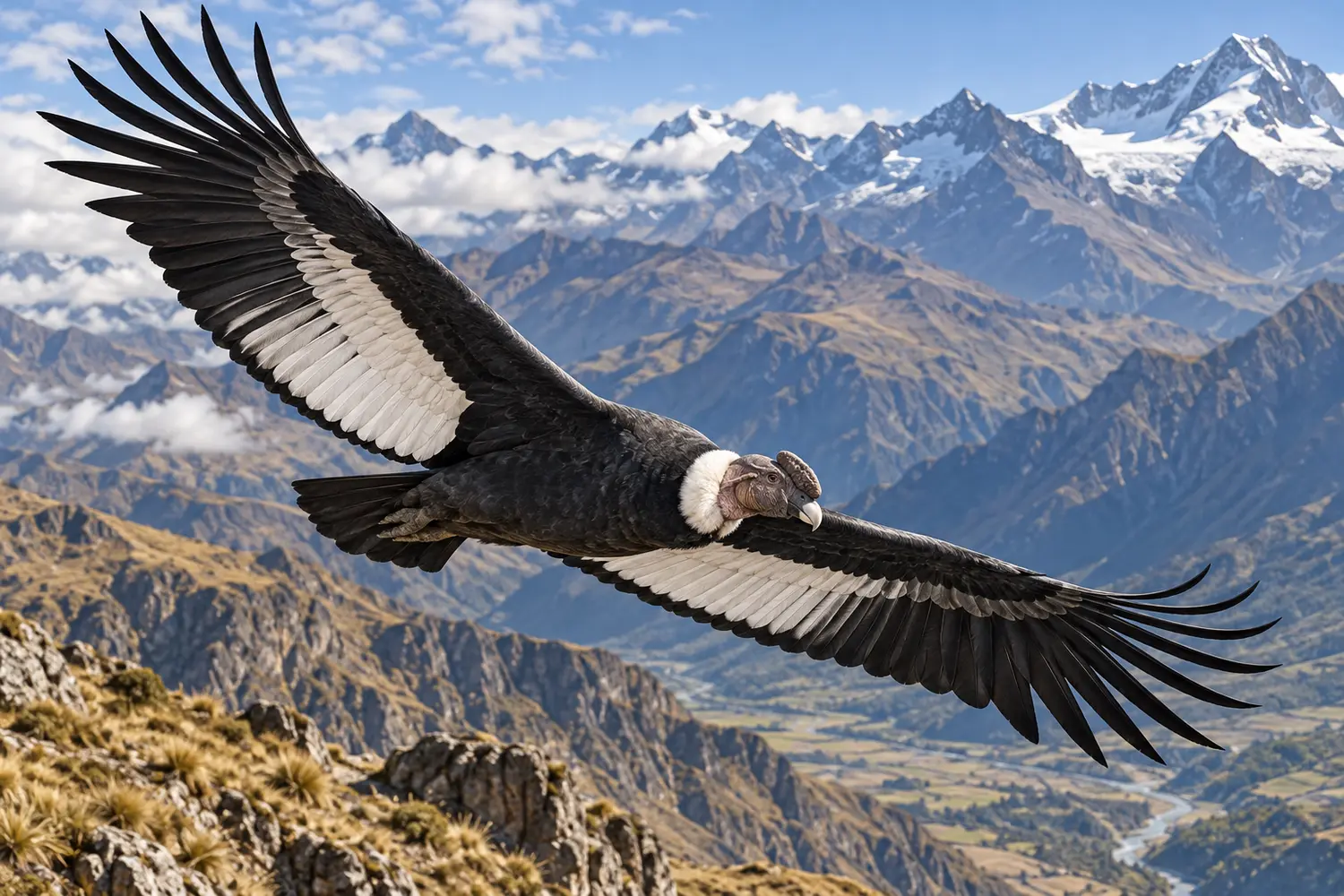
The Andean condor, Vultur gryphus, is one of South America’s most recognizable soaring birds. Its wingspan can reach about 3.2 metres, yet its size offers little protection against poisoned food. Understanding Andean condor conservation means looking beyond the spectacle of flight to the threats facing a slowly reproducing scavenger. [1]
What is the Andean condor’s conservation status?
The IUCN Red List assessment available when checked on October 30, 2026 classifies the species as Vulnerable, with a decreasing population trend. That assessment dates to 2020 and estimates about 6,700 mature individuals. This is an assessment estimate, not a new worldwide count made in 2026. [2]
Vulnerable is a formal extinction-risk category. It does not mean that every local population is declining at the same rate or that all birds face exactly the same conditions. Conservation measures need to address the places where condors feed, breed and encounter human activity.
Why poisoned carcasses are dangerous
BirdLife International identifies intentional and accidental poisoning among the main threats, alongside habitat loss and persecution. Carcasses may be treated with chemicals to kill livestock predators, but a scavenger feeding on them can also be exposed. Several birds may gather at one food source, making poisoning events especially damaging. [3]
San Diego Zoo also identifies lead ammunition, reduced food availability and habitat loss as risks. These pressures show why protecting the bird itself is only part of the task: the safety of its food and the condition of its surroundings matter too. [1]
Slow breeding limits the pace of recovery
San Diego Zoo describes a typical reproductive pattern of one egg every other year. Both parents incubate and care for the chick, which can remain dependent long after its first flight. This makes the source image’s claim of exactly one egg every three years too rigid. Breeding intervals and successful fledging are also different measures. [1]
A slow reproductive schedule means that the loss of breeding adults cannot be rapidly balanced by large numbers of chicks. Recovery therefore depends on more than successful nesting: reducing avoidable deaths is central to the conservation problem.
The ecological role of a scavenger
Condors consume animal carcasses and help recycle their remains. San Diego Zoo describes this scavenging as contributing to reduced disease spread. That is a useful ecological role, but it should not be inflated into a promise that condors prevent all bacteria or disease across the Andes. [1]
What conservation efforts can address
BirdLife points to habitat protection, education, awareness and action against harmful poisoning practices. It also describes monitoring and conservation work by organizations in Ecuador and Bolivia. These are practical responses to identified threats, rather than a single solution that can guarantee recovery. [3]
The evidence supports a clear priority: keep adult condors alive, protect feeding and breeding habitat, and track how populations respond. Their broad wings and cultural importance make them visible symbols, but conservation success rests on sustained work around the risks they actually encounter.