
Birds are dinosaurs: they are the living branch of the dinosaur family tree. A raven, a sparrow and a chicken belong within Theropoda, the broader group that also includes extinct animals such as Tyrannosaurus rex. This does not mean birds descended from T. rex. It means they share earlier ancestors within that diverse lineage.
Why scientists classify birds as dinosaurs
In evolutionary classification, descendants remain part of the groups from which they evolved. Birds did not leave Dinosauria when their ancestors acquired wings. Their position within theropod dinosaurs reflects a pattern of shared skeletal features and fossil discoveries, rather than a resemblance based only on appearance.
The American Museum of Natural History describes more than 100 anatomical features shared by birds and theropods, including wishbones, swiveling wrists and three forward-facing toes. No single characteristic proves the relationship by itself; the combination provides much stronger evidence. AMNH explains the anatomical evidence.
Feathers appeared before modern birds
Feathered fossils show that feathers were present in non-avian dinosaurs before modern birds evolved. Their early roles may have included insulation and display, but explaining the original function of every feather type remains a research question. Feathers should not automatically be treated as evidence of powered flight.
Archaeopteryx, around 150 million years old, combines feathers with teeth, a long bony tail and clawed hands. It is a useful example of the mosaic of features seen near the origin of birds. Calling it simply the first modern bird would hide both its distinctive anatomy and continuing debates over early bird relationships. The Natural History Museum reviews these early fossils.
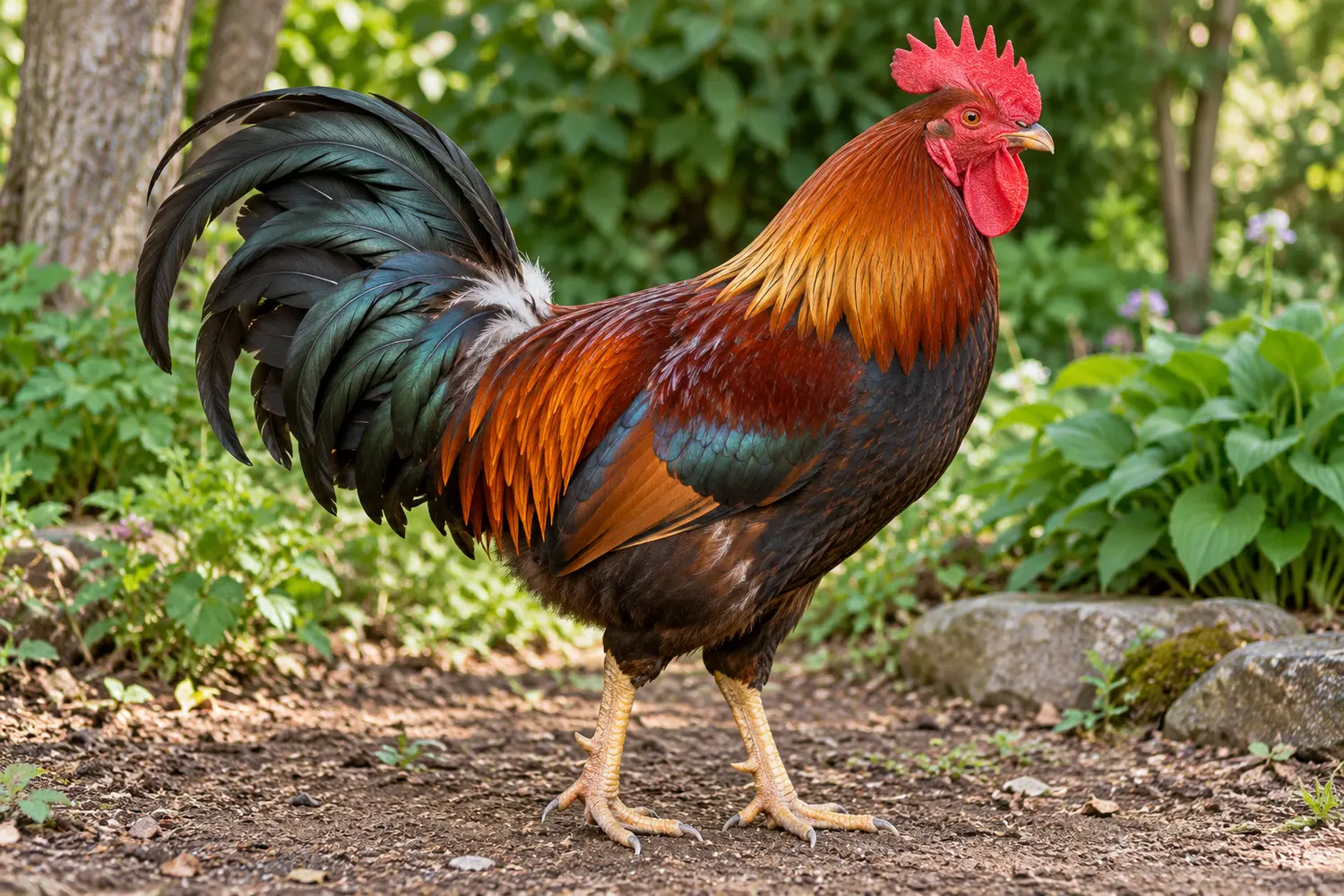
What survived the extinction 66 million years ago?
The end-Cretaceous mass extinction eliminated all non-avian dinosaurs. Some bird lineages survived, while many other ancient birds also disappeared. Today’s birds therefore represent surviving dinosaur branches, rather than evidence that the extinction never happened.
Small size and dietary flexibility are among proposed advantages of survivors. Their survival was not simply a reward for having feathers: many feathered dinosaurs died out too. The precise combination of ecology, geography and chance remains an active topic of investigation. The museum distinguishes surviving birds from extinct non-avian dinosaurs.
Are chickens descended from Tyrannosaurus rex?
No. Chickens and T. rex belong to different branches of theropod evolution. Modern birds arose from small theropod ancestors; large tyrannosaurs were relatives, not the direct ancestors of chickens. A modern bird is also not an unchanged Jurassic animal. Its lineage continued evolving throughout the millions of years since the extinction.
How to recognize the connection today
Watch a bird walk, preen or fold its wings and you are watching a living dinosaur perform modern behaviors. Its feathers, limb arrangement and skeleton have a deep evolutionary history. Those observations are a starting point for understanding the connection, while fossils and comparative anatomy provide the evidence needed to reconstruct it.
The accurate statement is therefore more specific than “dinosaurs never went extinct”: non-avian dinosaurs vanished, but birds survived and diversified.