
Some bizarre animal adaptations look invented, but each one solves a real biological problem. A glassfrog can temporarily hide most of its circulating red blood cells while resting. A saiga antelope uses an enlarged nose to condition dusty air. A shoebill carries a deep, hooked bill suited to large aquatic prey. And the blue dragon sea slug stores stinging cells taken from the animals it eats.
These creatures are sometimes described as “alien,” yet none of their features appeared fully formed or was consciously engineered. Natural selection shaped existing structures across many generations. The result is not science fiction—it is a set of specialized solutions constrained by anatomy, habitat and evolutionary history.
Four bizarre animal adaptations at a glance
| Animal | Striking feature | What evidence supports | Common exaggeration |
|---|---|---|---|
| Northern glassfrog | Transparency increases during sleep | About 89% of circulating red blood cells can be packed into the liver in studied frogs | It becomes completely invisible |
| Saiga antelope | Large flexible nose | Specialized nasal anatomy helps trap inhaled particles; the nose also conditions cold air | It survives “Arctic” weather through its nose alone |
| Shoebill | Large shoe-shaped bill with hooked tip | The bill grips and processes fish and other wetland prey | It routinely decapitates crocodiles in one strike |
| Blue dragon sea slug | Stores prey nematocysts | Intact stinging capsules from Physalia can be retained and redeployed defensively | It manufactures or concentrates a universally lethal toxin |
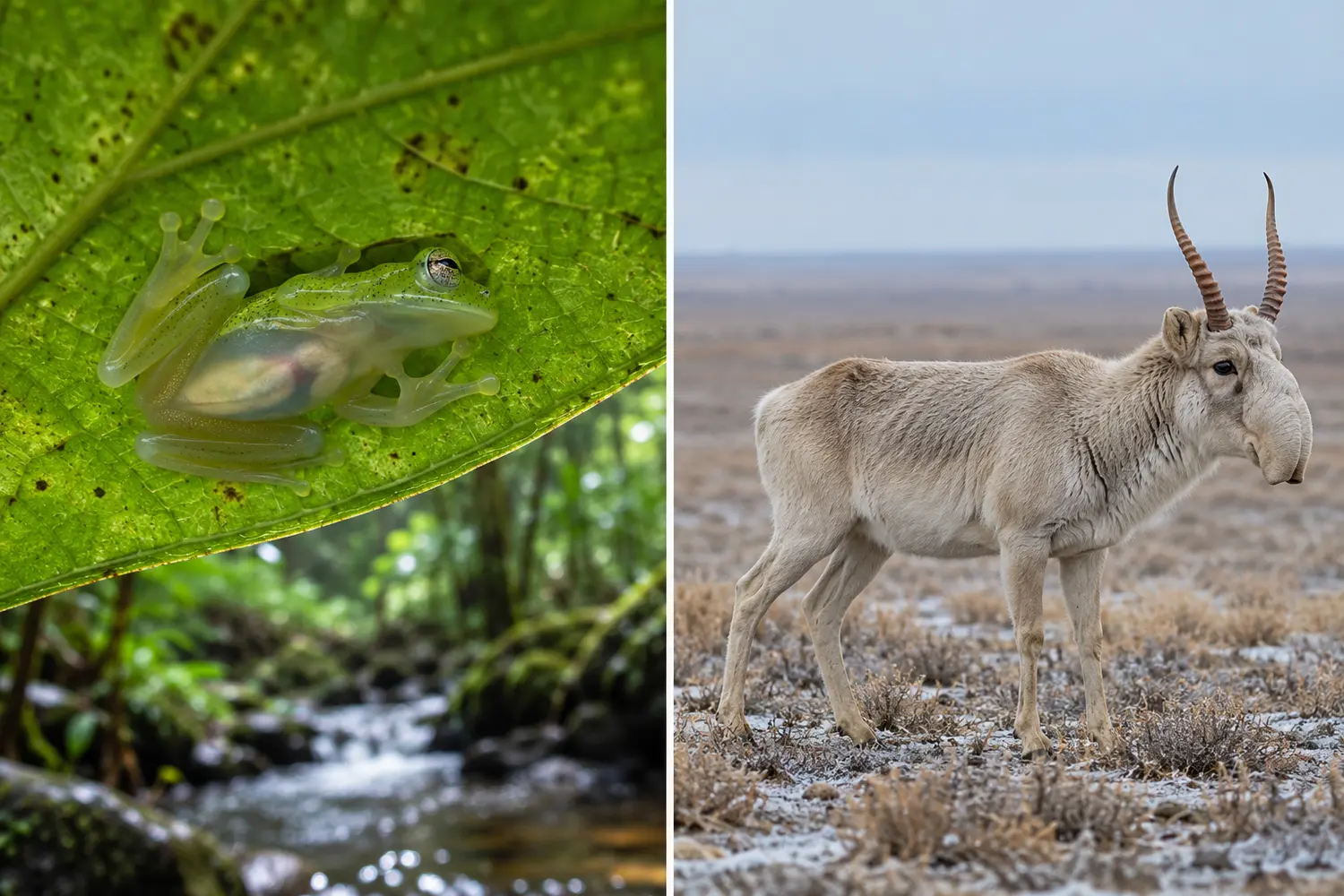
1. The glassfrog hides blood to become more transparent
Glassfrogs are a diverse family of small Central and South American frogs. Their translucent undersides can reveal portions of the heart, digestive system and other internal structures, but they are not invisible. Green dorsal coloration still helps them blend with leaves, while transparency softens the visual boundaries of the body.
The most remarkable mechanism has been documented in the northern glassfrog, Hyalinobatrachium fleischmanni. A 2022 study used photoacoustic imaging to follow red blood cells in living frogs. During sleep, the animals removed about 89% of their circulating red blood cells and packed them into the liver. Their transparency increased roughly two- to threefold.
That finding is more precise than the viral claim that every glassfrog “redirects nearly 90% of its blood.” The study concerns red blood cells in a particular species and physiological state—not 90% of total blood volume in every glassfrog. The frogs also remain visible: bones, organs, eyes and green tissues still interact with light.
The liver expands as it holds the cells, while reflective structures around it help conceal the red coloration. How the frogs avoid dangerous clotting while repeatedly concentrating so many cells remains an important biomedical question. What scientists can say is that the process improves camouflage while the frog rests exposed beneath a leaf.
2. The saiga antelope has a living air-conditioning system
The saiga antelope, Saiga tatarica, inhabits open steppe and semi-desert across parts of Central Asia. Its enlarged, flexible nose hangs over the mouth and gives the animal a profile unlike any other living antelope. The structure is not ornamental: the internal nasal cavity is highly specialized.
Anatomical research describes an enlarged nasal vestibule, recesses and vascular tissues that help regulate airflow. Dust stirred by moving herds can be trapped in the front of the nasal passage before it reaches more sensitive respiratory surfaces. Saigas can then expel mucus-bound particles through forceful nasal exhalations.
The same broad system helps condition cold, dry air before it reaches the lungs. Calling it a “built-in air conditioner” is a useful analogy, but not a literal description. The nose works with the rest of the respiratory system, body insulation and behavior; it does not single-handedly make the animal immune to extreme weather.
The phrase “Ice Age survivor” is broadly evocative because saiga relatives occupied a much larger Pleistocene range. Modern saigas, however, face modern threats, including disease outbreaks, illegal hunting, habitat fragmentation and disruption of migration routes. Their unusual nose is an adaptation, not a guarantee against rapid environmental change.
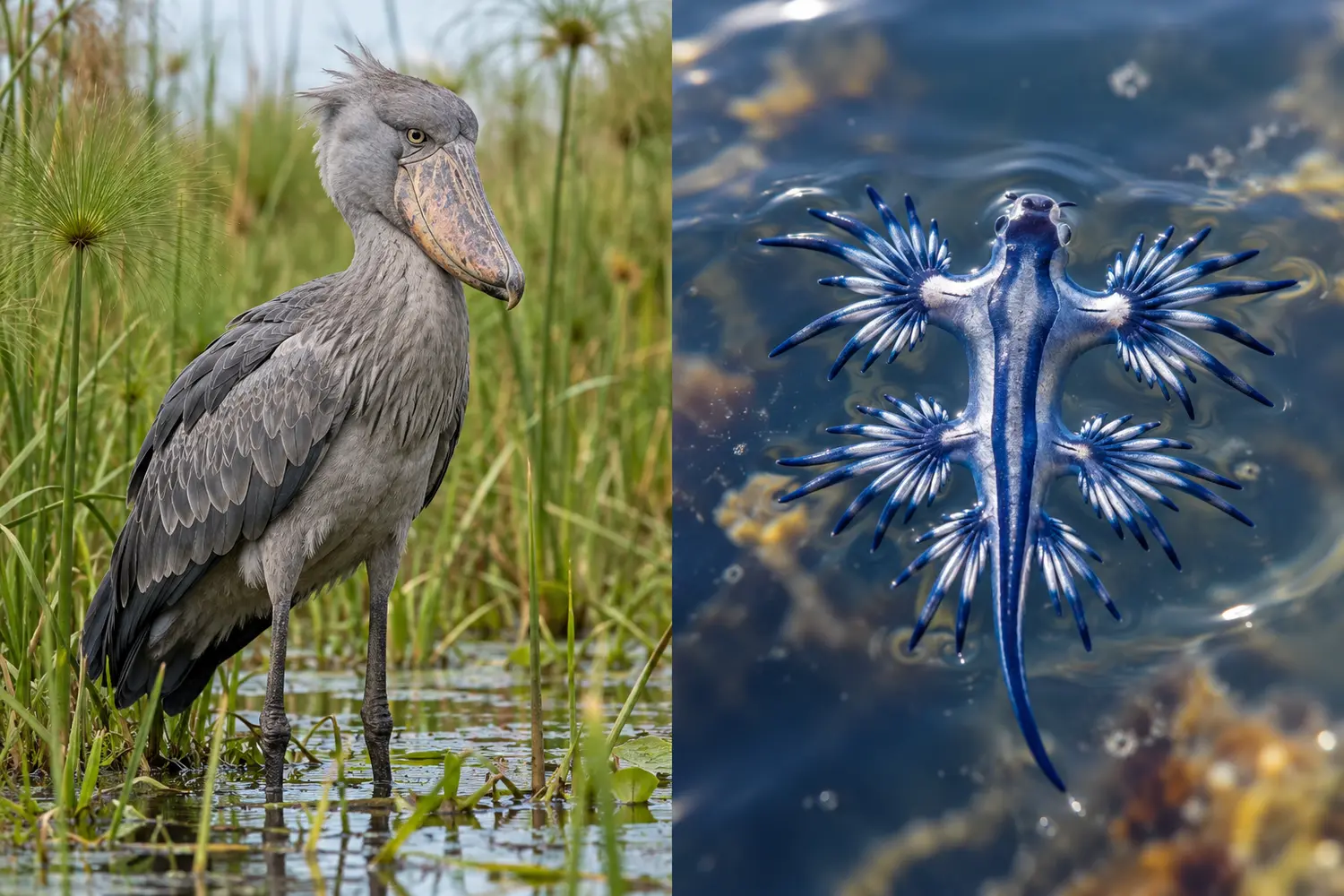
3. The shoebill’s bill is a wetland hunting tool
The shoebill, Balaeniceps rex, is a very large African wetland bird with a bill shaped like a deep wooden shoe. Adults can approach about 1.5 meters in height, but size varies, and the bird’s imposing appearance should not be confused with dinosaur-style aggression.
The bill is broad, deep and edged for gripping prey, with a sharp curved hook at the tip. Shoebills often stand almost motionless before lunging into shallow water. Lungfish are important prey, alongside bichirs, catfish, tilapia, watersnakes, frogs and other aquatic animals. Young crocodiles have been reported among occasional prey, but they are not the main diet.
Online descriptions often say the bird “decapitates lungfish and baby crocodiles in a single strike.” The bill can crush, grip and tear prey, and head removal may occur during prey handling. Yet a universal one-strike decapitation claim is not a measured biological capability. Hunting attempts can involve vegetation, repositioning and repeated manipulation.
The hooked tip is therefore best understood as one component of a complete feeding system: strong neck muscles, binocular attention, patient ambush behavior and a bill capable of controlling slippery animals in dense marsh vegetation.
4. The blue dragon steals stinging cells from its prey
Glaucus atlanticus, commonl