
A chicken’s comb helps exchange heat with the environment, but it is not a stand-alone cooling system. Its thin, unfeathered tissue contains dense superficial blood vessels. When conditions are warm, changes in blood flow can move heat toward the comb and wattles, where it can be lost to cooler surrounding air. Chickens also use their legs and other bare skin, hold their wings away from the body, drink more, seek shade and pant.
What is a chicken comb?
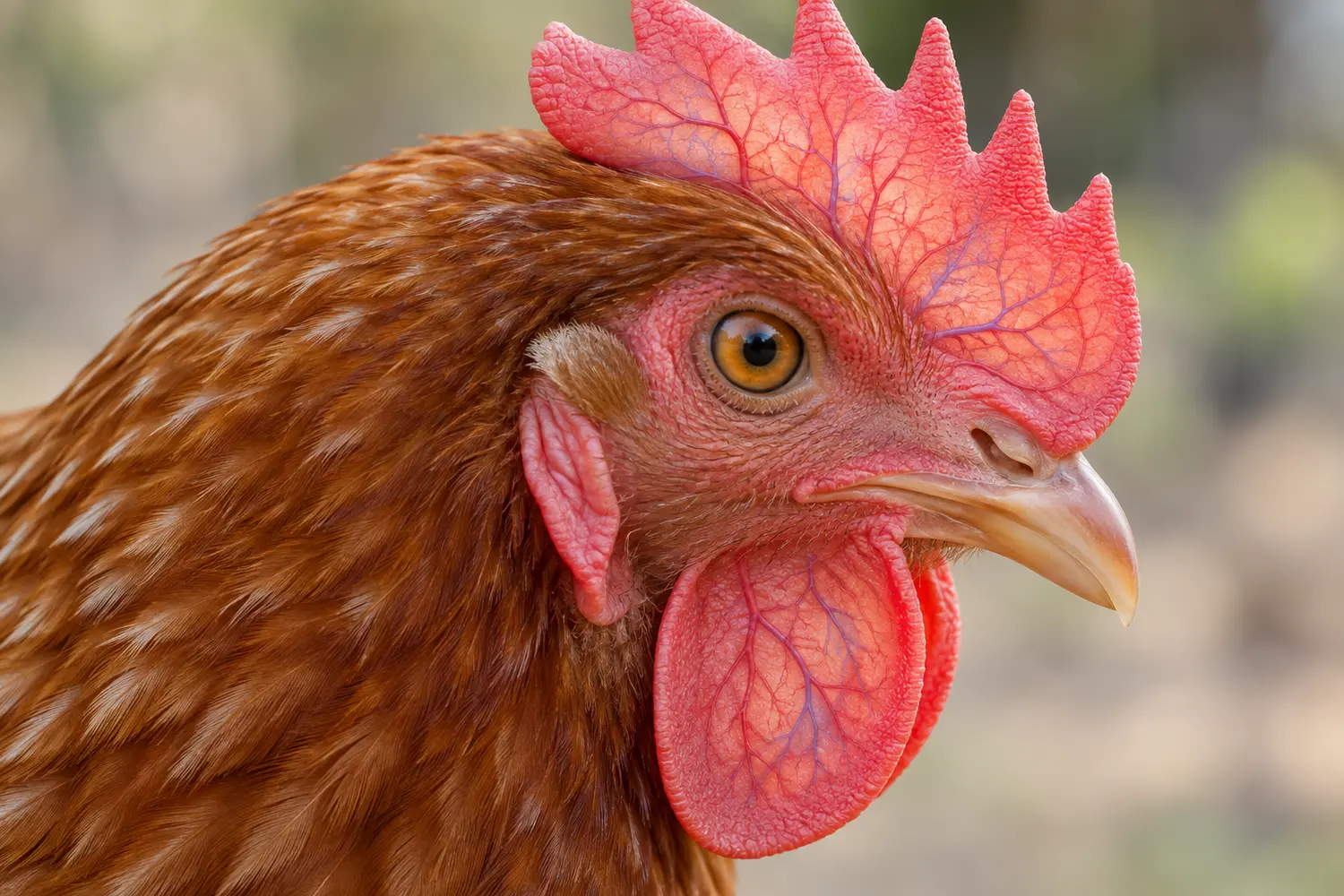
The comb is the fleshy structure on top of a chicken’s head. It is made of skin and connective tissue rather than muscle or bone, and its surface is supplied by an extensive vascular network. Wattles hang beneath the beak and share several of the comb’s functions.
Comb shape varies widely. Familiar forms include single, rose, pea, walnut and cushion combs. Genetics, sex, age, reproductive state and breed all influence size and appearance, so one “normal” comb does not fit every chicken.
Key takeaways
- The comb and wattles are vascular, unfeathered tissues that participate in heat exchange.
- Calling the comb a “radiator” is a useful analogy, not a complete physiological description.
- Chickens also lose heat through other bare skin and by panting, wing spreading and changing behavior.
- A comb cannot protect a bird indefinitely during extreme heat, especially when humidity is high.
- Comb color and condition can provide clues, but they cannot diagnose a disease by themselves.
How does a chicken’s comb help it cool down?
Feathers are excellent insulation. That is useful in cool conditions but creates a challenge when a bird needs to shed body heat. The comb, wattles, shanks and other exposed areas provide thermal windows where heat can move from the body to the environment.
Blood vessels near the comb’s surface can dilate as a bird becomes warm. Warmer blood reaches unfeathered tissue, and heat can pass to surrounding air through radiation, convection and conduction when the environment is cooler than the tissue. Blood returning toward the body has then lost some heat.
Anatomical studies have identified dense capillary networks and arteriovenous connections in the comb. Physiological research also shows that blood flow through unfeathered skin changes with thermal conditions. These findings support the radiator analogy, but the comb does not “pump” blood; the heart drives circulation while blood vessels regulate flow and resistance.
What experiments show
Researchers studying White Leghorn hens compared birds whose combs and wattles had been partially trimmed with untrimmed controls. During an imposed heating episode averaging about 34.6°C for more than two days, the trimmed hens had greater difficulty coping with heat. They showed increased panting and wing spreading, and the study reported higher body temperature and mortality during the challenge.
The result supports an important thermoregulatory role for combs and wattles. It does not mean every breed depends on them to the same degree. Comb size, body size, plumage, age, health, acclimation, airflow and humidity can all change heat balance.
Why panting becomes important
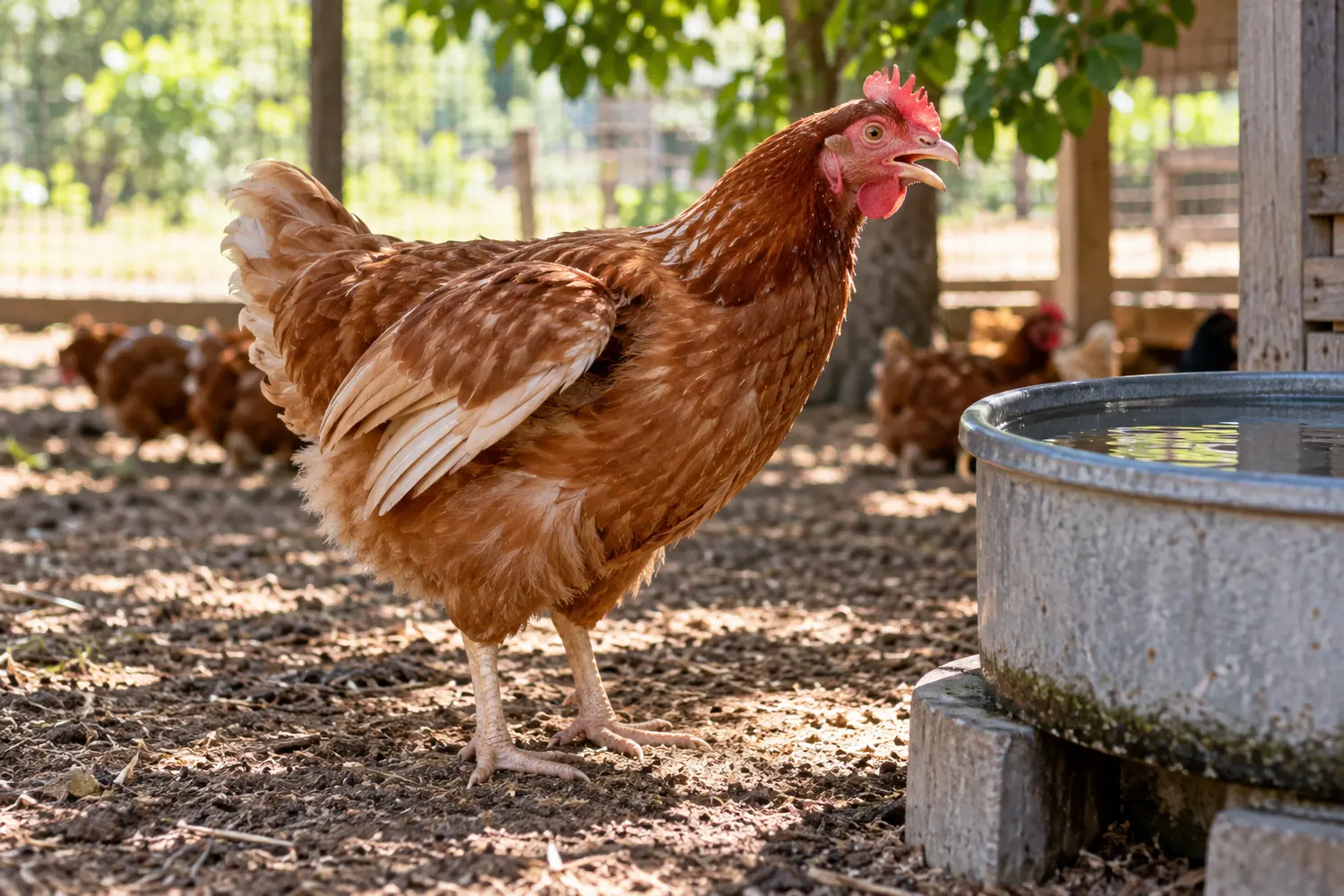
Chickens do not rely on sweating the way humans do. When dry heat loss from exposed skin is no longer enough, they increase evaporative cooling through the respiratory tract. A hot chicken may open its beak, increase breathing rate and hold its wings away from the body so air can reach less-feathered surfaces.
Panting can remove heat as water evaporates, but it has limits. High humidity reduces evaporation, prolonged panting consumes energy and changes acid–base balance, and a bird can still overheat. A visibly panting chicken needs shade, ventilation and cool, clean drinking water—not confidence that its comb will solve the problem.
Does comb size affect heat tolerance?
A large comb offers more exposed surface area, which can support heat exchange. That helps explain why prominent combs are often associated with breeds developed in warmer regions, while small pea or rose combs reduce exposed tissue vulnerable to frostbite. However, breed differences are not controlled by comb size alone.
Large-bodied birds and heavily feathered breeds may struggle in heat even when they have visible combs. Birds with small combs can compensate through panting, posture, behavior and other exposed skin. Management conditions often matter more than a simple comparison of comb shapes.
The comb has other functions
The comb is also a social and reproductive signal. Its size and color can influence mate choice and may reflect hormone activity, age and current condition. Roosters generally develop larger combs than hens, although the amount of difference varies by breed.
That does not make the comb a precise health monitor. Color can shift with temperature, circulation, excitement and individual pigmentation. A pale, dark or bluish comb should be interpreted alongside breathing, behavior, appetite, temperature exposure and other signs.
Signs of heat stress in chickens
Early signs can include panting, holding the wings away from the body, reduced activity, increased drinking and reduced feeding. More serious signs include heavy or labored panting, lethargy, staggering, inability to stand, seizures, collapse or a markedly pale or discolored comb and wattles.
Severe heat stress is an emergency. Move the bird to a cooler, well-ventilated shaded area and contact a veterinarian experienced with poultry. Avoid plunging an overheated chicken into ice water; rapid, extreme cooling can create additional problems.
How to help chickens during hot weather
- Provide deep shade throughout the hottest part of the day.
- Keep multiple sources of cool, clean water available.
- Increase safe airflow through the coop and shaded run.
- Reduce crowding and avoid unnecessary handling during peak heat.
- Schedule feeding and routine work for cooler hours when practical.
- Watch heavier, older, sick or heavily feathered birds especially closely.
Cooling strategies should improve the environment rather than depend on one body part. Air temperature, radiant heat, humidity and airflow determine whether heat can actually leave the comb and other exposed surfaces.
What happens in cold weather?
The same exposed tissue that releases heat is vulnerable to cold injury. Large combs and wattles can develop frostbite in freezing, damp or poorly ventilated conditions. Dry bedding, protection from drafts at roost level and adequate ventilation to reduce moisture are important. Petroleum jelly is not a substitute for correcting cold, wet housing.
Frequently asked questions
Do chickens have sweat glands?
Chickens do not use functional sweat glands for whole-body cooling as humans do. They rely on heat exchange through exposed skin, respiratory evaporation and behavior.
Is the comb really a radiator?
It behaves somewhat like one because warm blood reaches a broad, thin, exposed surface. The word is an analogy: circulation, vessel diameter, ambient temperature and airflow all influence the result.
Why does a chicken’s comb become darker or paler?
Temperature and blood flow can change its appearance, but so can stress, injury, disease and natural pigmentation. A persistent color change combined with weakness or breathing difficulty requires veterinary attention.
Can a chicken survive extreme heat because of its comb?
No. The comb contributes to heat loss but has finite capacity. Extreme temperature, high humidity, direct sun, poor ventilation or lack of water can overwhelm the bird’s thermoregulatory system.
The bottom line
A chicken’s comb is more than decoration. Its vascular, unfeathered surface provides an important route for exchanging heat, while its size and color also play social and reproductive roles. But safe heat regulation depends on the whole bird and its environment. The comb helps; it does not make a chicken heatproof.
Sources
- Poultry Science: The ability of White Leghorn hens with trimmed comb and wattles to thermoregulate
- The Journal of Physiology: Blood flow through arteriovenous anastomoses and its thermal function in the laying hen
- Anatomia, Histologia, Embryologia: Vascularization of the fleshy comb in the domestic chicken
- Penn State Extension: Hot weather management of poultry
- University of Minnesota Extension: Preventing heat stress in poultry