
Cane Corso, Doberman and Dogo Argentino differences are easiest to see in their silhouettes, heads and coats. All three are muscular domestic dog breeds, but their similar visual impact can hide important distinctions. A broad muzzle or alert expression describes appearance; it does not establish an individual dog’s temperament.
This guide compares recognizable physical features using official breed standards. Those standards describe breeding ideals, so real dogs may vary. They are reference points for identification, not personality tests or guarantees about a particular animal.
Cane Corso: a broad head and robust outline
The Cane Corso is an Italian mastiff-type dog. The FCI Cane Corso standard describes a robust, muscular animal whose body is slightly longer than tall. Its broad skull, strong square muzzle and deep chest contribute to its substantial appearance.
The muzzle is noticeably shorter than the skull, creating a different profile from the Doberman’s longer wedge-shaped head. Natural ears are triangular and droop. A keen expression is part of the breed description, but a photograph cannot tell you whether the dog is relaxed, worried or comfortable with an unfamiliar person.
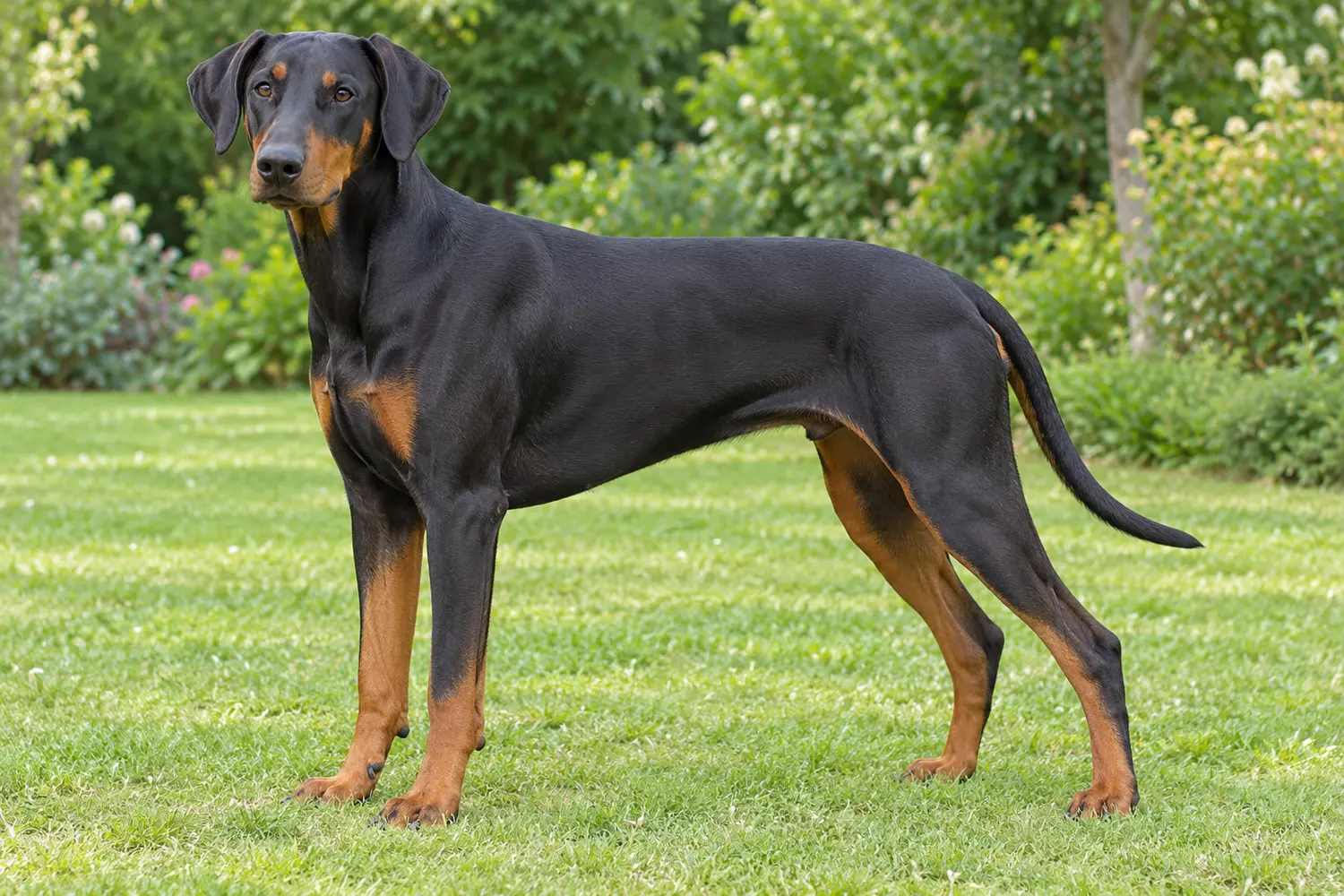
Doberman: athletic lines and a wedge-shaped head
The Doberman Pinscher, called Dobermann in the FCI standard, has a strong, muscular body with a nearly square outline, especially in males. Its head forms a blunt wedge when viewed from above. Tight lips and clean body lines distinguish it from the more substantial mastiff-type silhouette.
Black-and-rust coloring is a familiar appearance, while the FCI standard also recognizes brown with rust markings. The markings help frame the face, but they do not reveal mood or intent. Natural ears fold close to the cheeks; the upright ears seen in many photographs reflect cropping rather than the natural ear shape.
Dogo Argentino: a white-coated athletic hunter
The FCI Dogo Argentino standard identifies an Argentine big-game hunting breed. Its muscular body and substantial head can look imposing, while the short white coat provides a clear visual contrast with many Cane Corsos and Dobermans.
The American Kennel Club describes its historical role as a pack hunter pursuing animals such as wild boar and puma. A limited dark patch near the eye is permitted in its description. White coloring is a useful clue, but it is not proof of breed identity: other breeds and mixed-breed dogs can have similar coats. See the AKC Dogo Argentino profile.
Why powerful looks do not predict personality
A 2022 study published in Science examined owner-reported behavior and canine genetics. As summarized by the UMass Chan research team, breed explained about 9% of behavioral variation in the analyzed data. That finding is a population-level result, not a score for these three breeds or a guarantee about any dog.
Genetics still matters, and some behavioral tendencies relate to ancestry. The practical lesson is narrower: breed labels and physical features cannot fully predict an individual’s responses. Training and social experience matter too, but neither guarantees that every dog will become equally sociable, tolerant or easy to manage.
Compare the dog as well as the breed
For visual identification, start with the combination of head shape, body outline, coat and natural ears rather than a single dramatic feature. A Cane Corso’s square muzzle, a Doberman’s wedge-shaped head and a Dogo Argentino’s white coat offer useful contrasts.
For understanding temperament, look beyond the portrait. Ask about the individual dog’s history and observe its behavior in context. The same serious-looking face can appear in photographs of very different animals. These breeds deserve descriptions grounded in their actual features, rather than rankings of how intimidating they look.
References
FCI: Cane Corso, Standard 343; FCI: Dobermann, Standard 143; FCI: Dogo Argentino, Standard 292; AKC: Dogo Argentino; Morrill et al., 2022, Science; UMass Chan research summary. Sources checked 22 October 2026.