
Cougar vs Kangal is a comparison between a wild cat and a domestic livestock guardian, not two equivalent predators. The cougar, Puma concolor, relies on concealment and short ambushes. The Kangal Shepherd Dog was developed to guard sheep. Their bodies and behavior make sense in those roles; neither a viral bite-pressure figure nor a dramatic photograph establishes a fight winner.
Cougar vs Kangal at a glance
| Feature | Cougar | Kangal |
|---|---|---|
| Identity | Wild cat species, also called puma or mountain lion | Domestic dog breed originating in Turkey |
| Main role | Hunting wild prey | Guarding livestock |
| Visible features | Tawny adult coat, rounded ears, long dark-tipped tail | Dark mask, pendant ears, robust rectangular body |
| Behavioral emphasis | Stalking and short-range ambush | Vigilance around a flock |
| Meaningful comparison | Predator ecology | Guardian function and management |
How a cougar hunts
The National Park Service’s cougar account describes a generally solitary animal that moves through cover before launching a short attack. Powerful hind legs support jumping, while the neck and jaws help grasp prey. This is a strategy built around approaching without being noticed, rather than maintaining a prolonged chase.
An adult cougar’s plain tan-brown coat differs from the spotted coat of a young cub. Its pale throat and underside, dark-backed ears and long tail help distinguish it from other large cats. “Cougar,” “puma” and “mountain lion” refer to the same species, so changing the name does not change the animal being compared.
What the Kangal was developed to do
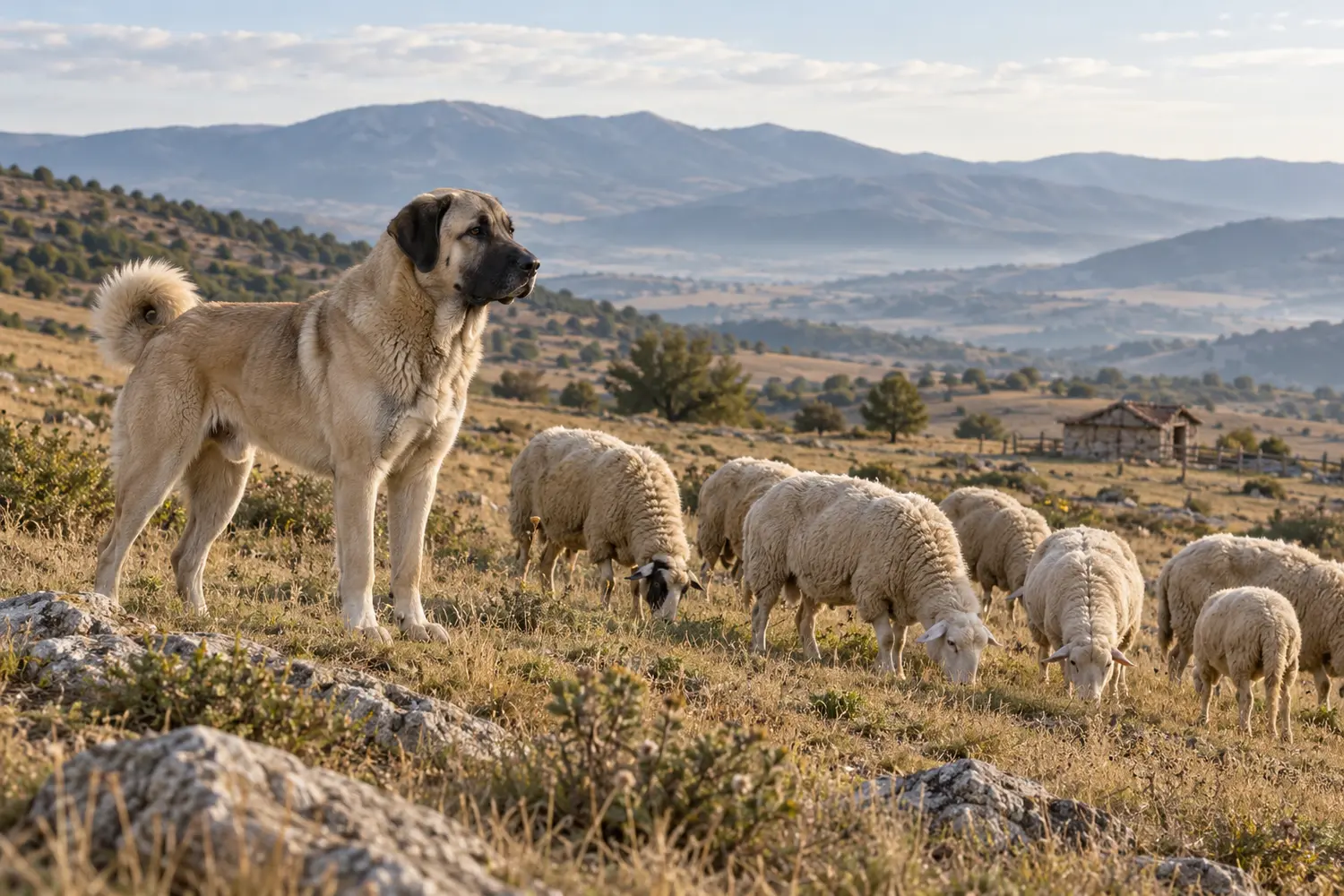
The FCI Kangal Shepherd Dog standard identifies Turkey as the breed’s origin and sheep guarding as its purpose. It describes a large, robust dog with a dark mask, pendant ears and a rectangular body. The expected temperament is steady, independent and confident, without indiscriminate aggression.
The standard lists males at 72–78 cm and 48–60 kg, and females at 65–73 cm and 40–50 kg, with a stated height tolerance. These are breed-standard ranges, not measurements of every individual. They offer a more useful reference than selecting the heaviest dog from social media.
Why the 740 PSI claim is not a reliable ranking
The queued comparison assigns the Kangal a 740 PSI bite. A 2018 veterinary review by Kim and colleagues explains why canine bite measurements require caution: results vary with anatomy, tooth position, motivation and the measurement method. That review does not establish a standardized 740 PSI Kangal rating.
Force and pressure also describe different things. Pressure requires a contact area; a force estimate cannot simply become a PSI score without that information. A valid comparison would need transparent methods and comparable animals. Copying two numbers onto a graphic does not supply either.
The same problem affects the claim that a dog is built to “absorb punishment.” That phrase is not a measurement of bone density, resistance to injury or guardian effectiveness. A powerful dog can still be seriously injured.
Protection is about reducing opportunities for predation
USDA guidance on livestock protection dogs describes dogs living with sheep and patrolling grazing areas to deter potential predators. It places them within an integrated approach to reducing conflict. Their practical value is helping protect the flock, not proving superiority in an arranged confrontation.
That distinction changes the question. Instead of asking whether one Kangal can defeat a cougar, ask whether the animals, terrain and management system reduce the chances of an attack. A guardian’s presence is a tool, not a guarantee against losses.
What this comparison can tell us
A cougar’s ambush adaptations and a Kangal’s guardian behavior answer different biological and human needs. Breed standards describe a desired dog type; wildlife accounts describe a species in its ecosystem. Neither source supports a universal combat prediction.
The useful lesson is to compare function, evidence and context. Cougar stealth is real, and livestock guarding is a real working role. Exaggerated injury tolerance and unverified bite rankings add certainty that the evidence does not provide.