
Doberman Pinschers and Belgian Malinois are intelligent, athletic working dogs, but the viral shorthand “power versus speed” hides more than it explains. Both breeds can excel in demanding work, and neither comes with a guaranteed personality or performance level. Their structure, original purpose, training style and individual temperament matter far more than an unsourced bite-force number.
Doberman vs Belgian Malinois at a glance
| Trait | Doberman Pinscher | Belgian Malinois |
|---|---|---|
| Breed origin | Germany; developed as a protective working dog | Belgium; short-coated variety of the Belgian Shepherd |
| General build | Square, smooth-muscled and substantial | Square, moderate-boned and lighter on its feet |
| AKC height | Males 26–28 in; females 24–26 in | Males 24–26 in; females 22–24 in |
| Typical emphasis | Watchfulness, protection, companionship and versatile work | Herding heritage, intense engagement and versatile working tasks |
| Best match | Experienced homes able to provide structure, training and exercise | Experienced, highly active homes prepared for sustained mental and physical work |
These are breed-standard tendencies, not promises about every dog. Sex, breeding line, early socialization, health, training and environment all influence what an individual becomes.
Size and body structure
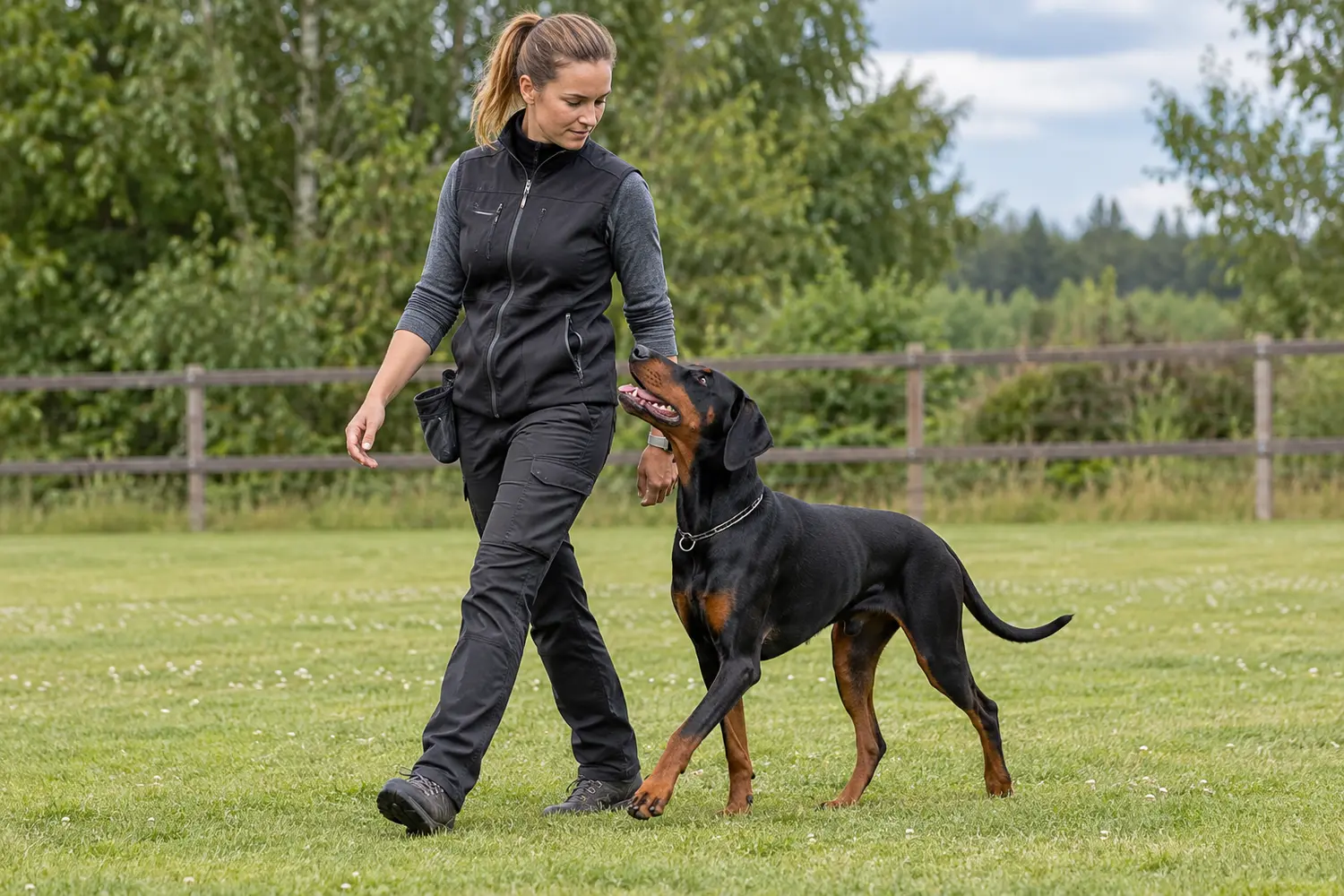
The Doberman is generally the more substantial dog. The official Doberman Pinscher Club of America standard describes a medium-sized, square dog with a compact, muscular build and specifies 26–28 inches at the withers for males and 24–26 inches for females. The standard emphasizes endurance and speed, not bulk for its own sake.
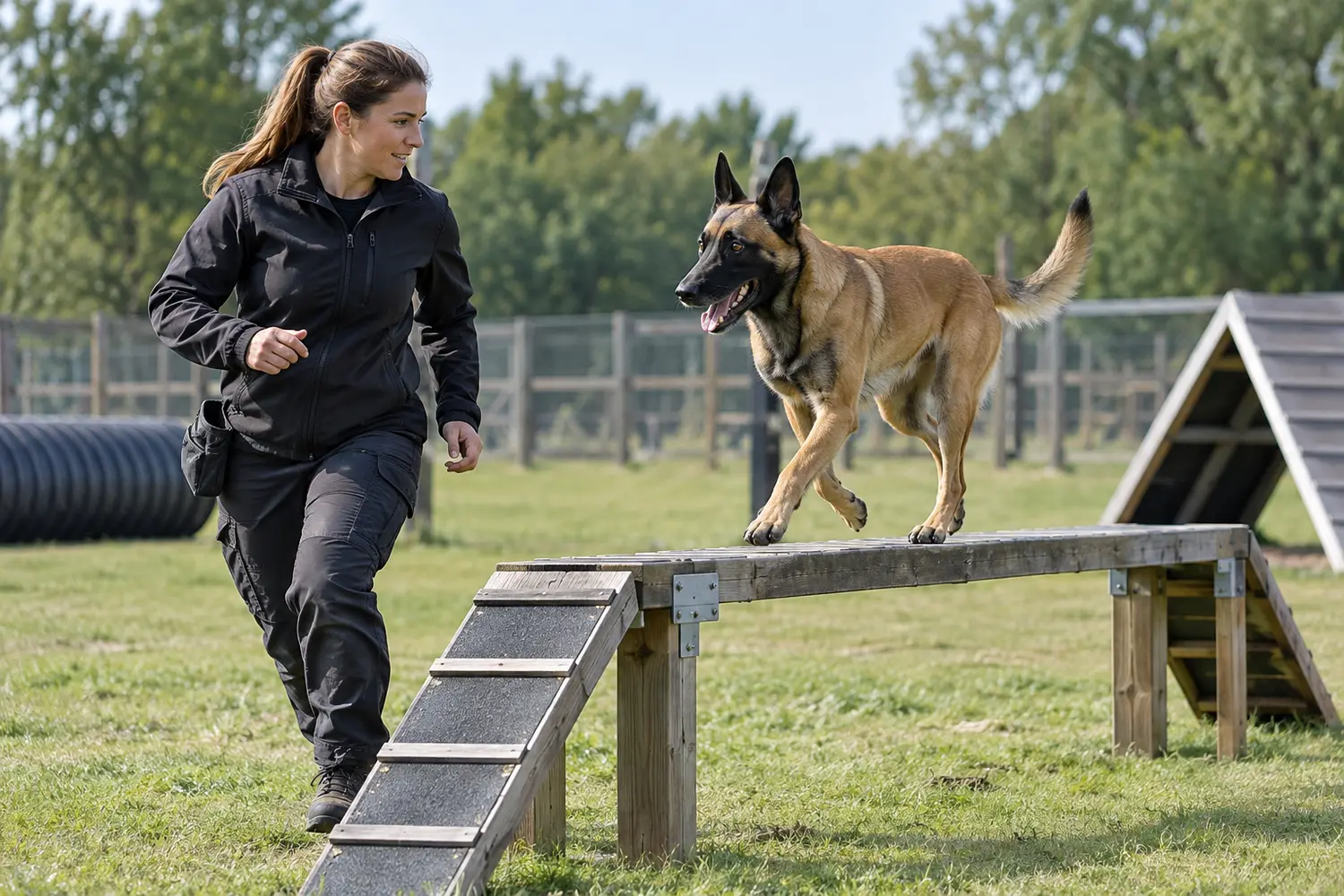
The American Belgian Malinois Club standard describes the Malinois as square, elegant and balanced, with moderate bone rather than a cumbersome frame. Males are 24–26 inches and females 22–24 inches at the withers. That leaner outline can contribute to quick acceleration and efficient movement, but it does not establish a universal speed ranking between the breeds.
Temperament and working style
A correct Doberman should be watchful, determined, alert and loyal. A correct Malinois should be confident, responsive to its handler and neither shy nor aggressive in new situations. Those descriptions come from standards for the ideal breed character; they do not mean every Doberman is naturally calmer or every Malinois is automatically suitable for police work.
Dobermans were deliberately developed for personal protection and later became versatile police, military, service, sport and companion dogs. Malinois emerged from Belgian herding stock and are now widely used in detection, patrol and dog sport. Modern working roles overlap, so job title alone is a poor way to choose between them.
Training and daily exercise
Both breeds learn quickly and need consistent, reward-based training. The practical difference is often intensity. Many Malinois have a high desire to chase, grip, search and repeat tasks, especially in working lines. They can become difficult when their days lack structured outlets. Exercise alone is not enough; problem-solving, scent work, obedience and controlled play are important.
Dobermans also require substantial exercise and mental engagement. Many are highly people-oriented and work closely with their families. Their larger frame does not make them low-energy, and their protective reputation is not a substitute for careful socialization. For either breed, harsh methods can create conflict or fear and should not replace clear, humane instruction.
Why viral bite-force rankings are unreliable
The source image assigned the Doberman 245 PSI and the Malinois 195 PSI. Those figures should not be treated as established breed averages. Bite force changes with motivation, tooth position, head geometry, the measuring device and the task used to elicit a bite. Force in newtons and pressure in pounds per square inch are also different quantities.
A peer-reviewed study of police dogs used an instrumented bite sleeve and reported measurements for particular trained German Shepherd Dogs and Belgian Malinois during a modified long attack. The authors focused on the reliability of that method and warned that breed technique and working conditions matter. It did not validate internet-wide PSI tables or provide a controlled Doberman-versus-Malinois ranking.
Which breed is faster or stronger?
There is no high-quality, standardized study showing that all Malinois are faster than all Dobermans or that all Dobermans are stronger. The Doberman’s greater average substance may help in some physical tasks. The Malinois’ moderate build and working-line selection can favor agility and repeated high-intensity activity. Individual conditioning, body size, surface, temperature, health and training can reverse any simple expectation.
Real working-dog selection evaluates the whole dog: nerve stability, environmental confidence, recovery from stress, trainability, scent ability, physical soundness and the relationship with the handler. A single metric cannot capture those qualities.
Which breed is right for you?
Choose neither breed for appearance, intimidation or a hypothetical fight. A prospective owner should meet mature dogs from the breeder’s lines, review health testing, discuss temperament honestly and understand the daily workload. The Malinois is often the more demanding choice for a typical household, while a Doberman still requires experienced handling, close companionship and purposeful activity.
For most people seeking a family pet, a less intense breed—or a carefully assessed adult rescue—may be a better fit. For a working prospect, selection should be made with a qualified trainer and a breeder or program that evaluates health and temperament.
Frequently asked questions
Is a Belgian Malinois always faster than a Doberman?
No. Breed structure suggests tendencies, but there is no universal, standardized top-speed comparison. Individual size, conditioning and the testing method matter.
Does a Doberman have a stronger bite?
There is no credible breed-wide Doberman-versus-Malinois PSI ranking. Online values usually lack comparable methods and sample information.
Can both breeds work in protection roles?
Yes, suitably bred, healthy and trained individuals can perform protection work. That does not mean every dog of either breed has the temperament or physical suitability for it.