
A dog’s gums can provide useful clues about circulation and oxygenation, but color alone cannot diagnose a disease. Healthy gums are often pink and moist, although normal pigmentation varies. Pale, white, blue, gray or yellow gums—and red gums accompanied by illness—warrant prompt veterinary attention, especially when paired with breathing difficulty, weakness or collapse.
Key takeaways
- Learn your dog’s normal gum color when the animal is healthy; some dogs naturally have dark pigment.
- Pale, white, blue or gray gums can accompany emergencies and should not be watched at home if the dog is unwell.
- Yellow gums suggest jaundice, which has several possible causes and requires veterinary testing.
- Capillary refill time is a screening observation, not a home diagnosis of heart disease or shock.
- Breathing difficulty, collapse, severe weakness or altered responsiveness requires emergency care regardless of gum color.
What color should a dog’s gums be?
Veterinary triage references describe normal mucous membranes as pink, with a capillary refill time of roughly one to two seconds. Healthy gums should generally be moist rather than tacky. However, there is no single shade of “bubblegum pink” that fits every dog, and naturally black or mottled pigment can make assessment difficult.
The most useful comparison is your own dog’s baseline in good health. Check an unpigmented area above the teeth under neutral light. Do not rely on a photograph, phone screen or a single colored patch to decide whether a dog is safe.
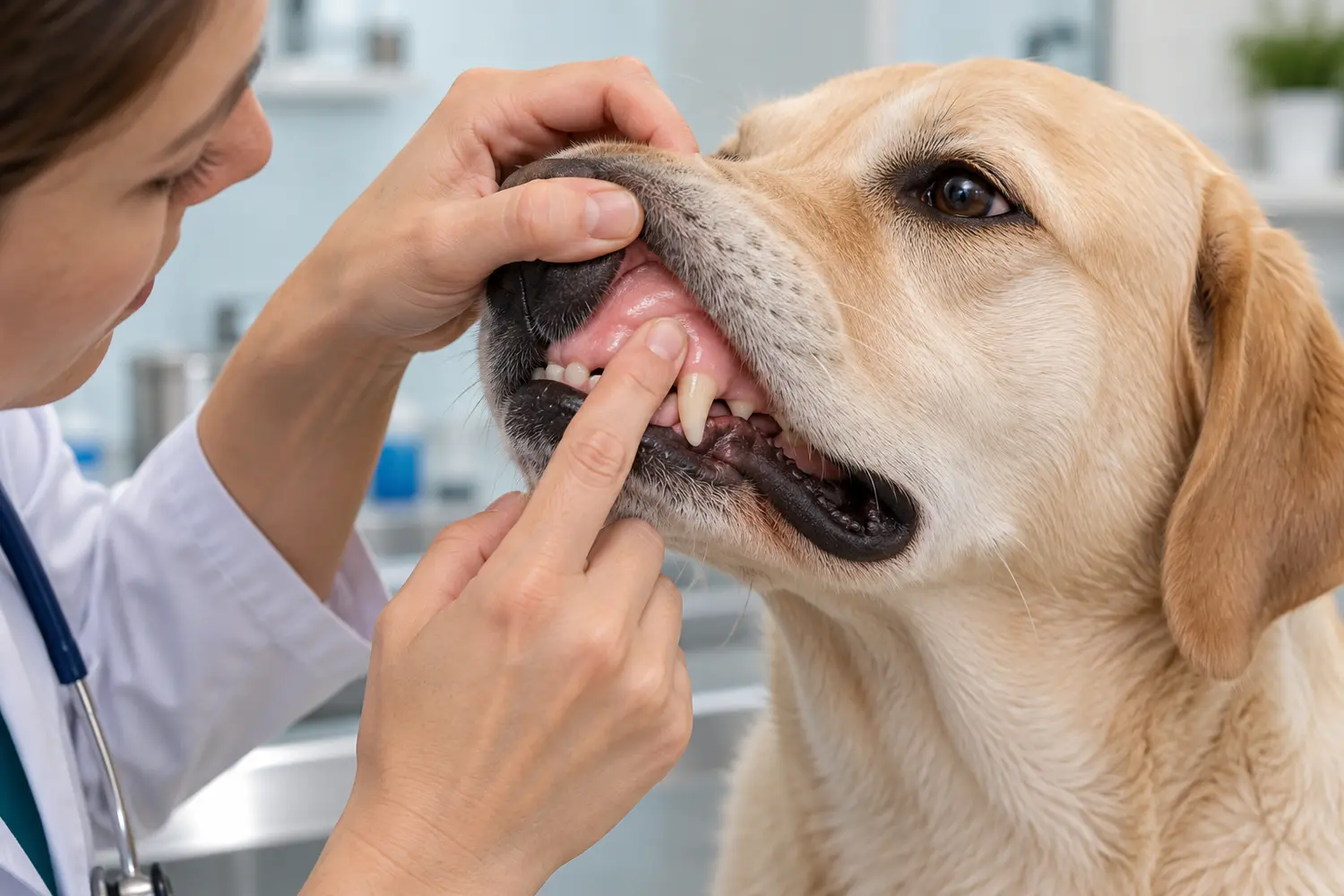
Dog gum colors and what they may signal
| Appearance | Possible significance | What to do |
|---|---|---|
| Pink and moist | Often normal circulation and oxygenation | Compare with the dog’s usual color and overall behavior |
| Pale or white | May occur with anemia, blood loss or poor circulation | Seek urgent veterinary advice; emergency care if weak, collapsed or breathing abnormally |
| Blue, purple or gray | May indicate inadequate oxygenation | Go to an emergency veterinary hospital immediately |
| Yellow | Jaundice from red-cell destruction, liver dysfunction or impaired bile flow | Arrange prompt veterinary examination and testing |
| Very red or dark pink | Can occur with heat illness, inflammation or circulatory changes; local dental disease can also redden tissue | Assess the whole dog; emergency care for overheating, collapse or neurologic signs |
Pale or white gums
Pale gums are commonly associated with anemia and may als