
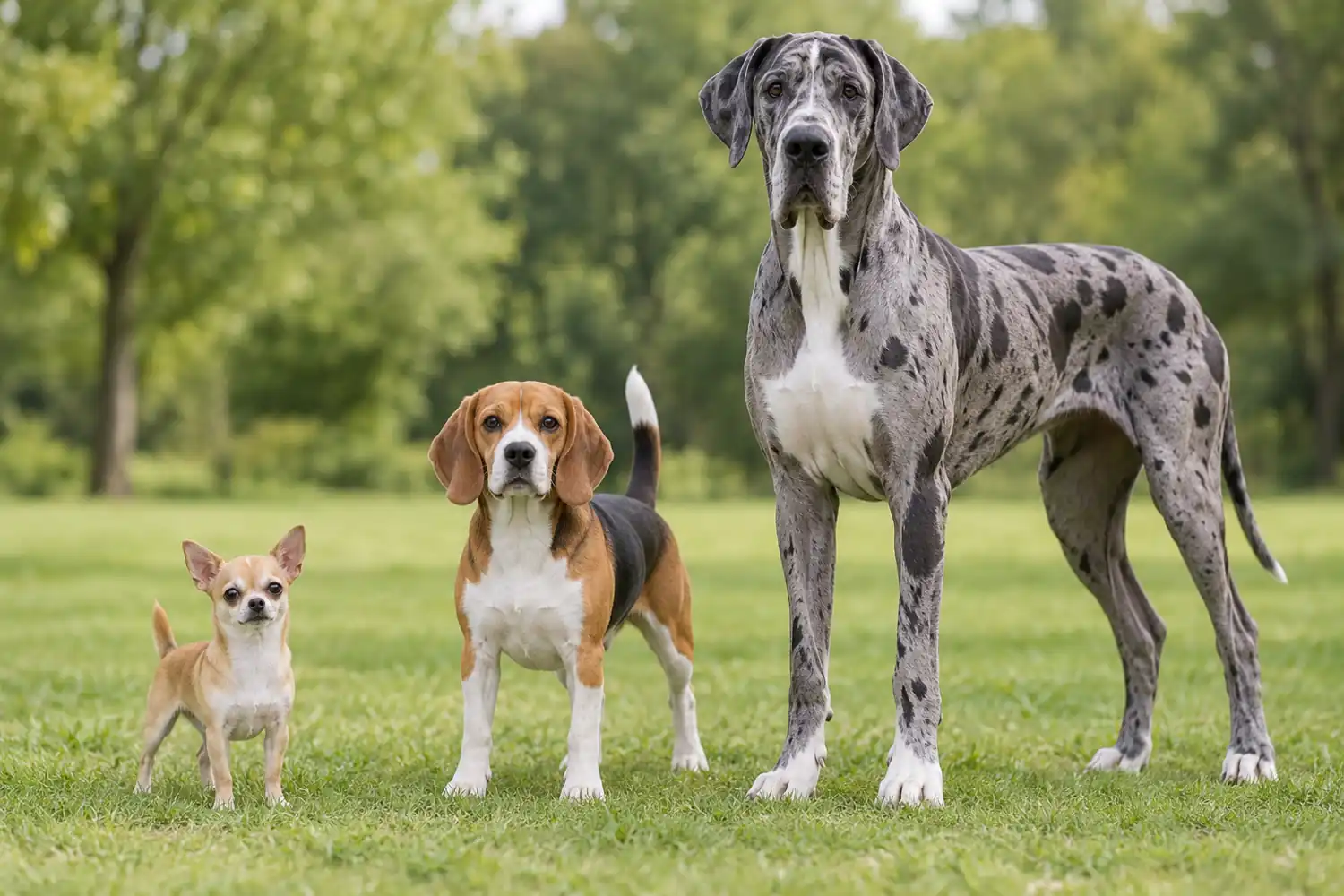
Smaller dogs generally live longer than larger dogs, but size is only part of the story. In a U.S. veterinary study, median survival declined from about 16.2 years in small dogs to 13.4 years in giant dogs when animals were grouped by measured weight. Breed genetics, body shape, disease risk, preventive care and individual health can all shift the outcome.
Key takeaways
- Small dogs tend to outlive large and giant dogs on average, although individuals vary widely.
- Large dogs appear to age faster after reaching adulthood; rapid growth and size-related disease risks may contribute.
- There is no universal lifespan range that fits every Chihuahua, Bulldog, Great Dane or mixed-breed dog.
- Body size works together with breed ancestry, genetic diversity, head shape, sex, environment and veterinary care.
- A long lifespan is not automatically the same as a long healthspan.
How long do dogs live by size?
Dog lifespan figures depend heavily on the population and method studied. A 2020 analysis of 20,970 dogs seen at three U.S. primary-care veterinary clinics found median survival times of 16.2 years for small dogs, 15.9 for medium dogs, 14.6 for large dogs and 13.4 for giant dogs when size was based on measured adult weight.
When the same study grouped purebred dogs by average breed weight, the corresponding estimates were 16.4, 15.7, 14.3 and 12.0 years. These are population-level medians, not promises for an individual pet. Different datasets can produce lower or higher estimates because veterinary access, geography, breed mix and the way deaths are recorded all matter.
| Size group | Median survival in the U.S. clinic study | How to interpret it |
|---|---|---|
| Small | 16.2 years | Group estimate, not a fixed breed lifespan |
| Medium | 15.9 years | Substantial overlap with small and large dogs |
| Large | 14.6 years | Breed and health risks still vary |
| Giant | 13.4 years | Some individuals live shorter or longer |
Why do small dogs usually live longer?
Across mammal species, larger animals often outlive smaller ones. Within a single species, however, the pattern can reverse. Domestic dogs provide an unusually dramatic example because selective breeding has produced adult body sizes ranging from a few kilograms to well over 60 kilograms.
A major comparative study concluded that large dogs die younger mainly because they age at a faster rate, not simply because they begin aging earlier. Researchers have proposed several connected explanations, including the biological cost of sustained rapid growth, differences in cell metabolism and oxidative damage, and higher risks for particular cancers and orthopedic or cardiovascular disorders in some large breeds.
None of those mechanisms should be treated as a single settled cause. Laboratory work has found greater glycolytic activity and DNA damage in cells from large-breed puppies, but cell-culture results do not explain every death in real dogs. The safest conclusion is that body size changes the pace and pattern of aging through several biological pathways.
Does every small breed outlive every giant breed?
No. Size creates a broad statistical trend, not a ranking that applies to every dog. A healthy Great Dane can outlive a Chihuahua with serious congenital disease. Breeds of similar size may also have different longevity because they carry different inherited risks and have different body shapes.
A 2024 UK study covering more than 584,000 dogs found that longevity varied with body size, breed lineage, sex and skull shape. Large breeds had a higher risk of shorter lifespan than small breeds, while flat-faced breeds as a group faced additional disadvantages. The authors also found a strong relationship between breed evolutionary history and median lifespan.
That is why broad claims such as “all small dogs live 18 years” or “all giant dogs die by age 10” are misleading. Chihuahuas, Toy Poodles and Jack Russell Terriers often reach advanced ages, but none has a guaranteed lifespan. Bulldogs are sometimes grouped as medium dogs, yet brachycephalic anatomy and breed-specific disease can affect their outlook.
Growth, disease risk and the speed of aging
Large-breed puppies must build far more bone and soft tissue before adulthood. They do not necessarily grow faster at every moment than small puppies, but their growth period is longer and the total amount of growth is much greater. Researchers suspect that the signaling pathways supporting this growth may carry later-life trade-offs.
Disease patterns also differ by size. Dog Aging Project data show that body weight is associated with the lifetime prevalence of several disease categories. Orthopedic conditions, for example, became more common with increasing size and rose more sharply with age in larger dogs. Yet some conditions are more common in small dogs, so “small” does not mean universally healthier.
Lifespan is not the same as healthspan
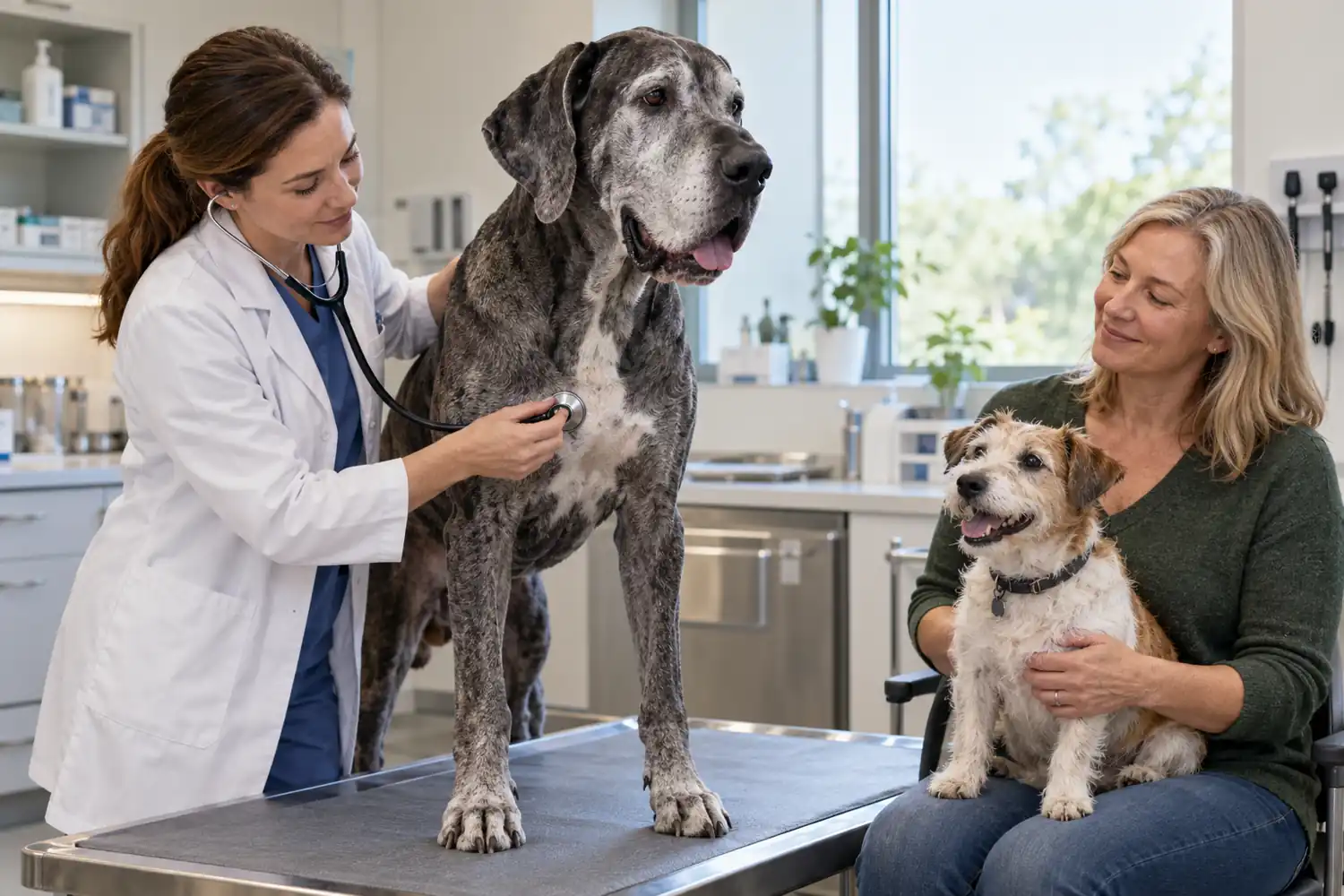
Lifespan measures how long a dog lives. Healthspan describes how long that dog remains mobile, comfortable and able to enjoy normal behavior. A breed with a high median lifespan may still face chronic dental, heart, eye or joint problems. Conversely, a large dog with a shorter expected lifespan can spend most of those years in good health.
Owners cannot change an adult dog’s genetic size, but they can influence several modifiable risks. Keeping a dog at an appropriate body condition, providing suitable exercise, maintaining dental care, attending veterinary checks and responding early to changes in appetite, breathing, movement or behavior can support healthspan. The right plan differs by age, breed and medical history, so individual advice should come from a veterinarian.
What else affects a dog’s longevity?
- Inherited disease: Some breeds carry elevated risks for specific cancers, heart conditions or neurologic disorders.
- Genetic diversity: Studies suggest that lower inbreeding and larger effective breed populations can be associated with modest longevity benefits.
- Body shape: Extreme conformation, including severe brachycephaly, can add health burdens independent of weight.
- Body condition: Excess weight can worsen metabolic and orthopedic stress.
- Environment and care: Nutrition, preventive medicine, accidents, infectious exposure and access to treatment all influence survival.
Frequently asked questions
Do smaller dogs always live longer?
No. Small dogs live longer on average across large populations, but health, breed genetics, accidents and veterinary care can outweigh the size trend for an individual dog.
Why do Great Danes have shorter lifespans?
Great Danes are giant dogs, and giant size is associated with faster aging and several size- or breed-linked diseases. Their expected lifespan should still be discussed as a range, not a fixed expiration age.
Can diet make a dog live longer?
No food guarantees longevity. A nutritionally complete diet in appropriate portions can help maintain healthy body condition, but feeding decisions should account for the dog’s age, size, activity and medical needs.
What is the average lifespan of a dog?
There is no single universal figure. Large studies report different averages and medians because their populations and methods differ. Breed- and size-specific estimates are more useful than one number for every dog.
Sources
- McMillan et al., longevity of companion dog breeds, Scientific Reports (2024)
- Urfer et al., lifespan in U.S. primary-care veterinary clinics (2020)
- Kraus et al., why large dogs die young (2013)
- Jimenez et al., cellular metabolism and oxidative stress (2018)
- Dog Aging Project, dog size and disease history (2024)