
Dog sleeping positions can reflect immediate comfort, temperature, available space and physical condition, but they do not provide a reliable one-to-one reading of emotion. A dog may curl up to conserve warmth, stretch out to cool down or change posture simply because the surface feels better. Context and changes over time matter more than a viral posture chart.
Key takeaways
- Side, curled, belly-down and back-sleeping postures can all be normal.
- No single posture proves complete trust, anxiety or a particular sleep stage.
- Dogs cycle through drowsiness, NREM and REM sleep and may change position during the night.
- Temperature, bedding, room familiarity, age, body shape and pain can influence posture.
- A sudden persistent change accompanied by stiffness, breathing problems or restlessness deserves veterinary attention.
What do dog sleeping positions really mean?
Sleeping posture is best understood as a response to several conditions at once. Dogs choose a surface and body position that help them rest while managing warmth, pressure on joints, breathing and readiness to move. Their choice may also reflect whether the location is familiar and how active they were before sleeping.
Researchers can identify canine sleep stages with electroencephalography, eye-movement recordings and muscle activity. Posture alone is much less precise. A review of dog sleep research lists lying with the head on the forepaws, on the side or on the back among observed sleep postures, but it does not turn those positions into fixed personality labels.
Common dog sleeping positions
Sleeping on the side
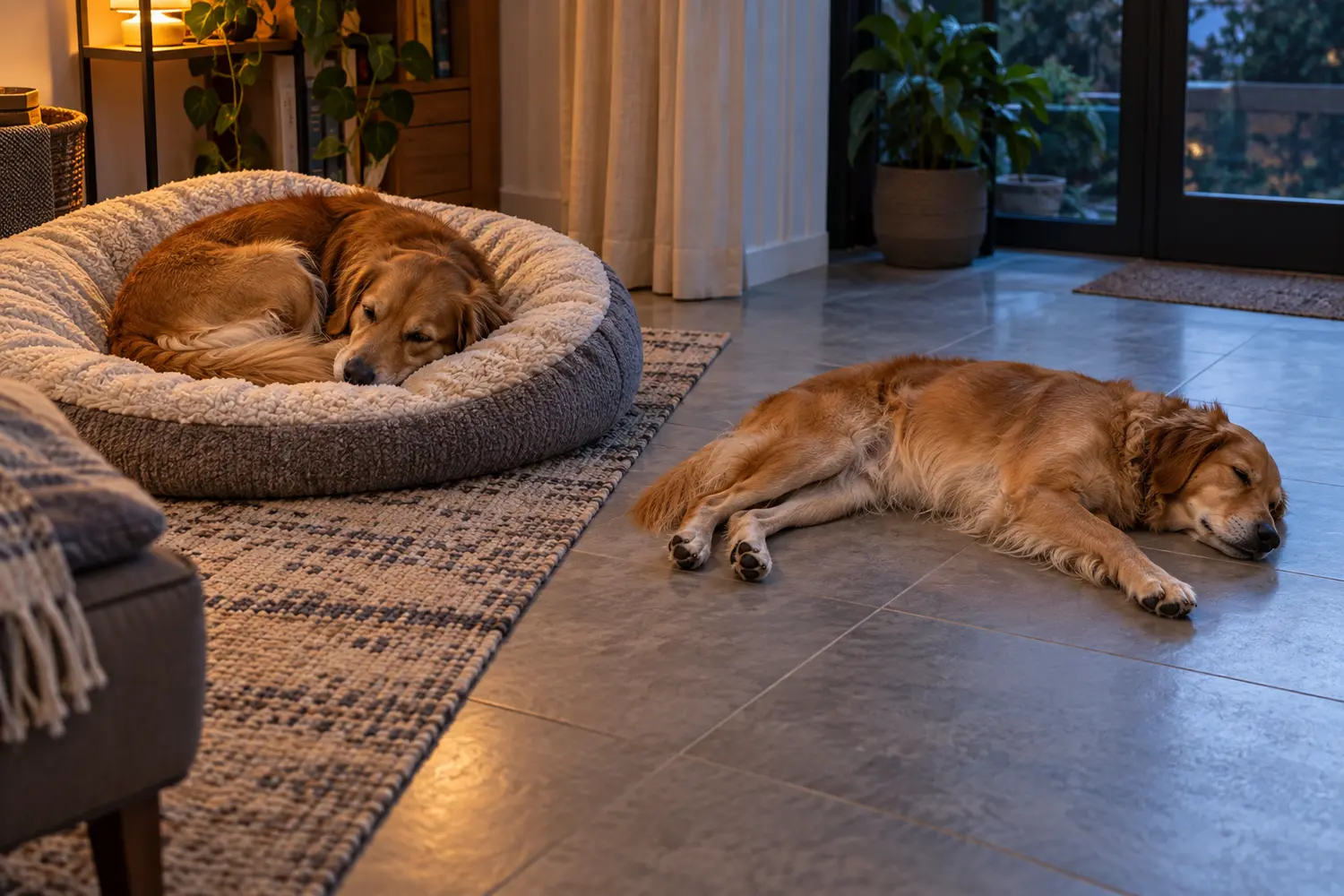
In lateral recumbency, the dog lies with one side of the body against the surface and the legs relaxed or extended. This position gives the rib cage and limbs room to move and is common during sustained rest. It may indicate that the dog is physically comfortable in that moment, but it does not prove a specific emotional state or guarantee deep REM sleep.
Curled into a donut
Curling brings the limbs close to the body and reduces exposed surface area. Across mammals, compact postures can help limit heat loss, so dogs may curl more in cool conditions or on a bed that supports that shape. Dogs also curl when the space is small or simply because it is comfortable. The posture alone does not show that a dog feels insecure.
Belly-down or “lion” position
A dog resting on the sternum with the head on or near the front paws can lift its head or stand without first rolling over. This may occur during light rest, but dogs can remain in a chosen prone posture as sleep deepens. Calling every chest-down position a “transitional nap” goes beyond the evidence.
The “Superman” sprawl
Some dogs lie belly-down with their front legs reaching forward and hind legs extended behind. Puppies and flexible dogs often use this sprawl, especially on a cool surface. Body proportions and joint flexibility affect whether it is comfortable, so many adult dogs rarely adopt it. It is not a recognized test of energy level or readiness to spring into action.
Sleeping on the back
A dog on its back exposes less-furred areas of the abdomen and may dissipate heat more readily. A soft bed, loose joints and a familiar room can make the posture comfortable. Because many dogs avoid vulnerable positions when alert to danger, back-sleeping can be consistent with relaxation—but “total trust” is an interpretation, not a measurement.
Cuddling or sleeping back-to-back
Contact with a person or another dog may provide warmth, stability and social comfort. Yet some affectionate dogs prefer their own bed, while others lean against a companion because that spot is warm or supportive. Calling every contact posture “mutual protection” risks turning flexible social behavior into a fixed story.
Can posture tell you whether a dog is in REM sleep?
Not reliably. Dogs have polyphasic sleep, meaning sleep and wakefulness occur in multiple periods rather than one uninterrupted block. Studies using non-invasive polysomnography show that dogs experience drowsiness, NREM and REM sleep. They generally spend more time in REM at night and after an active day, and a familiar sleeping location can shorten sleep latency and increase total sleep and REM compared with a laboratory setting.
During REM sleep, owners may notice eye movements, small twitches, irregular breathing or brief vocalizations. These signs are not always present, and movement alone cannot identify the sleep stage. Vigorous, repeated episodes that risk injury or are difficult to interrupt should be recorded on video and discussed with a veterinarian.
What influences a dog’s sleeping posture?
- Temperature: Curling may conserve warmth, while extending the body on a cool surface may help heat loss.
- Surface and space: A supportive bed, sofa edge, floor or narrow crate allows different postures.
- Familiarity: Dogs can sleep differently in a familiar home than in a laboratory or shelter.
- Age and anatomy: Puppies, seniors, long-backed dogs and brachycephalic breeds may favor different positions.
- Activity and routine: Previous exercise and time of day influence canine sleep structure.
- Pain or illness: Joint, spinal, abdominal or breathing discomfort can make formerly easy positions difficult.
When should a sleeping-position change concern you?
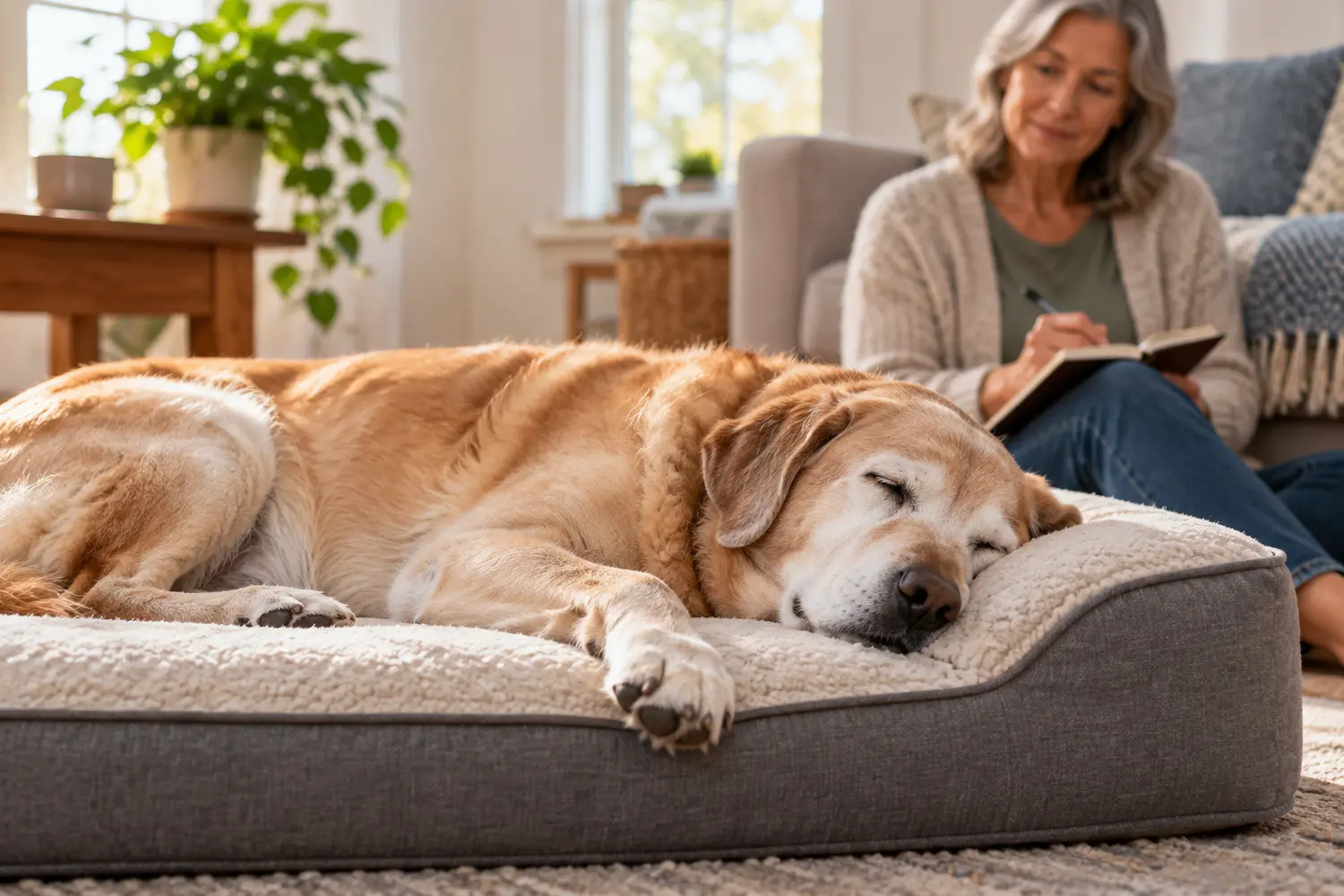
A single unusual nap is rarely meaningful. Pay attention when a new posture persists or appears with pacing, repeated repositioning, reluctance to lie down, crying, stiffness, limping, a hunched back, abdominal swelling, coughing or labored breathing. A dog that cannot settle may be uncomfortable even if no obvious injury is visible.
Record when the change began, which positions the dog avoids, activity level, appetite, breathing and any medication changes. A short video can help a veterinarian assess the pattern. Emergency care is appropriate for breathing difficulty, collapse, a distended abdomen, severe pain or inability to stand.
How to support better sleep
- Offer a quiet resting area where the dog will not be repeatedly disturbed.
- Provide a bed large enough for both curled and stretched positions.
- Give access to warmer and cooler surfaces when safe.
- Use non-slip flooring and supportive bedding for older or arthritic dogs.
- Maintain an age-appropriate routine for exercise, toileting and sleep.
- Let sleeping dogs wake naturally, especially around children.
Frequently asked questions
Does sleeping on the back mean my dog trusts me?
It can be consistent with feeling relaxed in the current environment, but it does not prove “complete trust.” Temperature, bedding, anatomy and habit can produce the same posture.
Why does my dog sleep curled up?
Curling can conserve warmth and fit a small or supportive resting space. It can also be a simple preference. Interpret it alongside room temperature and the dog’s normal behavior.
Is twitching during sleep normal?
Brief twitches and small movements can occur during normal sleep. Seek veterinary advice for violent, prolonged or increasingly frequent episodes, especially with loss of bladder control, difficulty waking or abnormal behavior afterward.