
A Spanish Lidia fighting bull and an African Cape buffalo can look like closely matched heavyweights, but the viral “arena athlete versus savanna tank” framing hides the more useful story. These bovines belong to different evolutionary and human histories. One is a domestic cattle breed shaped by selective breeding; the other is a wild African buffalo adapted to living in herds across demanding landscapes.
This comparison examines their verified size, horn structure, behavior and ecology. It does not predict the outcome of a staged fight, because there is no controlled scientific evidence for such a matchup and animal behavior cannot be reduced to a guaranteed winner.
Fighting bull vs Cape buffalo at a glance
| Feature | Spanish Lidia bull | Cape buffalo |
|---|---|---|
| Status | Domestic cattle breed | Wild African bovine |
| Scientific identity | Bos taurus, Lidia breed | Syncerus caffer caffer |
| Typical cited male weight | Spanish official breed profile lists 480 kg | Large adult males can exceed 835 kg |
| Horn form | Highly variable; short hooked horns are common | Broad horns with a heavy central boss in mature males |
| Primary setting | Managed Iberian grazing systems | African savannas, woodlands and grasslands |
What is a Spanish fighting bull?
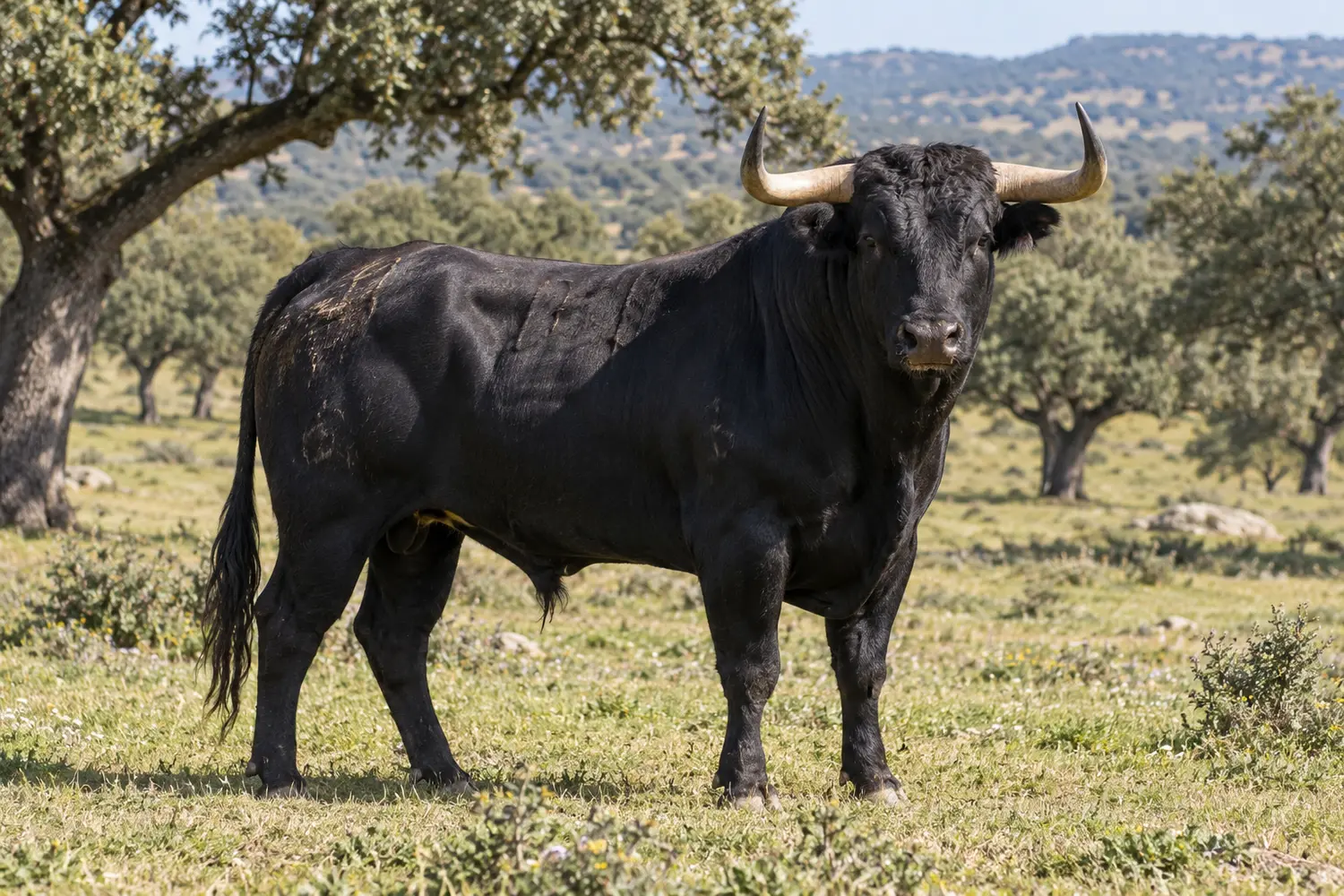
The fighting bull is not a wild species. It is the Lidia breed of domestic cattle developed in Spain from regional cattle populations and selected for bullfighting over several centuries. Spain’s Ministry of Agriculture classifies Lidia as an autochthonous breed and notes substantial genetic and physical variation among herds and breeding lines.
The ministry’s current breed profile lists an average male weight of 480 kg, not the universal 500–700 kg range shown in many viral graphics. Individual animals can differ, especially because bullfighting regulations and herd practices vary, but a single dramatic range should not be treated as a biological standard.
Lidia cattle are often described as athletic, reactive and capable of sustained charging behavior. Those traits reflect selective breeding and management, not a simple “aggression gene.” Their horn length, curvature, body proportions and coat color vary considerably. The official description says short hooked horns predominate in males, while many other forms occur.
What makes the Cape buffalo different?
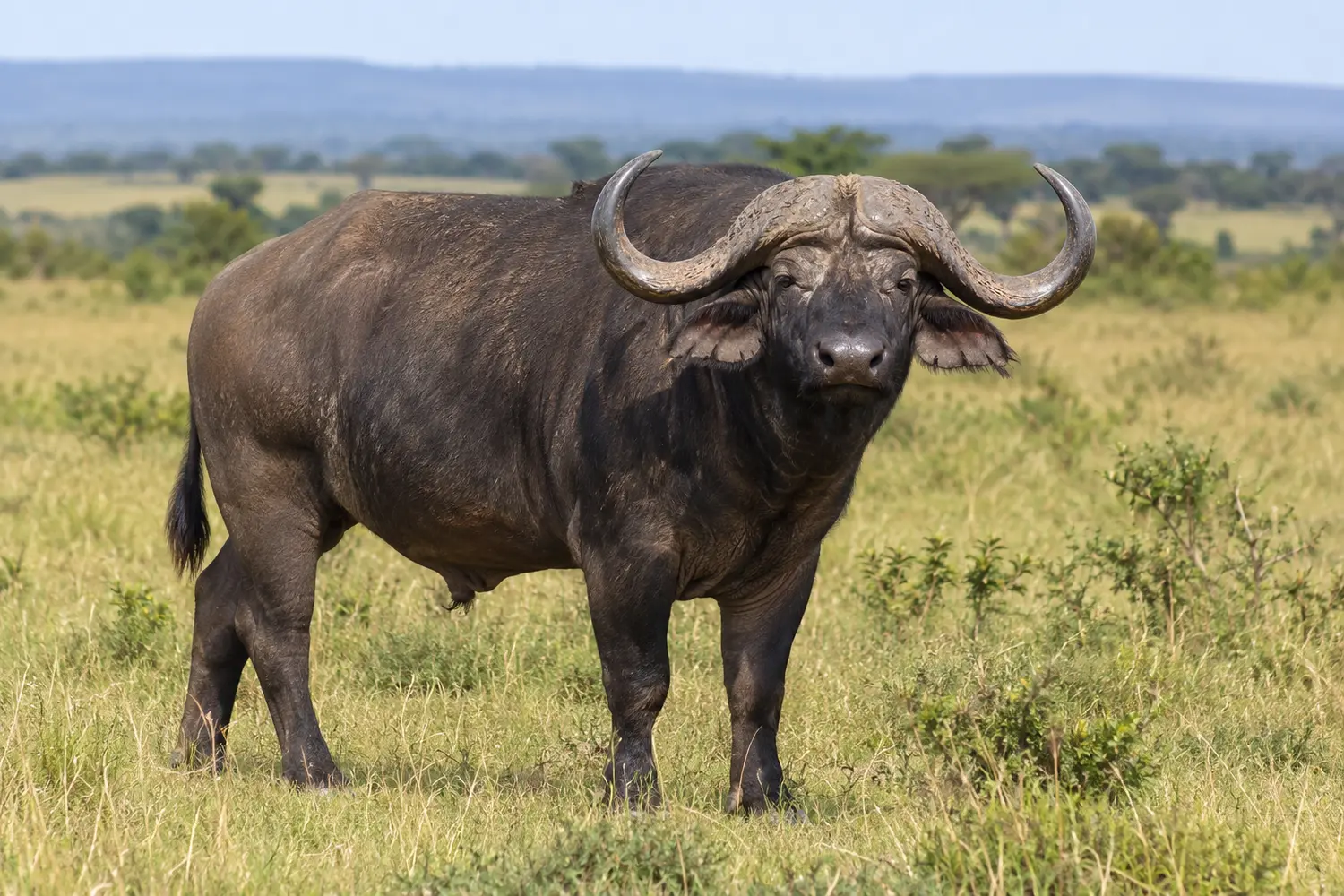
The Cape buffalo is the large southern savanna form of the African buffalo. Unlike domestic cattle, it evolved under natural selection in ecosystems containing drought, disease, competitors and large predators. African buffalo are social herd animals, and group defense can be important when calves or vulnerable individuals face predators.
Size varies by sex and subspecies. Animal Diversity Web reports that males of the largest form can exceed 835 kg, while females may reach about 500 kg. That supports the conclusion that a mature Cape buffalo can outweigh an average Lidia bull, but it does not mean every buffalo weighs 900 kg or that the difference is always 250 kg.
The famous “boss” is also frequently misdescribed. It is not a separate helmet placed over the skull. In mature males, the thickened bases of the horns meet across the forehead and are supported by a bony ridge above the eyes. Females have more slender horns and generally lack the same massive boss.
Horns, body design and movement
Both animals can use their horns defensively, but their equipment is not interchangeable. A Lidia bull’s horns usually project outward and forward or upward depending on the individual line. The Cape buffalo’s horns sweep laterally and curve upward, while the boss adds strength at the horn bases in mature males.
Calling one an “athlete” and the other a “tank” is memorable but oversimplified. Lidia cattle are agile domestic bovines selected for a specific behavioral performance. Cape buffalo are powerful wild grazers that walk long distances, negotiate uneven habitat and respond collectively to threats. Neither animal is engineered for combat in the mechanical sense implied by viral posts.
Would a Cape buffalo always win?
No scientifically responsible answer can guarantee a winner. Age, sex, health, body mass, motivation, footing and opportunity would all matter, and deliberately arranging such an encounter would be dangerous and unethical. Weight alone does not determine behavior, while labels such as “relentless,” “unstoppable” or “Black Death” are storytelling devices rather than measurable anatomical traits.
The evidence supports a narrower conclusion: large adult male Cape buffalo generally have a substantial mass advantage and a distinctive heavy horn boss, whereas Lidia bulls are domestic cattle selected for particular responses and show considerable variation between breeding lines. That is a biological comparison—not a fight forecast.
Frequently asked questions
Is a fighting bull a separate species?
No. The Spanish fighting bull is the Lidia breed of domestic cattle, Bos taurus.
Is the Cape buffalo’s boss made only of bone?
The visible boss is formed by the thickened horn bases meeting across the forehead, supported by a bony ridge. Calling it a solid “bone helmet” is misleading.
Are Cape buffalo naturally aggressive?
They can be dangerous when threatened, injured or defending herd members, but “aggressive” is not a fixed personality shared equally by every animal. Context and distance strongly influence behavior.