
Tiger, lion, jaguar and leopard hunting strategies reveal different ways to secure a meal. All four are cats in the genus Panthera, but their habitats, prey and social lives shape how they hunt. Comparing those differences is more useful than declaring one species the universal “king.”
The clearest contrast is between the tiger’s generally solitary ambushes, the lion’s cooperative opportunities, the jaguar’s distinctive killing bite and the leopard’s ability to protect food in trees. These are tendencies, not rigid rules: no animal uses just one tactic in every situation.
Tiger: a patient approach before the strike
A tiger (Panthera tigris) relies on concealment and a close approach. Its striped coat breaks up its outline among grass and forest vegetation. Strong forelimbs help seize prey, while the jaws deliver a neck bite. Deer and wild pigs are important prey, although diets differ across its Asian range.
Tigers generally live alone, apart from mothers with young and temporary associations. A solitary hunter must bring prey under control without a pride’s help. Size and strength matter, but so do cover and patience; an ambush still begins with getting close enough. San Diego Zoo Wildlife Alliance’s tiger profile describes these adaptations.
Lion: cooperation adds another option
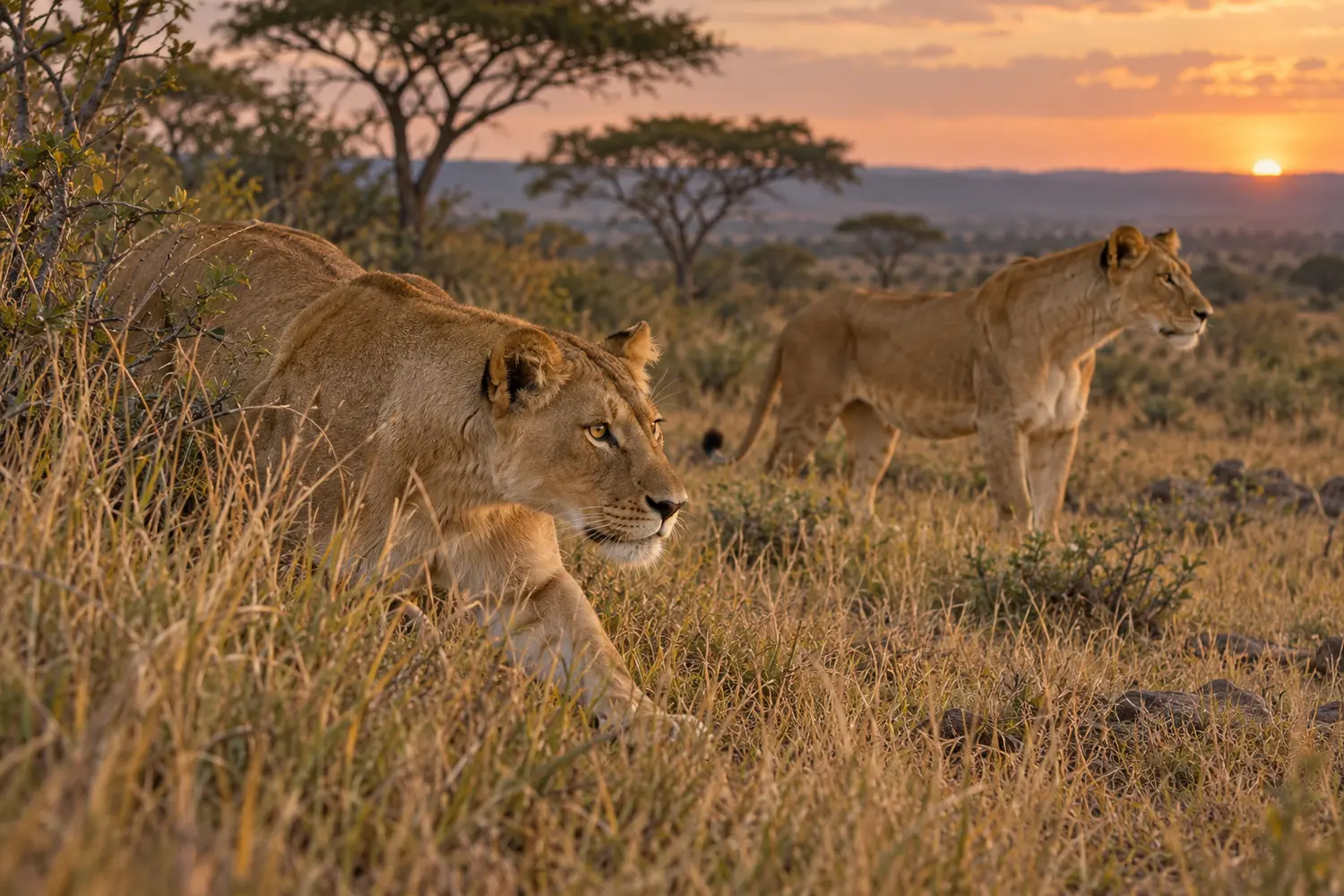
Lions (Panthera leo) live in prides, giving them opportunities to hunt together. Lionesses can approach from different directions, with some pursuing prey toward others positioned to intercept it. Hunting roles can change with the individuals involved and the prey being targeted.
This is flexible animal behavior, not a military chain of command. Teamwork helps explain the contrast with the other cats here, but a successful hunt still depends on conditions and the prey’s response. Lions also scavenge and take food from other predators. See the San Diego Zoo Wildlife Alliance lion profile.
Jaguar: a powerful bite and waterside opportunities
The jaguar (Panthera onca) is a stocky American cat that stalks and ambushes prey. Strong swimming ability opens opportunities around rivers and wetlands, although jaguars also occupy other habitats. Their diet includes mammals as well as reptiles.
Large jaw muscles and strong canine teeth allow jaguars to pierce a prey animal’s skull; turtles and caimans are among their documented prey. That does not mean every attack follows the same route or that every crocodilian is equally vulnerable. The San Diego Zoo Wildlife Alliance jaguar profile supports the behavior without requiring a headline bite-pressure figure. Bite-pressure comparisons require a stated measurement method and comparable testing conditions; an isolated “1,500 PSI” figure should not be treated as a universal species value.
Leopard: close-range hunting and food storage
The leopard (Panthera pardus) stalks low or waits in ambush, then attacks over a short distance. Its hunting approach varies with vegetation and local prey. It is generally solitary and can use trees both as vantage points and as refuges.
Climbing also helps protect a meal. In areas shared with lions and spotted hyenas, leopards often carry prey into trees for feeding or caching. This reduces exposure to competitors. The IUCN SSC Cat Specialist Group leopard account documents that behavior. It does not justify treating “twice its body weight” as a guaranteed lifting capacity for every leopard, carcass and tree.
Which hunting strategy is best?
There is no single winner across forests, wetlands and savannas. A useful comparison asks what each behavior accomplishes: concealment brings an ambush hunter close, cooperation adds opportunities, a killing bite helps subdue prey, and caching helps keep food.
Nor do these cats represent four completely separate strategies. Tigers, jaguars and leopards all use ambush, and lions also exploit cover. Their differences are matters of emphasis and ecological context. For related examples, explore our guide to wild cat hunting adaptations.
References
San Diego Zoo Wildlife Alliance: Tiger; Lion; Jaguar; IUCN SSC Cat Specialist Group: Leopard. Sources checked 22 October 2026.