
Knowing how to lift a dog safely matters when helping a small dog onto a table, moving a senior dog into a car or transporting a pet that cannot walk. The goal is simple: support the front and rear of the body, keep the dog close to you and avoid letting the hindquarters dangle.
But there is no single technique for every situation. A relaxed, healthy puppy can be scooped up differently from a 35-kilogram dog with painful hips—and a dog that may have a spinal injury needs emergency handling rather than an ordinary lift.
How to lift a small, healthy dog
- Let the dog know you are there. Approach calmly and avoid grabbing without warning. A treat or familiar cue can help if the dog has been trained to be lifted.
- Bend at your knees. Keep your feet stable and bring your body close instead of leaning forward from the waist.
- Support the chest. Slide one hand or forearm beneath the chest, usually just behind the front legs. Do not squeeze the throat or pull on the collar.
- Support the rear. Place the other hand or forearm under the pelvis and hindquarters.
- Lift smoothly. Raise the dog as one supported unit, keeping the body reasonably level.
- Hold the dog close. Keeping the dog near your torso improves stability and reduces the distance they could fall.
- Lower with the same support. Bend your knees and place all four paws securely before letting go.
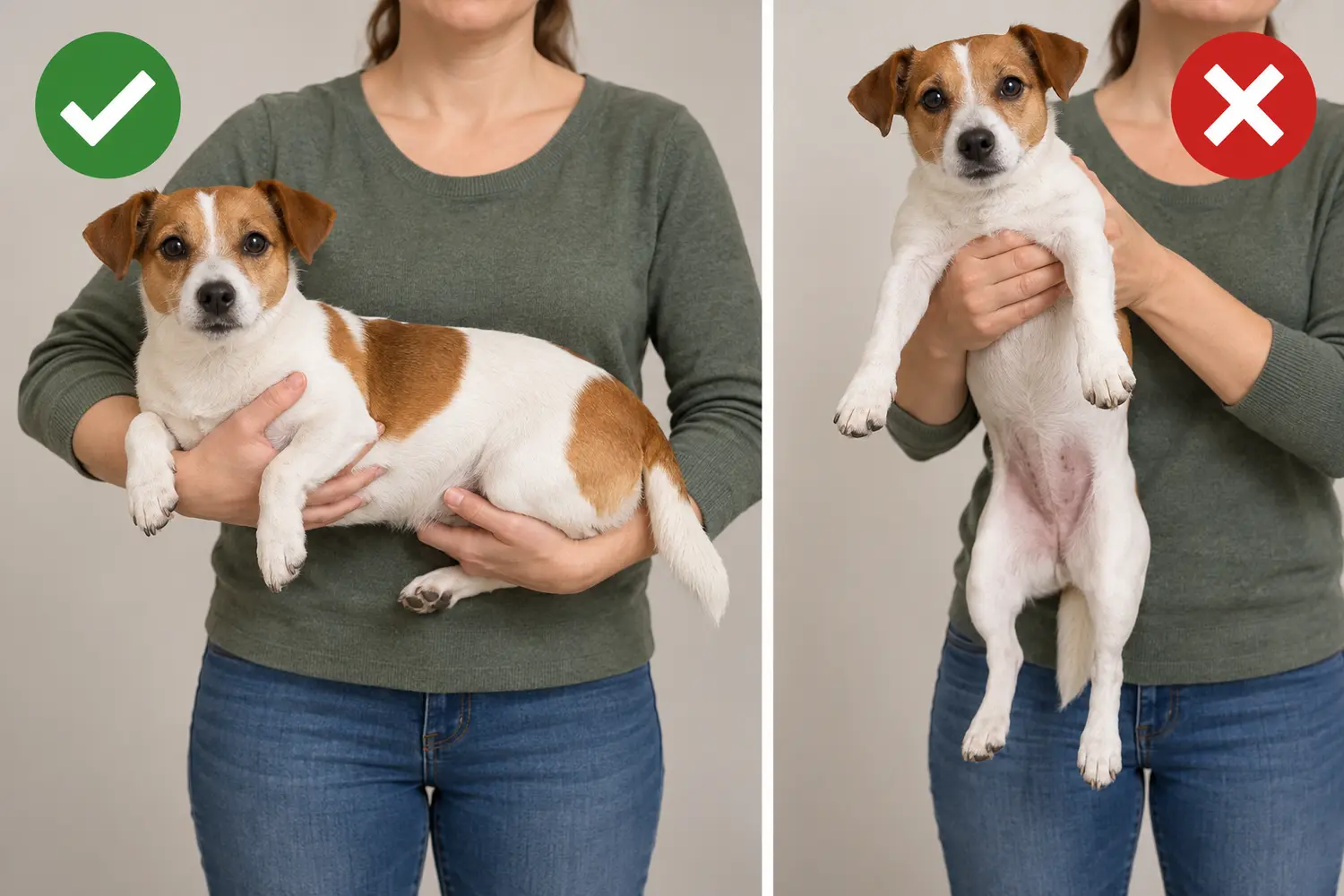
Why two-point support is useful
Supporting the chest and hindquarters distributes the dog’s weight across two areas. It also limits swinging and twisting while the dog is off the ground. The technique is recommended in veterinary and animal-handling guidance, but it should not be presented as a guarantee against injury.
The viral claim that any lift under the front legs will inevitably damage a dog’s spine, ribs or internal organs is too absolute. The immediate and better-supported concerns are discomfort, loss of support, struggling and a possible fall. Risk is higher when a dog is heavy, painful, frightened, recovering from surgery or already has orthopedic or spinal disease.
What not to lift a dog by
Avoid lifting or suspending a dog by the front legs, hind legs, tail, collar or scruff. Limbs and tails are not handles, and pulling them can be painful or cause injury. A collar can place pressure on the neck and airway. Scruffing is not an appropriate routine carrying method for dogs.
Do not place one hand under the abdomen and let both ends of a long-bodied dog hang. Dachshunds and other long-backed dogs benefit from coordinated support under both the chest and rear, especially if they have a history of back pain.
How to lift a medium or large dog
First decide whether lifting is necessary. A ramp, stable step or properly fitted support harness may be safer for getting a large or mobility-impaired dog into a vehicle. Veterinary rehabilitation guidance commonly recommends assistance devices when repeated lifting would strain the dog or handler.
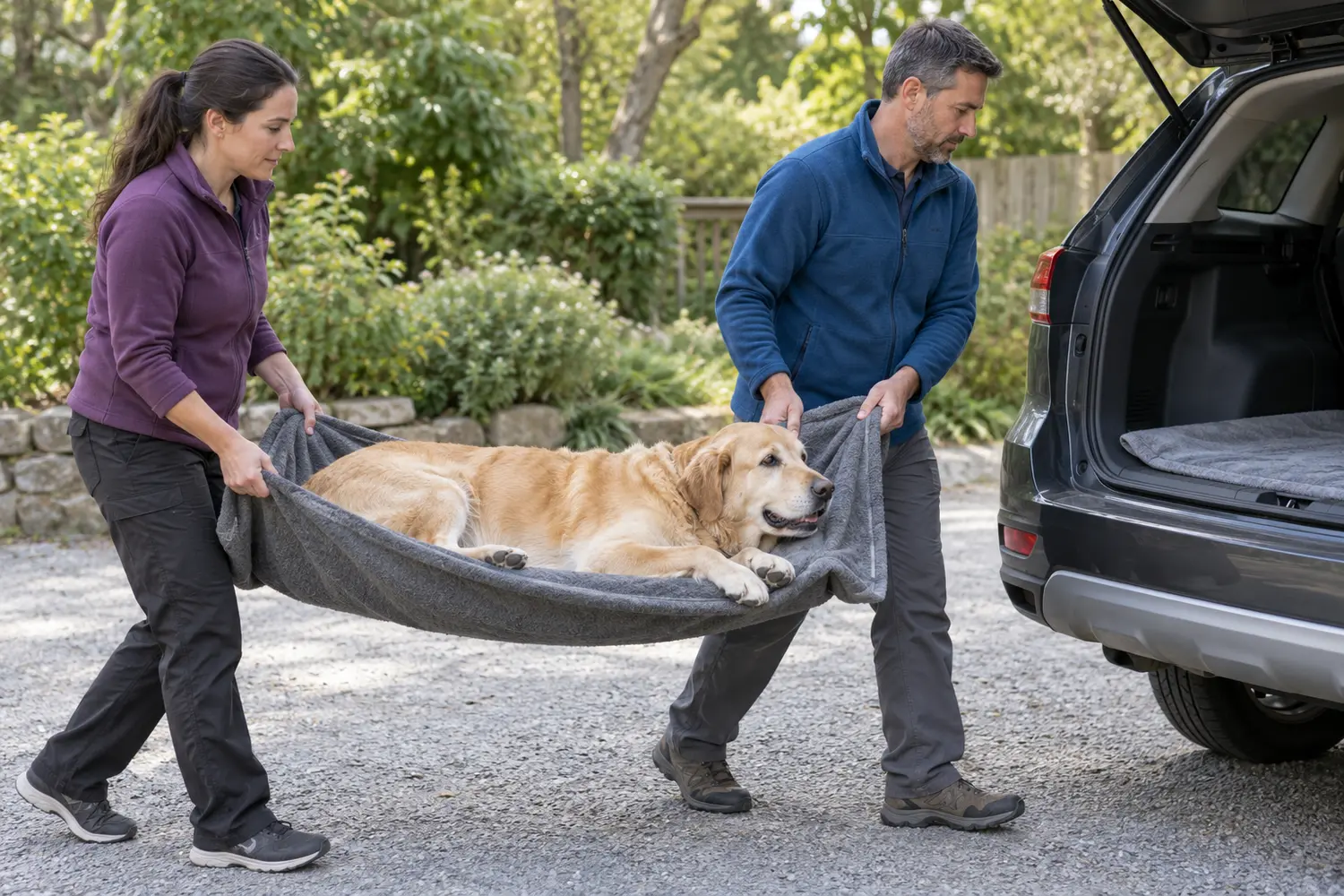
If a dog is too heavy for you to lift confidently, get another adult. One person can support the chest and front of the body while the other supports the pelvis and hindquarters. Agree on a count, lift together and keep the dog level. Poor coordination can twist the dog or injure a handler’s back.
Do not assume that a dog’s willingness to cooperate means the lift is safe. Large dogs can shift weight suddenly, and frightened or painful dogs may bite. Use a calm voice, avoid crowding the face and stop if the dog becomes distressed.
When the dog may be injured
An injured dog requires a different plan. Pain and fear can make even a familiar dog defensive. If possible, call a veterinarian or emergency hospital before moving the dog so staff can advise you and prepare for arrival.
If spinal injury, a fracture or major trauma is possible, minimize bending and twisting. Veterinary emergency sources recommend a rigid board, flattened cardboard or a strong blanket used as a stretcher. A blanket works best with two or more people holding the edges evenly. It supports the whole body without forcing a normal lifting posture.
For a small injured dog, removing the top of a carrier can allow the dog to be lowered in with less bending than pushing them through a narrow door. If the dog cannot walk, is having trouble breathing, has pale gums, is bleeding heavily, has collapsed or shows severe pain, transport them for emergency veterinary assessment.
Signs a dog does not want to be picked up
Pause if the dog turns away, stiffens, lowers the body, tucks the tail, shows the whites of the eyes, growls, snaps or repeatedly tries to escape. These signals may reflect fear, discomfort or pain. Do not chase and grab a dog after they have clearly objected.
Some dogs can learn a predictable “up” cue. Practice when the dog is comfortable: touch the chest, reward calm behavior, add gentle support and keep early lifts very brief. Training does not replace physical support, but it can reduce surprise and struggling.
Special cases
Puppies and toy breeds
Their small size makes one-handed lifting tempting, but they can wriggle and fall. Support the chest in your palm or forearm and secure the rear with the other hand. Do not allow children to carry a puppy without close adult supervision.
Senior dogs and arthritis
Move slowly and avoid compressing painful joints. Ramps and rear-support harnesses may reduce how often the dog needs to be lifted. Ask a veterinarian or rehabilitation therapist to recommend a method matched to the dog’s diagnosis.
Dogs recovering from surgery
Follow the surgeon’s instructions. Incisions, orthopedic repairs and abdominal procedures may require restrictions that differ from routine handling. Do not place pressure over a surgical site.
Pregnant dogs
Avoid unnecessary lifting and pressure on the abdomen. Seek veterinary guidance if the dog must be moved or appears unwell.
Frequently asked questions
Is it safe to pick up a dog under the armpits?
It is not a good routine technique because the rear is unsupported and the dog may feel unstable or struggle. Support the chest and hindquarters instead. Claims that one brief underarm lift automatically causes severe internal injury are not supported as a universal rule.
Can I carry a dog like a baby?
Some small dogs tolerate a cradled position, but it is not automatically safer. Keep the chest and pelvis supported, protect the dog from falling and stop if they resist. Never force a dog onto their back.
Should I lift a dog that cannot walk?
Call a veterinarian. For a large dog or suspected trauma, a blanket, board or commercial stretcher with more than one handler is generally safer than trying to scoop the dog alone.
What if my dog suddenly cries when lifted?
Put the dog down safely and contact a veterinarian. A new pain response can come from the back, neck, abdomen, joints or another problem that cannot be diagnosed from the reaction alone.
The safest lift is the one matched to the dog
For a healthy small dog, support beneath the chest and hindquarters, lift smoothly and hold the dog close. For a heavy dog, use help, a ramp or a support harness. For trauma or suspected spinal injury, minimize movement and use a stretcher-style method while seeking veterinary care.
Good handling is not about proving you can carry a dog. It is about choosing the least stressful, most stable way to move that individual animal.