
Kangal vs Cane Corso comparisons often reduce two serious working breeds to viral bite-force numbers or an imaginary fight. That misses the useful question. Both are large guardian dogs, but they were shaped for different jobs: the Kangal as an independent livestock guardian and the Cane Corso as a versatile Italian farm and property guardian.
The differences matter more than claims about which dog is “stronger.” Breed standards describe body type, temperament and purpose; they do not establish a universal winner. Individual health, breeding, socialization and training also matter enormously.
Kangal vs Cane Corso at a glance
| Trait | Kangal Shepherd Dog | Cane Corso |
|---|---|---|
| Origin | Turkey | Italy |
| Traditional role | Guarding sheep and livestock | Farm, property and personal guardian |
| FCI male height | 72–78 cm at the withers | 64–68 cm at the withers |
| FCI male weight | 48–60 kg | 45–50 kg |
| Typical outline | Large, robust, rectangular, built for outdoor endurance | Muscular, athletic mastiff type, slightly longer than tall |
| Working style | Independent assessment around stock | Close cooperation with an owner or handler |
These are breed-standard ranges, not guarantees for every dog. Sex, age, body condition and bloodline can produce substantial variation.
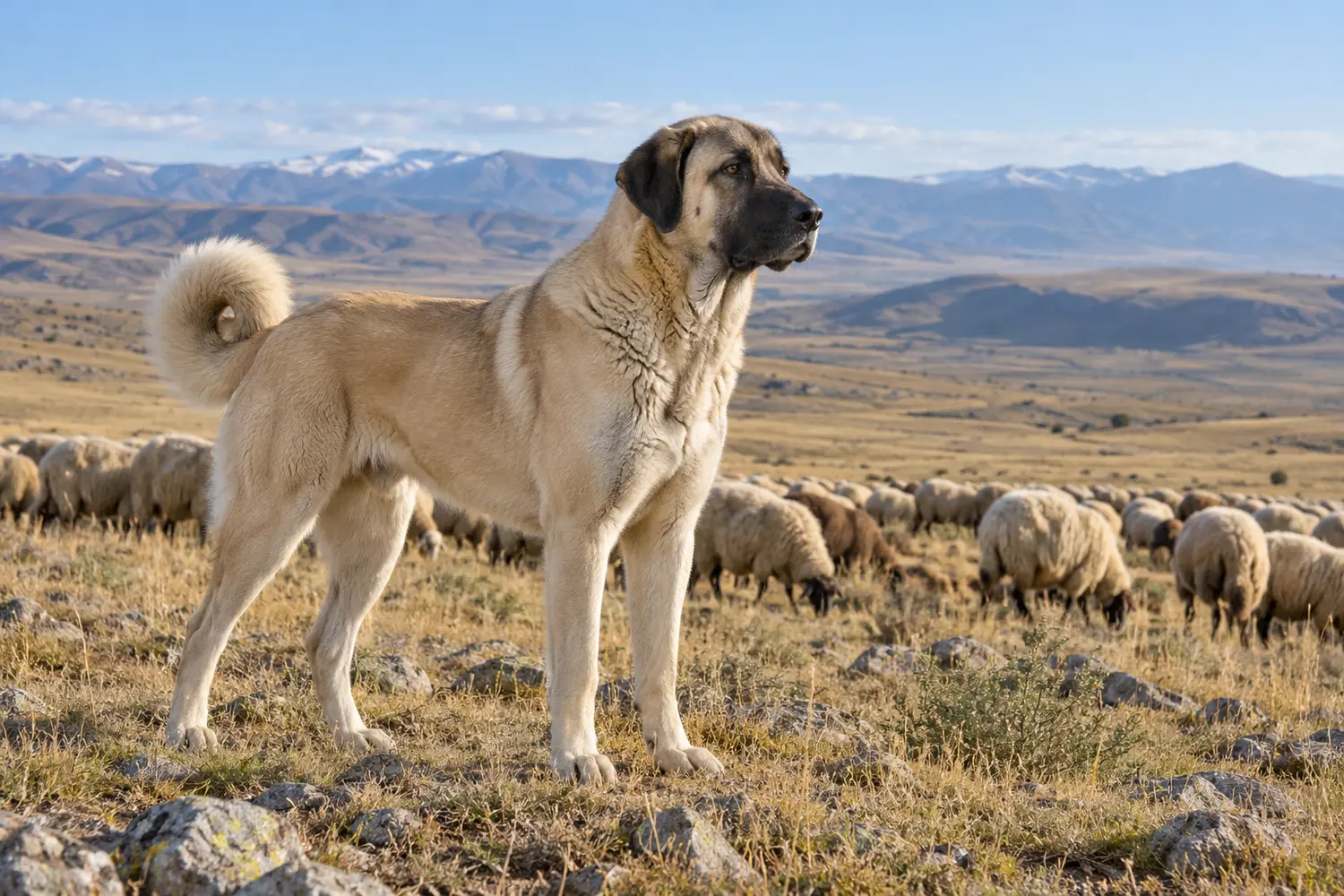
What was the Kangal bred to do?
The Fédération Cynologique Internationale identifies the Kangal Shepherd Dog as a Turkish breed used to guard sheep. Its official standard describes a large, powerfully built dog able to endure heat and cold. It also describes the breed as steady, bold without aggression, naturally independent, intelligent, tractable and wary of strangers while working.
That combination reflects livestock-guardian work. A dog may need to live near a flock, notice unusual activity and make decisions when a person is not standing beside it. The job calls for confidence and environmental awareness—not uncontrolled hostility.
The Kangal standard favors a dun-colored coat with a dark mask, pendant ears and a robust but functional body. Males are listed at 72–78 cm and 48–60 kg; females are somewhat smaller. This generally makes the Kangal taller and, at the upper end, heavier than a standard Cane Corso.
What was the Cane Corso bred to do?
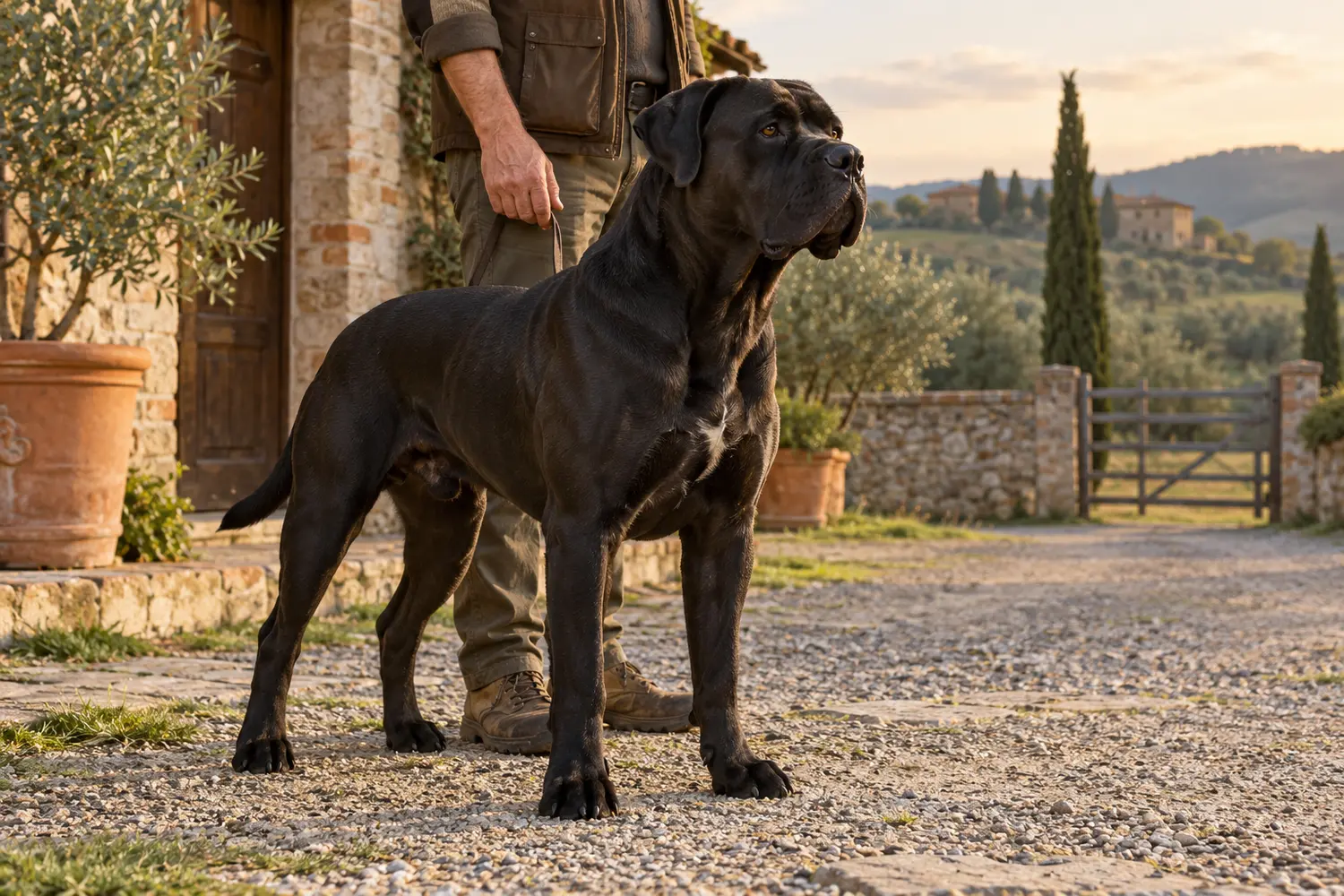
The Cane Corso is an Italian molosser with a broad history as a utility and guardian dog. The Cane Corso Association of America says the breed was developed as a property guardian, wild-boar hunter and all-purpose farm dog—not as a fighting breed. Modern breed material emphasizes strength, trainability and close work with people.
The FCI standard lists males at 64–68 cm and 45–50 kg, with females at 60–64 cm and 40–45 kg. The body is muscular and athletic rather than simply massive. A Cane Corso should look powerful while remaining capable of efficient movement.
Its guardian behavior also differs in emphasis. A Corso is commonly expected to take direction from its household and work near people. The official American standard describes the breed as intelligent, trainable, affectionate with its owner and protective of property and family.
Which breed is bigger?
Under current FCI standards, the Kangal is usually taller. Male Kangal height starts above the upper end of the male Cane Corso range. Their listed weights overlap, although a male Kangal can have a higher standard maximum.
That does not mean every Kangal outweighs every Corso. Online comparisons often select the largest claimed Kangal and place it beside an average Corso, creating a misleading gap. Responsible comparison uses the same sex, adult condition and a consistent standard.
Why the 743 PSI and 700 PSI claims are unreliable
Viral graphics frequently assign 743 PSI to the Kangal and about 700 PSI to the Cane Corso. Those figures are not established breed averages from directly comparable scientific tests.
A veterinary review found that canine bite-force results vary with measurement method, tooth position, body and skull size, pain, motivation and whether a dog is conscious or anesthetized. In one awake-dog experiment, readings ranged widely because willingness to bite the sensor strongly affected the result. Researchers therefore warn that a single representative figure is difficult to determine.
There is also a units problem. Force is commonly reported in newtons, while PSI describes pressure over an area. Converting a bite into PSI requires knowing the relevant contact area, which changes with the tooth and test setup. A precise-looking social-media number can therefore compare unlike methods—or have no traceable study behind it.
Temperament and training differences
Neither breed should be chosen for intimidation. Both need deliberate socialization, secure management and an owner who understands large guardian dogs.
A Kangal’s independence can be valuable around livestock but challenging in a suburban home. Reliable fencing, room to move and careful introductions are important. Repetitive obedience drills may not motivate a dog developed to make autonomous decisions.
A Cane Corso tends to work more closely with its family, but that does not make it an easy beginner dog. Early training, calm boundaries and exposure to ordinary people, animals and environments are essential. The breed’s size and protective tendencies make poor management consequential.
In both breeds, “protective” should never be treated as a synonym for indiscriminate aggression. The Kangal standard explicitly calls for steadiness without aggression, while Cane Corso standards emphasize intelligence, control and devotion to the owner.
Kangal or Cane Corso: which is a better fit?
A properly bred Kangal is best matched to experienced livestock-guardian homes with suitable land, fencing and a real understanding of independent working behavior. A Cane Corso may fit an experienced household seeking a trainable, closely bonded property guardian, provided the owner can supply structured exercise, socialization and ongoing training.
Neither breed is automatically safer, stronger or “better.” Prospective owners should meet mature dogs, examine health testing and temperament in the breeder’s lines, and consider local housing and insurance rules. Choosing for function and stability is far more meaningful than choosing from an online power ranking.
Frequently asked questions
Does a Kangal have the strongest bite of any dog?
No reliable standardized study establishes a world-record breed ranking. Bite force varies by dog and test method, and the widely repeated 743 PSI figure lacks a traceable comparable dataset.
Is a Cane Corso a fighting dog?
No. Breed authorities describe it as an Italian utility, farm and guardian dog. Responsible breeding should prioritize stable, controllable temperament rather than aggression.
Would a Kangal beat a Cane Corso?
There is no factual universal answer, and staging such an encounter would be dangerous and unethical. Their useful differences concern working role, size, structure, independence and training needs.