
Pack animals vs solitary animals are often framed as opposites: one side wins through teamwork, the other through stealth. Biology tells a more interesting story. Group size is not a ladder of progress. It is a flexible answer to prey, habitat, kinship, reproduction and risk—and even famously social or solitary predators can change tactics when conditions demand it.
Pack Animals vs Solitary Animals at a Glance
For predators, living together can unlock cooperative defense, shared care of young and access to prey that would be risky for one hunter. Yet every carcass must feed more mouths, disease can spread through close contact, and social life creates competition over breeding and food. Solitary life reverses many of those costs and benefits: one hunter keeps what it catches and can move quietly, but it cannot call on partners when injured, challenged or raising dependent young.
The real comparison is therefore not “strong versus weak.” It is a trade-off between shared capability and shared cost on one side, and individual efficiency and individual risk on the other.
Why Some Predators Live and Hunt in Groups
A group can do things that an individual cannot, but cooperation is not identical across species. Wolves commonly live in packs, African wild dogs form highly cohesive packs, and lions live in prides. Calling all three systems “packs” hides important differences in family structure, hunting behavior and reproduction.
Wolves: families, not a permanent battle for alpha status
A typical wild wolf pack is primarily a family: a breeding pair and offspring from one or more years. Wildlife biologist L. David Mech argued that the familiar image of wolves constantly fighting for “alpha” rank came largely from unrelated captive groups and poorly describes most natural packs. Parents lead because they are parents, although real groups still contain negotiation, competition and changing relationships.
Family living helps wolves defend territories, provision pups and sometimes subdue larger prey. It does not guarantee that more wolves always improve each hunt. The value of another pack member depends on prey species, terrain, experience and whether the extra hunter contributes more energy than the group must later share.
African wild dogs: cooperation extends beyond the chase
African wild dogs provide one of the clearest examples of group dependence among carnivores. Pack members travel together, rear pups cooperatively and hunt in coordinated groups. Research on free-ranging wild dogs shows that group size can be associated with heavier prey and greater hunting success, while pup production and survival can rise in larger packs.
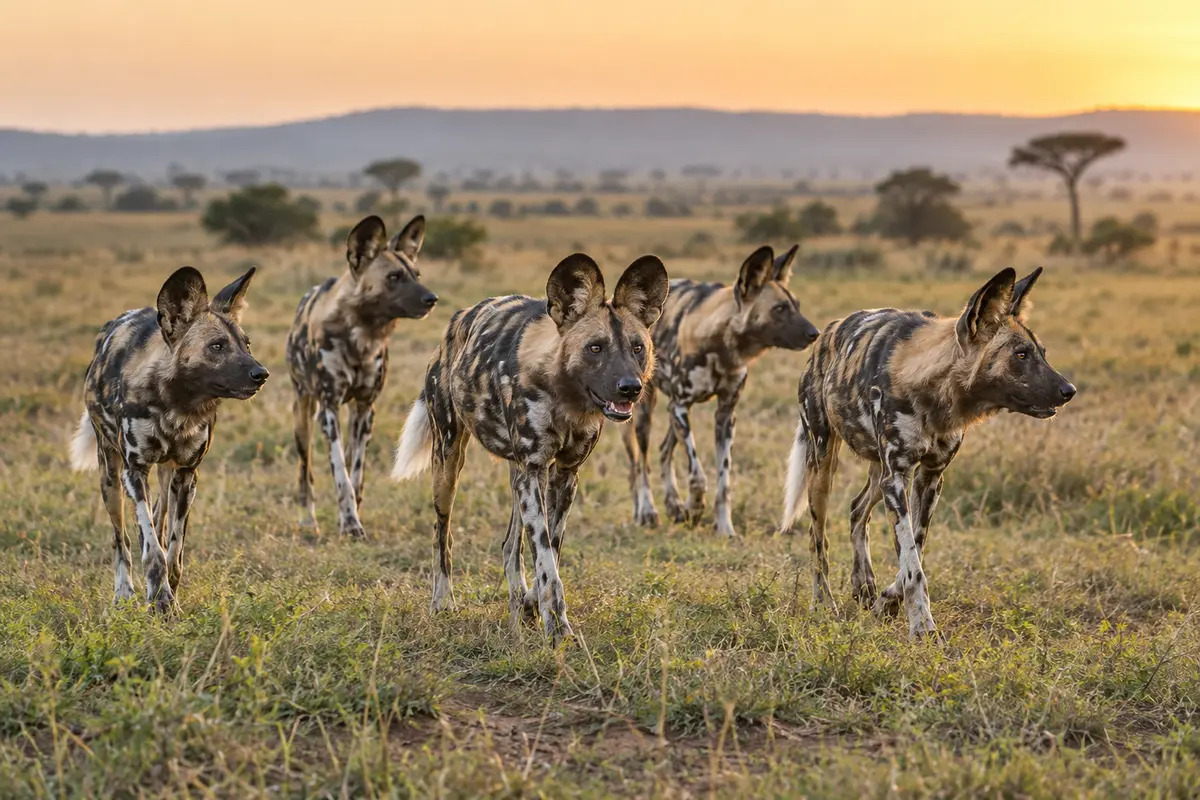
But the benefits are not free. A six-year study of 366 wild dogs found that adult survival decreased as pack size increased, even while larger groups could benefit reproduction. That result matters: “power in numbers” is a catchy summary, not a universal law. Cooperation can improve one part of fitness while imposing costs elsewhere.
Lions: prides offer more than cooperative hunting
Lions are social cats, but their groups are called prides. Females may hunt together, raise cubs in communal nurseries and defend a shared territory. Long-term lion research at the University of Minnesota emphasizes that cooperative hunting alone does not explain pride living. Lions often hunt independently or with limited coordination, becoming more cooperative when confronting large, dangerous prey such as buffalo.
Shared territorial defense and cub protection may be as important as access to large prey. Pride size can also become costly at a carcass: each additional diner reduces the food available per individual. Sociality succeeds when the combined advantages exceed that competition—not because groups automatically dominate solitary hunters.
Why Solitary Predators Often Thrive Alone
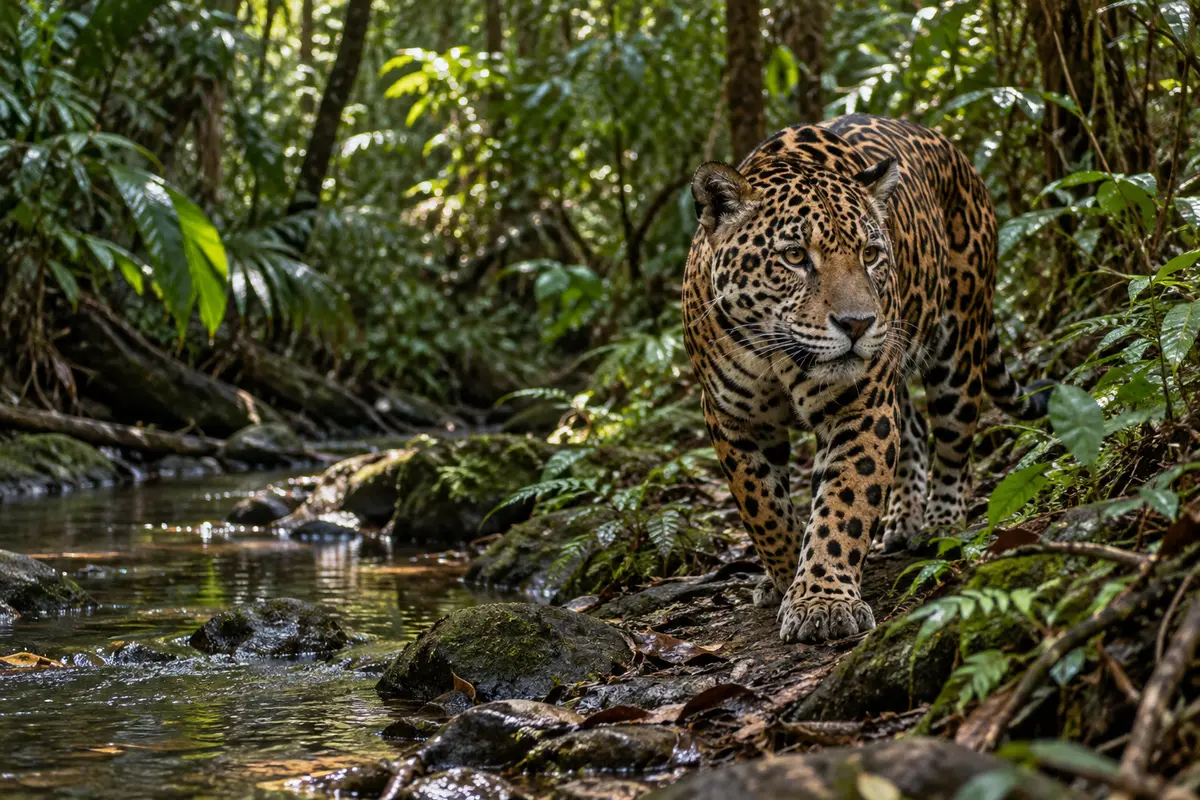
Most wild cats outside lions are usually described as solitary. Jaguars, leopards, pumas and tigers typically travel and hunt alone outside mating and maternal care. Their camouflage, powerful bodies and ambush tactics allow one animal to approach prey without the noise, visibility or coordination problems of a group.
One kill, one mouth—most of the time
A solitary predator can keep a larger share of its kill and select movements around its own hunger, reproductive state and risk tolerance. That can be especially valuable where prey is dispersed, cover favors close-range ambush, or one carcass cannot reliably feed several adults.
Solitude also reduces the need to synchronize travel and avoids constant competition with group mates. Territorial scent marking and familiarity with paths, water and prey activity turn knowledge of place into a survival tool. A jaguar moving through dense forest does not need to coordinate an attack with partners; concealment and a short, explosive approach are central to the strategy.
Solitary does not mean antisocial
The label “solitary” describes the usual spacing of adults, not a complete absence of social behavior. Mothers live with dependent young. Adults communicate through scent, scrapes and calls, meet to mate, and may tolerate or associate with neighbors under particular conditions. Male pumas, for example, have been documented sharing food and forming repeated social relationships, challenging the assumption that a solitary species never cooperates.
Likewise, jaguars are generally solitary, but research in the Brazilian Pantanal has documented male coalitions. Tigers can gather temporarily around rich food sources or interact within overlapping ranges. These exceptions do not erase the species’ usual pattern; they show that social systems are continua rather than two locked boxes.
The Ecological Forces That Tip the Balance
Several pressures repeatedly influence whether group living pays.
- Prey size and danger: Large or hazardous prey can reward multiple attackers, while small prey may not yield enough energy to share.
- Prey distribution: Predictable, concentrated food may support groups. Scattered prey can favor hunters that spread out.
- Habitat: Open ground may help animals coordinate and maintain contact; dense cover can favor a concealed individual.
- Territory defense: Allies can help protect space, dens, kills and young against rivals.
- Parental care: Helpers may provision or guard pups and cubs, raising reproductive success.
- Competition and disease: More companions also mean more mouths, reproductive conflict and opportunities for pathogens to spread.
No single factor decides the outcome. Evolution works on the full balance sheet. A behavior that improves hunting success can still be unfavorable if it sharply reduces each individual’s food intake. A solitary hunter may lose the security of allies but gain enough from concealment and exclusive access to prey to compensate.
Conditions can also change across seasons or stages of life. Dependent young make parental cooperation valuable, while dispersing adolescents may temporarily travel alone. A drought can alter prey density; a migrating herd can create a short-lived food bonanza. Natural selection can therefore favor behavioral flexibility alongside a species’ dominant social pattern.
Neither Strategy Guarantees Success
Groups can fail when prey b