
A puma vs snow leopard comparison is most useful when it asks how each cat lives. The puma (Puma concolor), also called cougar or mountain lion, occupies a remarkable variety of American habitats. The snow leopard (Panthera uncia) is closely associated with Asia’s rugged mountains. Both are powerful hunters, and both depend on getting close to prey.
Their differences are not a simple contest between strength and agility. Pumas can climb and negotiate steep country, while snow leopards use strength as well as balance. Habitat, concealment and prey help explain their body plans better than a hypothetical fight.
Range: an American generalist and an Asian mountain cat
The IUCN SSC Cat Specialist Group’s puma account describes habitats ranging from deserts and brushlands to forests and grasslands. Rocky mountain terrain is part of that range, not an environment reserved for snow leopards. Pumas often favor places with complex structure that provides cover.
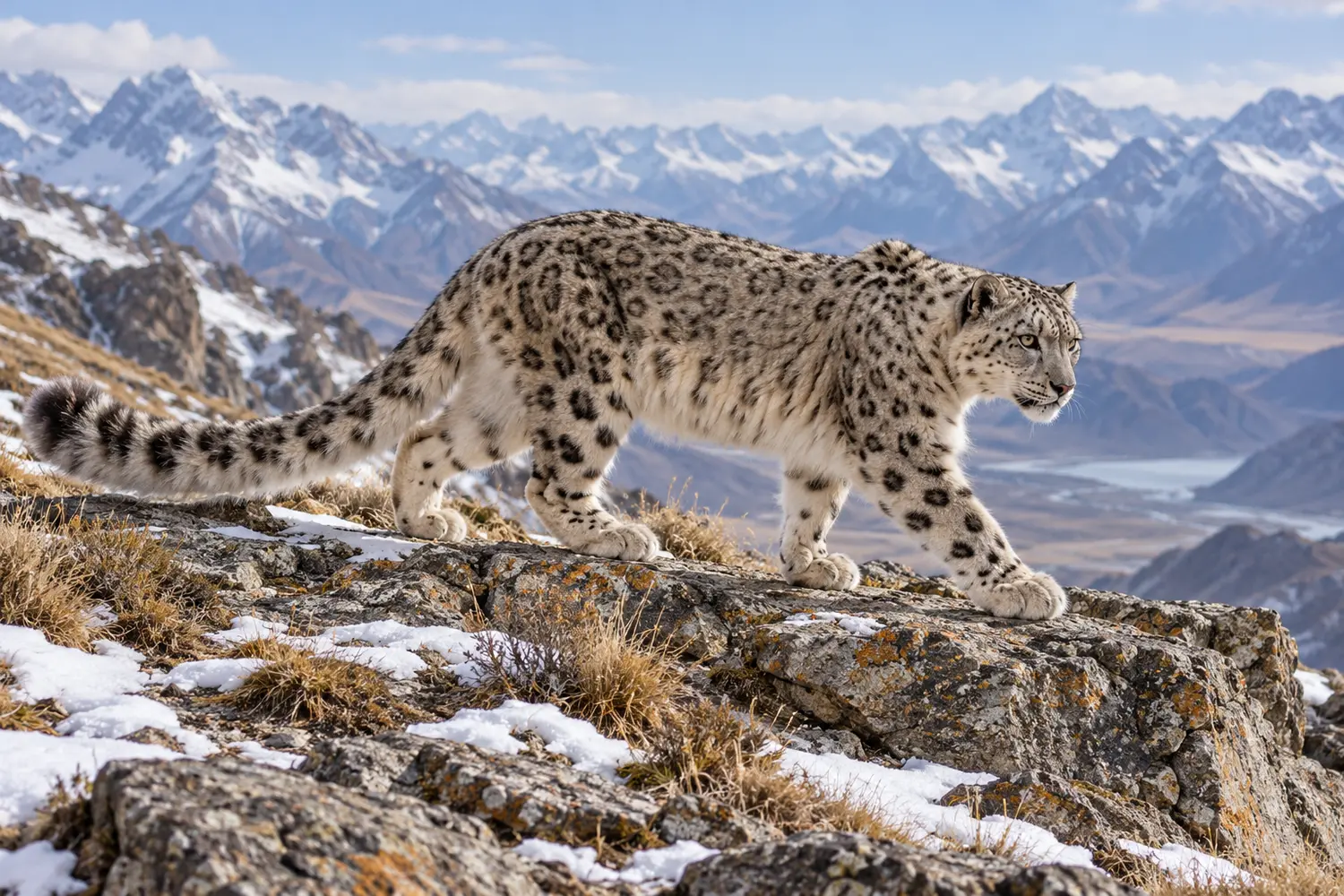
Snow leopards inhabit mountain landscapes across twelve Asian countries. According to the Snow Leopard Trust, cliffs, rocky outcrops and ravines provide cover and viewpoints for locating prey. Their habitat is not permanently blanketed in snow: cold, dry slopes can also carry grasses and low shrubs.
Coats, paws and tails reflect different settings
Adult pumas usually have a plain coat, varying from tawny or reddish to gray-brown. Their long legs and large feet support an athletic outline. The species is a capable climber, so describing it only as a heavy ground-based predator misses part of its biology.
The snow leopard’s pale, patterned coat blends with broken rock. Dense fur helps in cold conditions, and broad, fur-covered paws protect its feet. Its unusually long, thick tail contributes to balance and can wrap around the body for warmth. These features are described by Snow Leopard Trust and San Diego Zoo Wildlife Alliance.
Hunting: both cats use a close approach
Pumas are primarily ambush hunters. They stalk and launch a short attack rather than relying on a long chase. Their diet varies with location and includes deer as well as smaller animals. They may conceal leftovers with vegetation, soil or snow and return to feed, as described in the San Diego Zoo mountain lion profile.
Snow leopards also stalk before springing onto prey. Blue sheep and ibex are important prey in parts of their range, alongside smaller animals. Rocky terrain offers concealment, but a hunt still requires judging distance and bringing prey under control. A long tail does not replace the rest of the cat’s muscular body.
The useful contrast is therefore the setting in which ambush happens. A puma may approach through woodland or broken scrub; a snow leopard may use rock formations on an alpine slope. Neither animal has a single tactic that applies to every hunt.
Size and bite-force claims need context
Puma size varies substantially with sex and geography. The Cat Specialist Group notes that males are larger than females and that animals in colder parts of the range can be larger than tropical pumas. “The puma is heavier” should therefore be a qualified comparison, not a rule about any two individuals.
Claims that the two species have the same bite pressure need a comparable measurement method, specimen information and a defined bite position. An isolated PSI figure does not supply that context. This comparison makes no claim of equal bite force and uses no numerical strength ranking.
What the comparison actually shows
Pumas demonstrate flexibility across many habitats, including mountains. Snow leopards show distinctive adaptations to cold, broken terrain. Their coats, paws and tails make the differences visible, while their shared reliance on stealth reveals an important similarity.
They are best understood as cats responding to different ecological conditions. Comparing those adaptations teaches more than assigning one animal raw power and the other acrobatics, or imagining that either species can be summarized by a bite-force number.
References
IUCN SSC Cat Specialist Group: Puma; San Diego Zoo Wildlife Alliance: Mountain lion; San Diego Zoo Wildlife Alliance: Snow leopard; Snow Leopard Trust: Habitat; Snow Leopard Trust: Physical features. Sources checked 23 October 2026.