
A puma and a lioness are both powerful cats, but their hunting lives are built around very different social systems. A puma usually approaches prey alone, using cover and a short explosive attack. A lioness can also hunt alone, yet she may work with other pride members when prey, terrain and opportunity make cooperation useful.
The contrast is not simply “speed versus strength.” Both cats depend on stealth, timing and close-range acceleration. The deeper difference is that the puma is primarily a solitary hunter, while the lion is a social felid whose females can coordinate their movements. This puma vs lioness comparison explains what research actually supports—and why neither strategy guarantees success.
Puma vs lioness at a glance
- Puma: a solitary, cryptic ambush hunter distributed across the Americas.
- Lioness: a social African cat that may hunt alone or with other lions.
- Shared tools: concealment, stalking, rapid acceleration, claws and a suffocating bite.
- Main contrast: the puma normally captures prey without cooperative partners; lionesses can divide positions and influence a prey animal’s escape path.
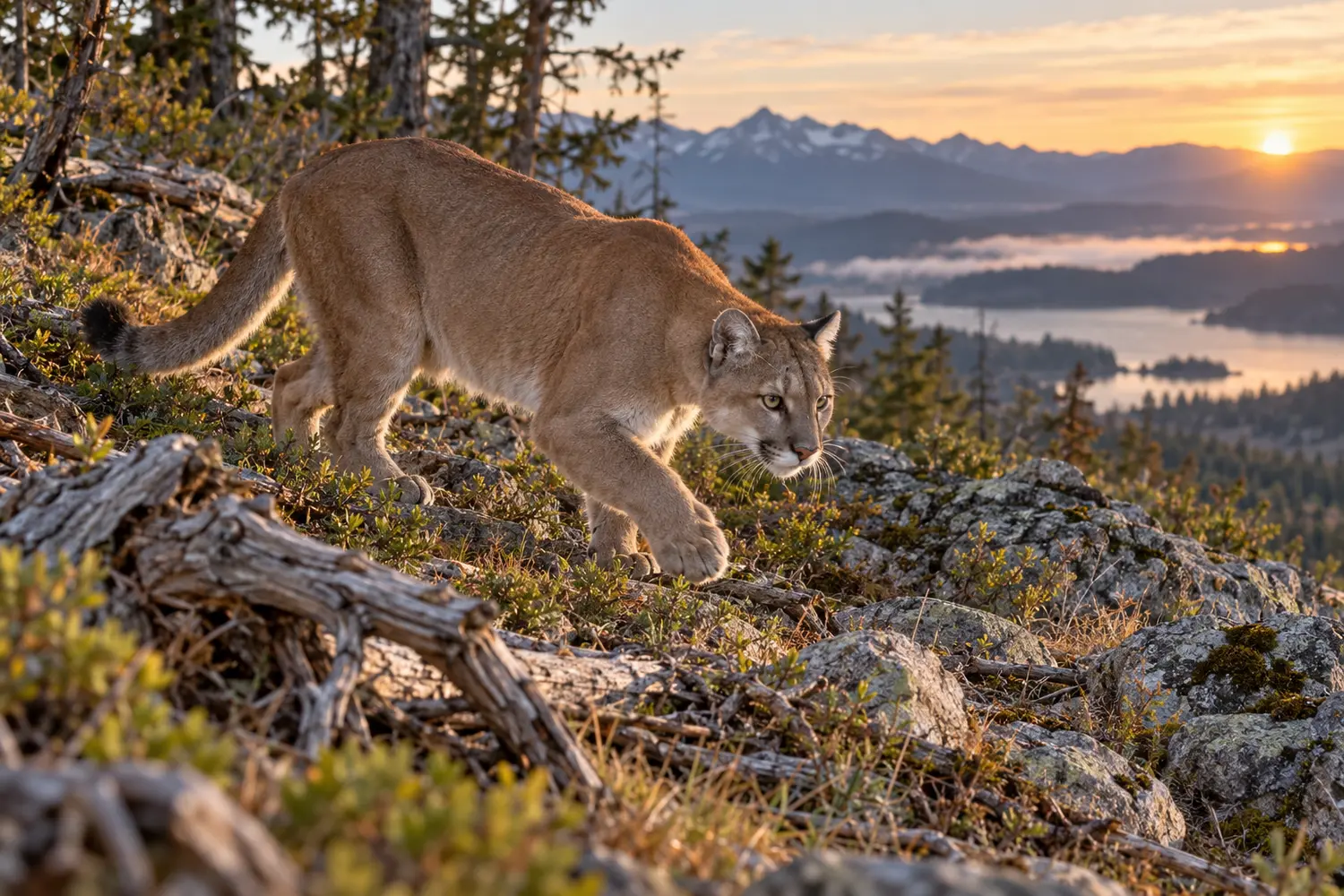
How does a puma hunt?
Pumas—also called cougars or mountain lions—typically search and travel alone. They use vegetation, rocks, terrain and low light to approach without being detected. Once close enough, the cat accelerates over a short distance, pounces and attempts to control the prey with its forelimbs and jaws.
Research using accelerometers and GPS collars shows that the energetic cost of a puma’s attack increases with prey size. Rather than relying on a long endurance chase, the cat commits to a brief, high-power sequence. This helps explain why getting close before the attack is so important.
“Solitary” does not mean pumas never meet. GPS and camera studies have documented temporary tolerance at kills, courtship and other social interactions. Those observations refine the old picture of a completely antisocial cat, but they do not turn pumas into routine cooperative hunters.
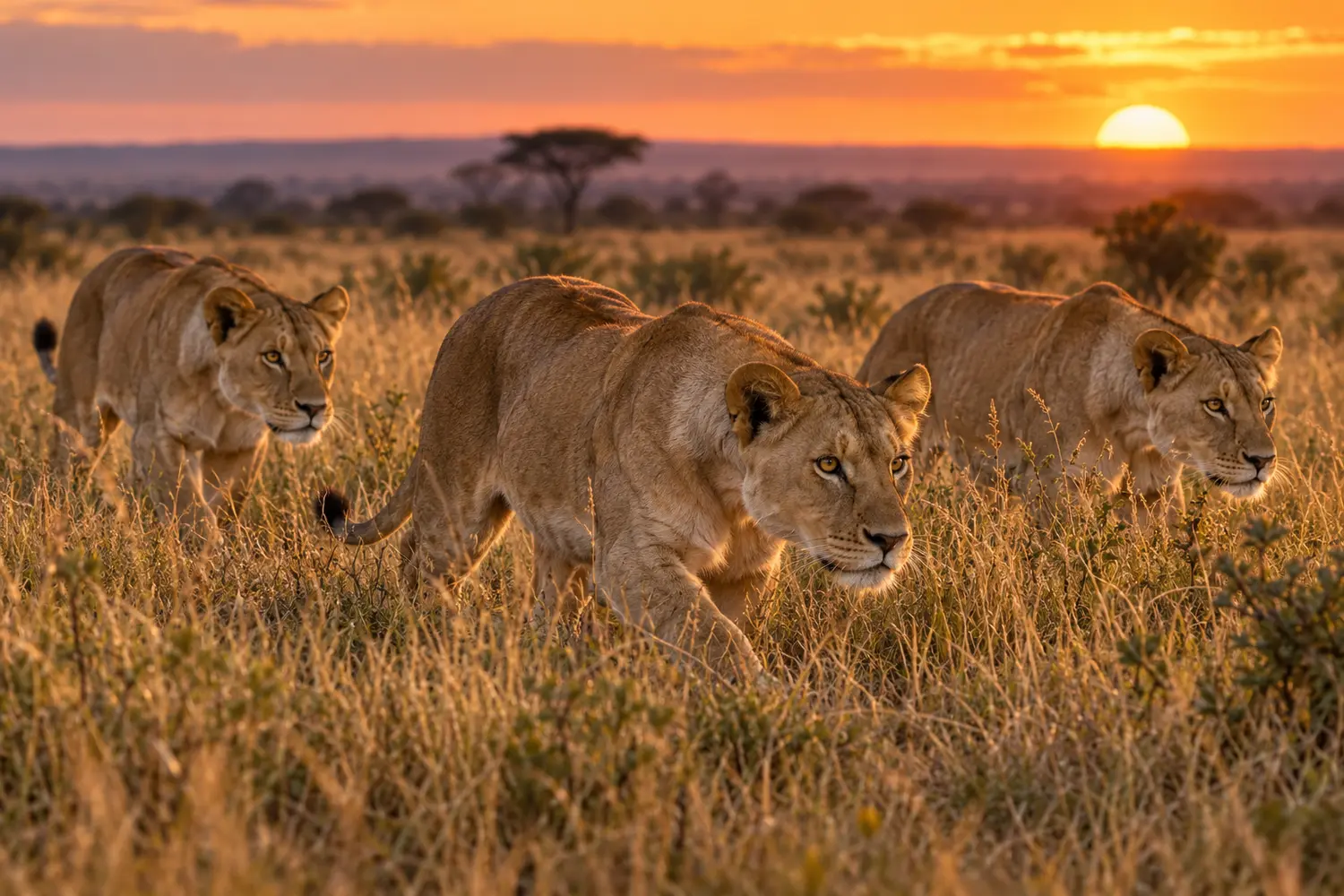
How does a lioness hunt?
Lionesses use concealment and short-range acceleration too. In open or semi-open habitats, however, several females may spread out during a stalk. Field observations have described recurring positions: some lionesses move on the wings and initiate an attack, while others remain more central and intercept prey displaced by those movements.
Cooperation is flexible rather than automatic. Lionesses sometimes hunt alone, and not every group hunt shows clean role specialization. Hunting success changes with prey species, prey group size, grass or bush cover, moonlight, wind and the number of participating adults. A larger hunting party is not a universal guarantee of a kill or more food for every individual.
Group hunting can be especially useful against larger or more dangerous prey and in open settings where several cats can influence escape routes. Yet social living also creates competition at the carcass. The benefit of capturing prey must be shared with pride members, cubs and sometimes males, while kills may also need protection from hyenas.
Which cat is faster or stronger?
A single winner cannot be chosen from generic “bite force” or speed tables. Viral graphics often assign exact pounds-per-square-inch values to each species without identifying a measured animal, sample size, bite position or testing method. Those numbers should not be treated as standardized performance scores.
Lionesses are generally heavier than pumas, but body mass alone does not describe hunting ability. A puma’s success depends on reaching an effective launch distance and converting a short burst into control of the prey. A lioness has a larger frame and may have partners, but she still needs concealment, positioning and timing.
Reported maximum speeds are also poor predictors of a real hunt. Wild attacks unfold across uneven ground, and prey can turn, kick, bunch together or detect the predator early. Acceleration, traction, cover and decision-making matter more than a single top-speed number.
How habitat shapes each strategy
Pumas occupy an exceptionally broad range of habitats, from forests and mountains to deserts and wetlands. Broken terrain and vegetation can create short sight lines and approach routes suited to a solitary stalk. Individual pumas also adjust prey selection and hunting behavior to local conditions.
Lions inhabit savannas, grasslands, scrub and some woodland systems. Open terrain may make concealment difficult, but it can also give cooperating lionesses room to spread across a prey animal’s likely route. Dense vegetation can alter approach distances and the location of kills, so the same pride may hunt differently in different parts of its range.
Do pumas and lionesses target the same prey?
No. Their ranges do not naturally overlap, and prey communities differ between the Americas and Africa. Pumas take animals ranging from small mammals to deer-sized ungulates and, in some regions, larger prey. Lionesses commonly hunt African ungulates, with prey choice varying by ecosystem and group composition.
Both species can kill prey heavier than themselves, but the risk and energetic reward change with age, experience, habitat and prey defenses. Statements that one cat always tackles “larger prey” oversimplify diverse populations and conditions.
What the comparison really shows
The puma represents a highly effective solitary solution: approach unseen, attack from close range and retain access to a carcass long enough to recover the energetic cost. The lioness represents a flexible social solution: hunt alone when that works, or coordinate with pride mates when prey and landscape make cooperation advantageous.
Neither method is inherently superior. Natural selection has shaped each around a different combination of habitat, prey, competition and social life. The important comparison is not which cat would win a hypothetical fight, but how two felids use shared anatomy within very different ecological systems.