
A suspected snakebite is a medical emergency. Call emergency services immediately, keep the person calm and as still as possible, remove rings or tight clothing before swelling begins, and arrange rapid transport to a hospital. Do not wait for two fang marks or severe symptoms.
You cannot reliably tell whether a bite involved venom from the wound pattern. Venomous bites may leave two punctures, one puncture, scratches or almost no visible mark. A nonvenomous bite can also produce punctures and substantial tissue injury.
This article provides general education, not individual medical advice. Follow your local emergency service or poison center because recommended first aid can vary by country and snake species.
Can fang marks identify a venomous snakebite?
No. The viral rule “two deep punctures means venomous; a curved row of teeth means nonvenomous” is unsafe. A snake may strike at an angle, bite through clothing, use only one fang or leave marks too small to see. Coral snake bites, for example, can initially look like tiny scratches or leave little obvious injury while still causing dangerous neurological effects.
The wound also cannot reveal whether venom was injected. Some bites by venomous snakes are “dry bites,” while other envenomings begin with mild local findings and worsen later. Identification and treatment belong to trained clinicians using the circumstances, evolving symptoms, examination and laboratory tests.
Snakebite first aid: what to do
1. Move away from the snake
Put a safe distance between the patient and the snake without trying to capture, kill or handle it. A second bite creates another emergency. If it can be done from far away without delaying care, note the snake’s color and pattern or take a distant photo. Never bring the snake to the hospital.
2. Call emergency services immediately
Tell the dispatcher that a snakebite is suspected, where the bite occurred, the patient’s condition and your exact location. In the United States, Poison Control can also be reached at 1-800-222-1222, but breathing problems, collapse, severe swelling or other rapidly progressing symptoms require emergency services.
Do not let the patient drive. Venom can cause weakness, dizziness, paralysis, bleeding or sudden deterioration.
3. Keep the person calm and completely still
WHO guidance emphasizes reassurance, complete immobilization and rapid transport. Walking and muscle movement can speed venom movement through lymphatic circulation. Have the person lie down or sit supported and avoid unnecessary movement.
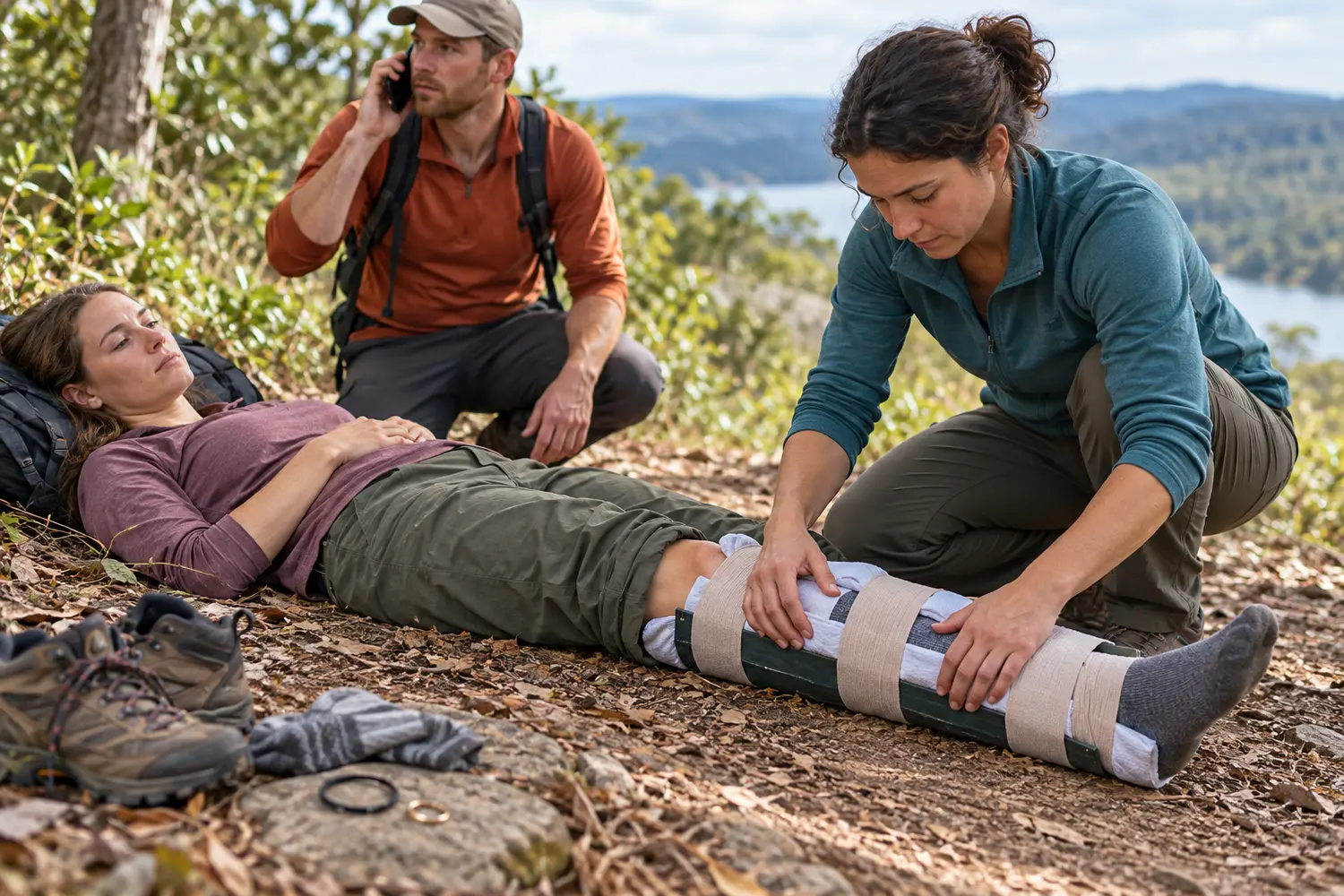
4. Support the affected limb
Keep the bitten limb still in a comfortable, neutral position. A loose splint or sling may help limit movement during evacuation, but it must not restrict blood flow. Remove rings, watches, bracelets, tight shoes and restrictive clothing before swelling makes removal difficult.
Do not elevate, massage or exercise the limb unless a qualified local professional specifically directs you.
5. Note the time and monitor the patient
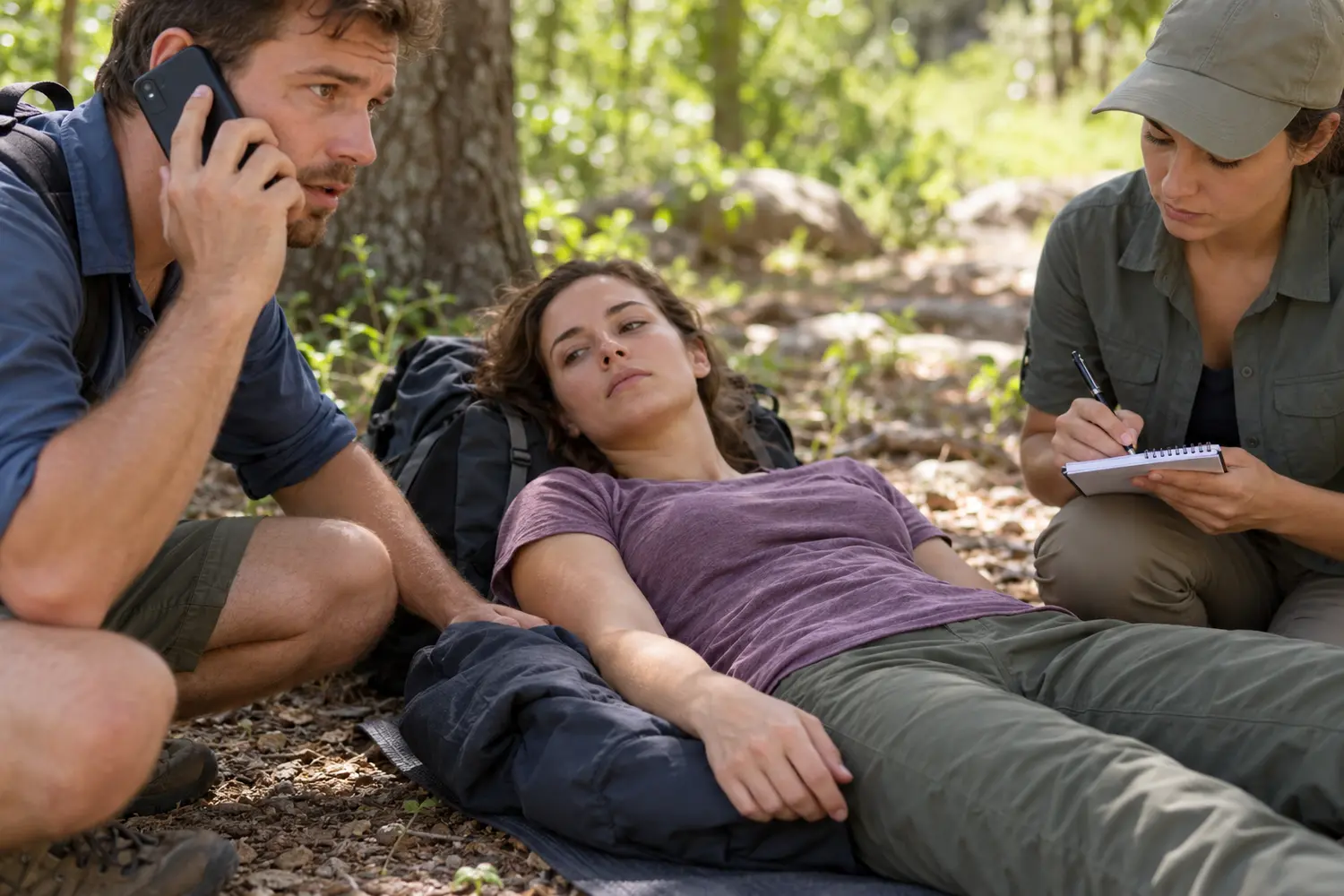
Record the approximate bite time and changes such as pain, swelling, vomiting, weakness, drooping eyelids, difficulty speaking, unusual bleeding or breathing problems. If swelling is spreading and local emergency professionals approve, marking its edge with the time may help clinicians track progression.
Monitor breathing and responsiveness. Start CPR if the person becomes unresponsive and is not breathing normally, following dispatcher instructions.
What not to do after a snakebite
- Do not use a tight tourniquet. Cutting off arterial blood flow can cause severe tissue damage and may threaten the limb.
- Do not cut the wound or suck out venom. Cutting adds injury and infection risk; suction does not remove a useful amount of venom.
- Do not apply ice, electric shock, chemicals, herbs or “snake stones.” These methods do not neutralize venom and may delay effective care.
- Do not drink alcohol or caffeine. Do not give medicines unless emergency professionals instruct you.
- Do not chase or handle the snake. Avoid a second bite and do not delay transport.
- Do not wait for symptoms. Serious effects may be delayed.
Should you use a pressure-immobilization bandage?
This is not a universal technique. WHO states that pressure at the bite site or a compression bandage may help for snakes with predominantly neurotoxic venom, but it is not recommended when the venom commonly causes major local tissue injury. Australian protocols recommend pressure immobilization for suspected Australian snakebites and advise against washing the site because venom residue may help identification.
In other regions, including much of North America, first-aid guidance may differ. An incorrectly applied bandage can become a dangerous tourniquet. Use pressure immobilization only when it is part of current local guidance and you have been trained, or when emergency professionals direct you.
Symptoms that may indicate envenoming
Possible signs depend on the snake and may include:
- increasing pain, swelling, bruising or blistering;
- nausea, vomiting, sweating or weakness;
- drooping eyelids, blurred vision, slurred speech or difficulty swallowing;
- trouble breathing or progressive paralysis;
- unusual bleeding, dark urine, reduced urine output or collapse.
Absence of these signs immediately after the bite does not rule out danger. Observation and antivenom decisions must be made in a medical facility. Antivenom is the only specific treatment for many clinically important snake venoms, but it must be given by professionals who can manage severe reactions and supportive care.
What about a confirmed nonvenomous snakebite?
Even nonvenomous snakebites can cause puncture wounds, torn tissue and infection. If a qualified professional confidently identifies the bite as nonvenomous, wash it with soap and clean water, cover it with a clean dressing and seek medical advice about wound care and tetanus protection. Deep wounds, uncontrolled bleeding, severe pain, numbness, loss of movement or infection signs need urgent assessment.
If identification is uncertain, treat the incident as a potentially venomous bite and seek emergency care.
Frequently asked questions
Do two fang marks prove the snake was venomous?
No. Venomous bites can leave one puncture, multiple marks, scratches or no obvious mark. The wound pattern is not a reliable diagnostic test.
Should you wash a snakebite?
Advice varies. Australian authorities advise leaving the site unwashed to preserve venom evidence. Other guidance may recommend gentle cleaning when professional care is delayed. Call local emergency services and follow their instructions.
Can you wait to see whether swelling develops?
No. Some dangerous neurotoxic bites initially cause little swelling. Seek emergency assessment immediately after any suspected bite from a venomous or unidentified snake.