
A spotted hyena and a puma can both bring down large prey, but they solve the problem in very different ways. The puma usually approaches unseen and spends its greatest burst of energy during a short attack. The spotted hyena is more likely to test prey in motion, sometimes pursuing alone and sometimes gaining partners when the target is difficult.
This spotted hyena vs puma comparison is not a hypothetical fight. It examines how anatomy, social life and habitat shape two successful predators—and why viral bite-force numbers tell only a small and often misleading part of the story.
Spotted hyena vs puma at a glance
- Spotted hyena: Crocuta crocuta, a social carnivore native to sub-Saharan Africa.
- Puma: Puma concolor, a mostly solitary cat distributed across the Americas.
- Typical hyena approach: identify a vulnerable animal, pursue it and adjust hunting group size to prey and opportunity.
- Typical puma approach: use terrain or vegetation to stalk close, then launch a brief, powerful ambush.
- Key anatomical contrast: the hyena has a skull and premolars specialized for processing bone; the puma has a flexible felid body optimized for stalking, pouncing and controlling prey.
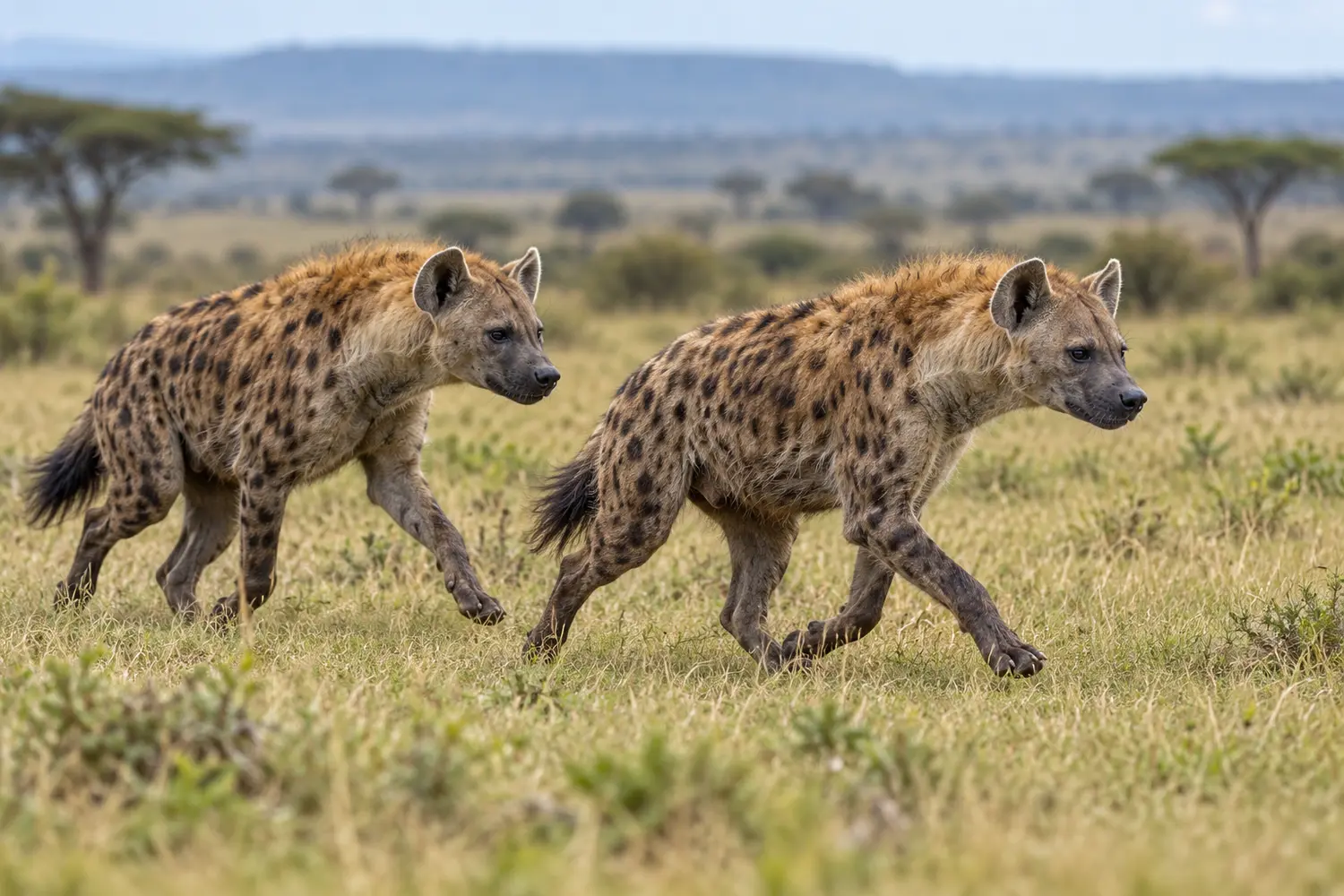
How do spotted hyenas hunt?
Spotted hyenas are capable pursuit hunters, but the familiar image of a large pack running together is not universal. Long-term observations in Kenya found that hunting group size changes with prey availability and prey species. Later analyses note that spotted hyenas commonly hunt alone for many prey items; one review reported a mean hunting group size of about 1.5 animals.
Additional hunters can improve the chance of capturing larger or more challenging prey. For some targets, success increases from one hunter to a small group and then levels off. That benefit comes with a cost: more participants must share the carcass, and rank influences access to food.
Hyenas use endurance more than an ambush cat does, yet “relentless long-distance hunter” is still too simple. Chases vary with habitat, prey condition, group size and how quickly the target can be isolated. A spotted hyena may abandon an unpromising chase rather than running indefinitely.
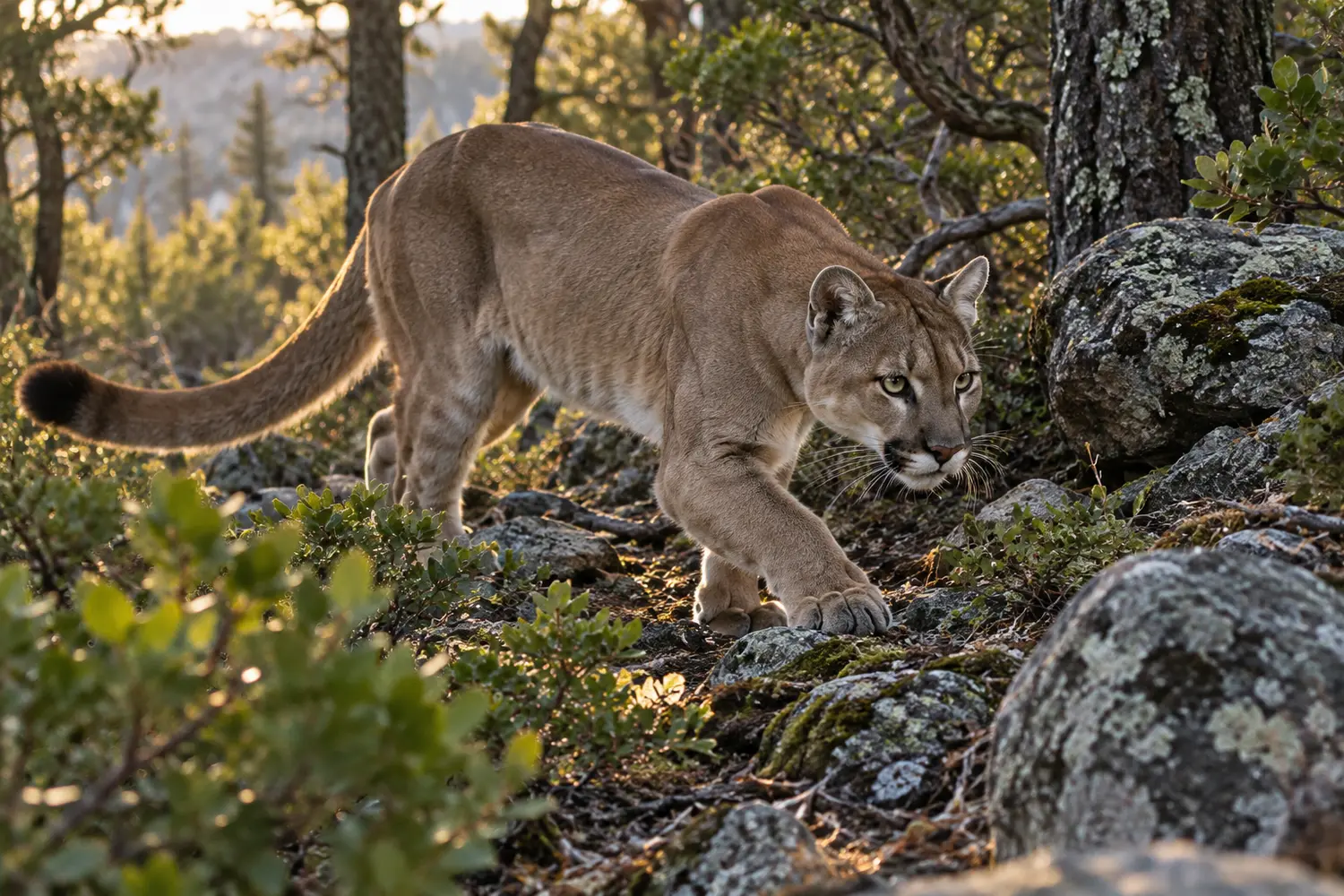
How does a puma hunt?
Pumas—also called cougars or mountain lions—are cryptic ambush predators. A puma uses vegetation, rocks, darkness and broken terrain to reduce the distance to prey. It then accelerates, pounces and attempts to hold the animal with its forelimbs while applying a killing bite.
Collar studies combining GPS and accelerometers show that puma attacks are intense but short. The energy spent during the attack rises with prey size, indicating that the cat adjusts its physical effort to the target. This strategy depends less on prolonged pursuit and more on reaching an effective launch distance without being detected.
Pumas are generally solitary hunters, although “solitary” does not mean socially incapable. Researchers have recorded courtship, temporary gatherings and tolerance at kills. These interactions do not amount to routine cooperative hunting comparable with the flexible group hunts seen in spotted hyenas.
Why can spotted hyenas eat bone?
The spotted hyena belongs to the cat-like branch of Carnivora, not the dog family, despite its sloping back and dog-like outline. Its skull has enlarged attachment areas for jaw muscles, while robust premolars concentrate force onto resistant food. Specialized enamel and tooth geometry help the animal crack bone and gain access to marrow.
Bone processing is different from simply having the “strongest bite.” Performance depends on which teeth are used, jaw position, the animal’s age and body size, and whether researchers measure living animals or estimate force from skull mechanics. The hyena’s advantage is a complete bone-cracking system, not a single universal PSI number.
Juvenile hyenas also need time to develop this ability. Research on skull growth and feeding behavior shows that mechanical advantage changes as permanent teeth replace deciduous teeth and the jaw matures.
Does a puma have a weaker bite?
That question cannot be answered responsibly with the common social-media figures of “1,100 PSI versus 400 PSI.” Such graphics rarely identify the study, sample, tooth position or measurement technique. Estimates produced with different models cannot be treated like scores from the same test.
A puma does not need to crush and consume large bones in the way a spotted hyena can. Its teeth and jaws are used within a felid predatory sequence: seize, restrain and deliver a targeted bite. Calling that system “weak” confuses specialization with inferiority.
Stamina versus explosive power
The hyena’s limb proportions and aerobic capacity support sustained travel and pursuit. Its hunting decisions unfold while prey is moving, allowing it to test and isolate vulnerable individuals. Small groups can surround or pressure a target more effectively than a lone hunter.
The puma follows a different energy budget. Stalking is relatively slow and economical; the attack demands rapid acceleration, muscular force and precise control. If the initial approach fails and prey gains distance, prolonged pursuit is usually a poor option.
Neither strategy works everywhere. Open plains provide room for pursuit and make concealment difficult. Forest edges, rocks, steep slopes and dense vegetation can shorten sight lines and create ambush opportunities. Both predators adjust behavior to local prey and landscape.
Do spotted hyenas only steal kills?
No. Spotted hyenas are effective hunters and obtain much of their food by killing prey themselves. The proportion varies among ecosystems and seasons, but describing them only as scavengers is inaccurate. They also scavenge opportunistically—just as lions, pumas and many other carnivores do when food is available.
Their ability to consume skin, tendons and bone means they can extract nutrition from carcass parts that other predators leave behind. This recycling role is ecologically important and should not be mistaken for an inabili