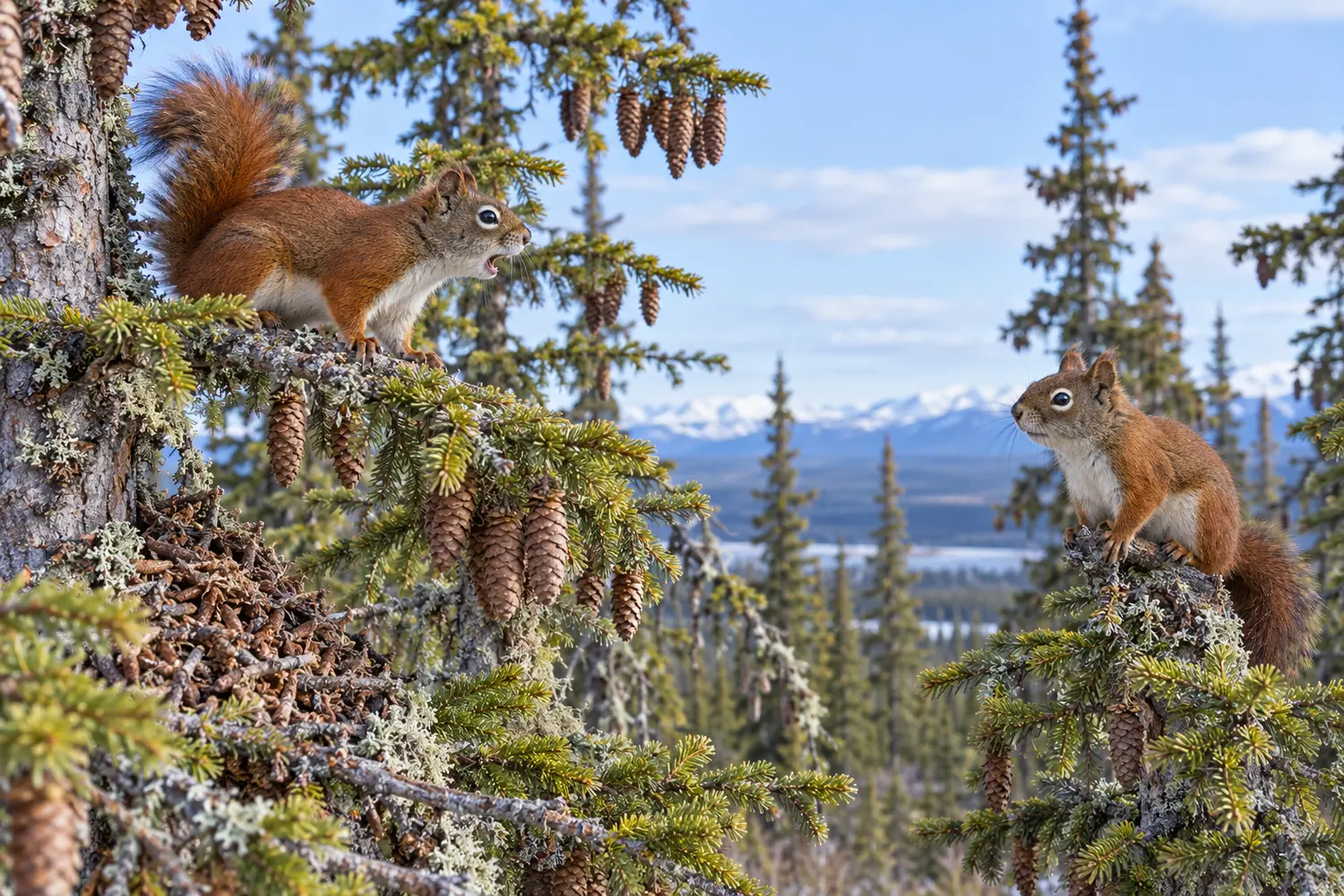
Female North American red squirrels sometimes adopt orphaned young—but the behavior is extraordinarily rare and far more selective than viral posts suggest. In a 19-year field study in Canada’s Yukon, researchers documented only five adoptions among 2,230 litters. Every adopted youngster was a close relative of the surrogate mother. Orphans without a nearby female relative were not adopted.
That finding turns a sentimental story about squirrels showing “compassion” into something even more scientifically interesting. Adoption can preserve shared genes, but it also imposes a real cost on the female and her own offspring. The observed cases closely followed a central prediction of evolutionary biology known as Hamilton’s rule.
Do squirrels adopt orphaned babies?
Yes, adoption has been documented in wild North American red squirrels (Tamiasciurus hudsonicus). However, it should not be described as something nearby females “often” do. The strongest field evidence comes from the Kluane Red Squirrel Project, a long-running study of a wild population in southwestern Yukon.
Researchers defined adoption strictly: a lactating female had to take another female’s juvenile into her litter and nurse it until weaning. Across 2,230 litters monitored over 19 years, the team recorded five such cases. That is about one documented adoption for every 446 litters in this particular population and study period—not a routine response to any orphan nearby.
The study also identified 29 additional litters whose mother died while a potential surrogate was available. Adoption did not occur in those cases. Only two of those orphaned litters had a lactating female relative nearby, showing how unusual it is for all the necessary circumstances to come together.
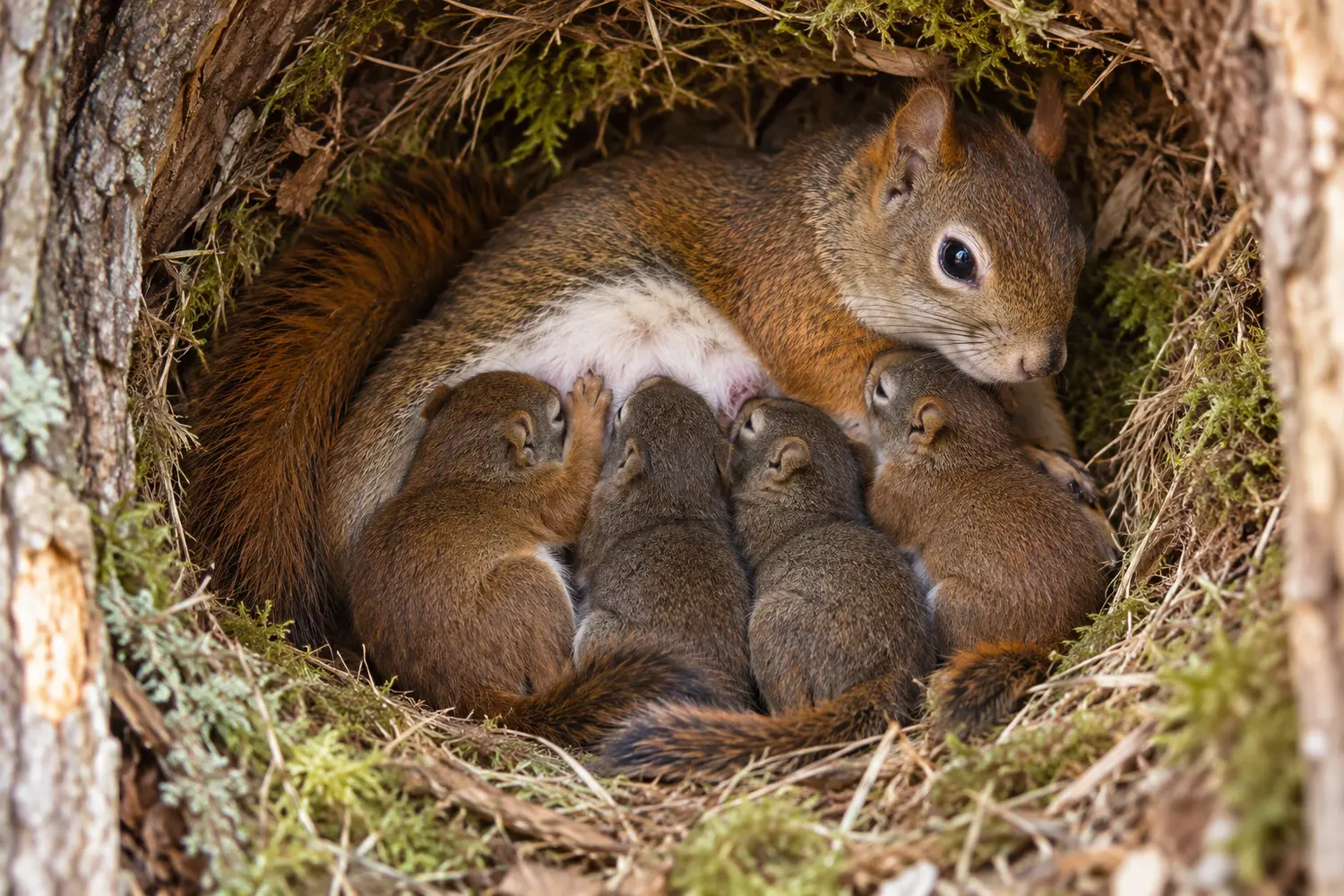
The key detail: every adopted orphan was kin
All five adopted juveniles were related to the surrogate female. The relationships included close kin such as nieces, nephews, siblings or grandchildren. In contrast, the researchers did not observe females adopting unrelated orphans, even though unrelated lactating females were more commonly available.
This distinction matters because the original claim can sound as if any female squirrel may hear a distressed baby and decide to raise it. The Yukon evidence supports a much narrower conclusion: in this North American red squirrel population, females occasionally adopted one orphan when that juvenile was a sufficiently close relative and the expected genetic benefit outweighed the cost.
The result was not simply inferred from which nests were close together. The long-term project tracked individuals, territories, reproduction and pedigrees. That detailed history allowed researchers to estimate how closely each potential surrogate was related to each orphan.
Why would a solitary animal raise another female’s young?
North American red squirrels are strongly territorial. Adults defend individual food-based territories and advertise ownership with distinctive vocalizations often called rattles. They are not cooperative breeders living in stable family groups, so adoption is especially surprising.
The explanation proposed by the researchers is kin selection. An animal can pass genes into future generations directly through its own offspring and indirectly by helping close relatives survive and reproduce. Because relatives share some of the same inherited genetic material, assistance to kin can sometimes increase what biologists call inclusive fitness.
This does not mean a squirrel consciously calculates genetic percentages. Natural selection can favor behavioral tendencies that, on average, produce a benefit when directed toward relatives. The exact sensory and learning mechanisms used by red squirrels to assess kinship remain unresolved.
How Hamilton’s rule helps explain adoption
Hamilton’s rule is commonly written as rb > c. In simple terms:
- r represents the genetic relatedness between the helper and recipient.
- b represents the survival or reproductive benefit received by the orphan.
- c represents the cost paid by the adopting female and her existing litter.
Adoption is favored when the benefit to the orphan, adjusted for relatedness, is greater than the cost to the surrogate. The red squirrel study was unusually valuable because the researchers could estimate all three parts of that relationship in a natural population.
Adding another juvenile to a litter is not free. As litter size rises, the survival probability of each youngster can decline. A nursing female has finite milk, time and energy, and her offspring must share those resources with the adopted juvenile. The five adoptions occurred only when the orphan was related closely enough for the indirect genetic benefit to exceed the expected loss in survival among the female’s own young.
Females never adopted more than one orphan. The researchers calculated that taking additional juveniles would have pushed the cost above the expected benefit. This is one reason the cases should not be framed as indiscriminate generosity.
How might a female know that an orphan is related?
The study demonstrated a strong association between kinship and adoption, but it did not establish the recognition mechanism. North American red squirrels monitor their neighbors through territorial calls, and later experiments have shown that their responses to familiar or related calls can be context dependent. Yet evidence that vocalizations alone explain adoption is not conclusive.
Several mechanisms could be involved. A female may learn the identity of relatives through early association, remember neighboring females, recognize individual calls or use scent and other cues. The safe conclusion is that red squirrels can discriminate among individuals in biologically useful ways; scientists have not shown that an adopting female performs a simple “family recognition” test before moving an orphan.