To tell if fish is fresh, check several clues together: the odor should be mild, the eyes clear, the gills bright, the skin glossy, and the flesh firm enough to spring back after gentle pressure. A sour, strongly fishy, rancid or ammonia-like odor is a reason to reject it.
These signs help you judge quality, but appearance alone cannot prove that seafood is free of pathogens or toxins. Safe temperature control, clean handling and proper cooking still matter.
Fresh fish vs. spoiled fish at a glance
| Feature | Fresh whole fish | Warning sign |
|---|---|---|
| Odor | Mild and clean | Fishy, sour, rancid or ammonia-like |
| Eyes | Clear, bright, slightly bulging or flat | Cloudy, milky or deeply sunken |
| Gills | Species-appropriate red or pink, with clear slime | Brown, gray, discolored, sticky or foul-smelling |
| Flesh | Firm and elastic | Soft, mushy or slow to recover after pressure |
| Skin | Bright or glossy, tightly attached scales | Dull, drying, discolored or covered in cloudy slime |
The Food and Agriculture Organization (FAO) uses the same broad sensory categories—odor, eyes, gills, skin and texture—in professional freshness grading. However, normal appearance varies among species, and freezing or thawing can alter the eyes, gill color and skin.
1. Smell the fish first
Fresh seafood should smell mild rather than sharply “fishy.” FoodSafety.gov advises shoppers to avoid fish that smells sour, rancid, strongly fishy or ammonia-like. Odor is especially useful around the gills, where spoilage smells may appear early.
Never taste raw fish to decide whether it is safe. If cooked seafood gives off a fleeting or persistent ammonia odor, do not eat it.
2. Look for clear, bright eyes
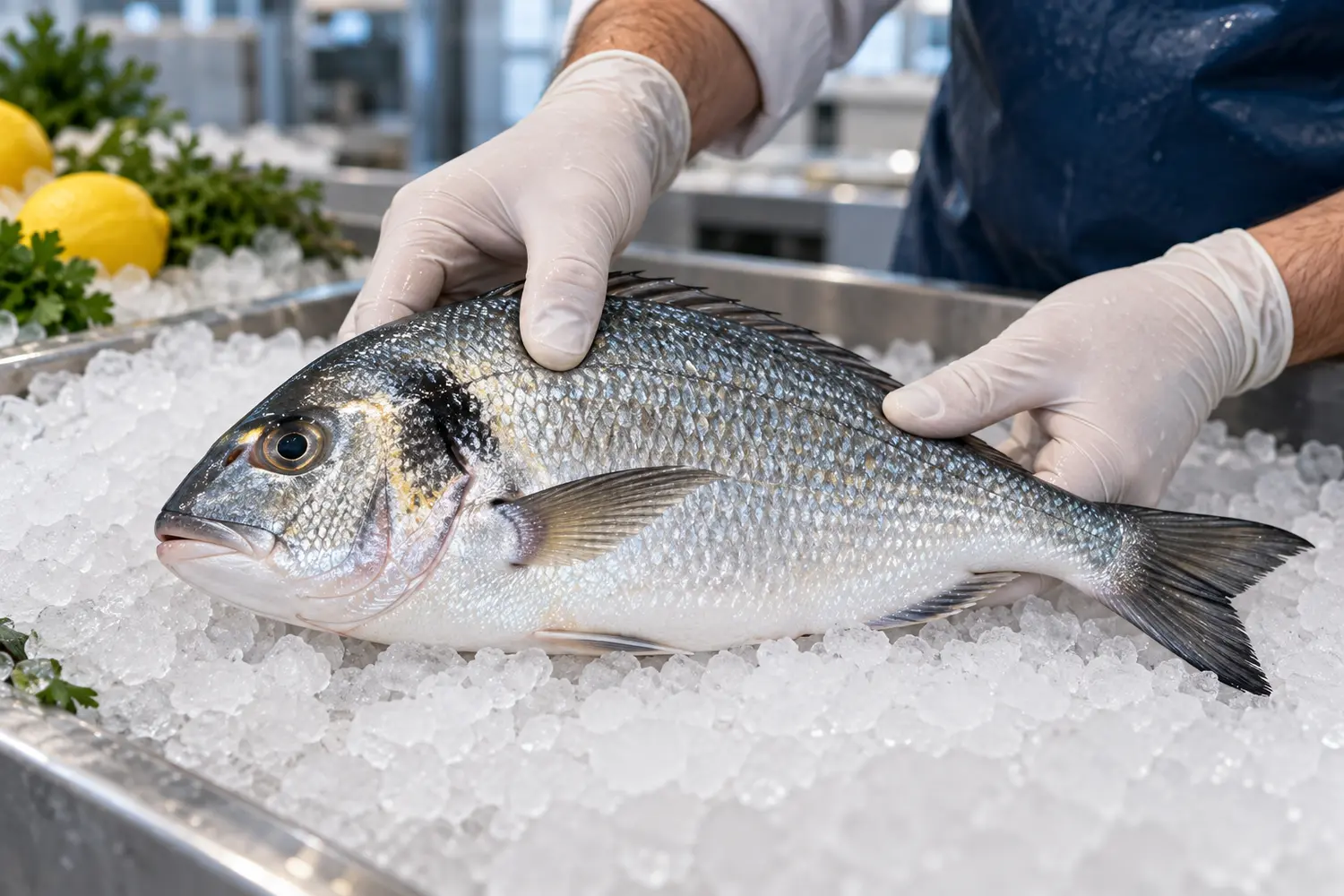
In many freshly caught whole fish, the eyes are clear, bright and somewhat convex. As storage time increases, the cornea can become cloudy and the eye may flatten or sink. FAO guidance lists a progression from transparent, bright eyes toward opaque, milky and concave eyes as quality declines.
Eye condition is not universal. Some species naturally have different eye shapes, and ice contact, handling, freezing and thawing can change their appearance. Treat the eyes as one clue, not a stand-alone verdict.
3. Check the gills carefully
Lift the gill cover only if the seller permits it. Fresh gills are commonly bright red or pink, moist and free of off-odors. Dark brown or gray color, cloudy slime and a sour or putrid smell indicate deterioration.
Gill color varies by species, bleeding and handling method, so “bright red” is not an absolute rule. Odor and the condition of the gill filaments can be more informative than color alone.
4. Press the flesh for firmness
Fresh flesh should feel firm and elastic. When pressed gently with a clean finger, it should recover rather than retain a deep indentation. Soft, flabby or mushy flesh suggests quality loss. The muscle should also remain attached to the bones rather than separating easily.
Texture differs among species and cuts. Oily fish can feel softer than lean white fish, while previously frozen fish may not rebound like never-frozen fish. Compare the sample with what is normal for that species and product form.
5. Inspect the skin, scales and surface
Whole fish should look bright or glossy, with skin that is intact and scales that are generally well attached. A thin layer of clear slime can be normal. Cloudy, thick, sticky or foul-smelling slime is not.
Reject fish with extensive discoloration, drying around the edges, unexplained bruising, ruptured belly tissue or obvious contamination. A swollen or broken abdomen can reflect poor handling or deterioration.
6. Judge fillets differently
Fillets do not provide eyes or gills to inspect, so focus on odor, firmness and surface condition. The flesh should appear moist and translucent for the species, without browning, yellowing, dark dry edges or excessive liquid in the package. Vacuum packaging should be intact and not ballooned.
Color alone can mislead because natural pigmentation differs among salmon, tuna and white-fleshed species. Added lighting in a display case can also make fish look brighter, so inspect texture and smell too.
7. Check temperature and packaging
Fresh-looking fish can become unsafe if it has been held too warm. Choose seafood that is refrigerated or displayed on a thick bed of fresh ice, preferably in a covered case. Packaged fish should feel cold, with no torn wrapping or leaking liquid.
Buy seafood near the end of your shopping trip, take it home promptly and refrigerate it at 40°F (4°C) or below. Keep raw fish in a sealed container on the lowest shelf so drips cannot contaminate ready-to-eat food.